
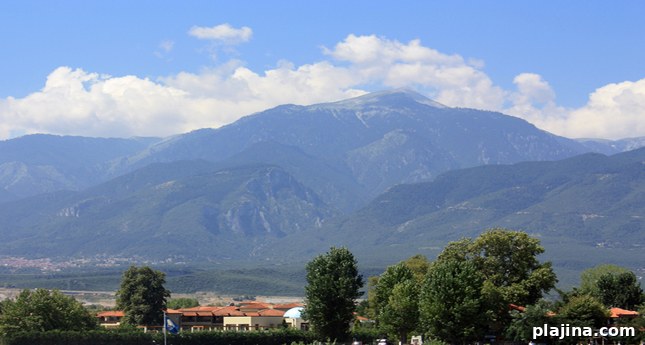
Mount Olympus, roughly 60 miles (about 1.5 hours) southwest of Thessaloniki, is the highest mountain in Greece. On clear days its snowcapped peaks can be seen from many points around the city, offering both a striking landscape and a powerful cultural symbol: the legendary home of the 12 Olympian gods of Greek mythology, such as Zeus, Poseidon, Athena, Apollo and Aphrodite. The mountain lies within Olympus National Park, established in 1938 as Greece’s first national park. The park covers diverse terrain, including steep gorges and eight main peaks rising above 9,000 feet, with the highest slopes typically snow-covered from November through May.
Near one of the mountain approaches is the ancient site of Dion, a Macedonian sacred city where King Archelaus staged annual festivals beginning in the fifth century BCE. These celebrations included nine days of athletic contests and rituals in honor of Zeus, the city’s divine patron. Modern visitors can explore impressive archaeological ruins at Dion and view artifacts in the local museum that help place the mountain and its cultic landscape in historical context.
Each year thousands of hikers and nature lovers travel from Thessaloniki to the Olympus area. Most itineraries start in the town of Litochoro, the usual gateway to the park’s trailheads and the finish point for the annual Olympus Marathon. A network of marked trails leads through changing zones of vegetation, and simple mountain huts are maintained along common climbing routes for shelter and rest. The park’s varied microclimates support a rich assemblage of flora and fauna, from high-elevation Bosnian pine forests to an abundance of wildflowers, birds and butterflies. This ecological diversity, together with the mountain’s dramatic topography and mythic associations, makes Mount Olympus a compelling destination for hikers, history enthusiasts and nature observers alike.