
SAY WHAT YOU WILL about wine, it is never dull. From its wide range of flavors to its many styles, wine offers endless variety. For nearly a decade I have written a monthly column on this endlessly fascinating subject for Global Traveler. Wine predates written history and continues to grow in appeal. It has encouraged countries that once produced simple jug wine to aim for international recognition, inspired regions that never grew grapes to plant vineyards, and led nearly every U.S. state to try winemaking. I’ve covered the best of California, Oregon and New York, but Americans are making wine from coast to coast. Texas now boasts more vineyards than cowboys, New Mexico — despite its desert terrain — supports about 50 wineries, and Idaho complements its potato fields with enthusiastic grape growing. Virginia, Washington, Pennsylvania, Colorado, Ohio and New Jersey have all expanded their vineyard plantings. Wherever grapes can be grown, someone is producing wine.
What intrigues me most is how different every wine can be. Each winemaking country, each region I visit, every winery and each glass I taste delivers a unique experience.
OFTEN, JUST AS INTERESTING as the wine itself is the history behind it. South Africa, for example, has been producing wine since the 1600s, but international embargoes during apartheid isolated the industry and led to a decline in quality. After apartheid ended in 1994, South African wine underwent a rebirth: new plantings, renewed investment and wines worthy of international attention. I’ve written about South Africa’s standout wines, including Sauvignon Blanc, Chenin Blanc, Bordeaux-style blends and Pinotage — a grape created there in the 1920s that has only recently become widely available abroad.
HISTORY WAS ALSO central to my first column on premium Chilean wines. After emerging from a 17-year dictatorship, Chile reintroduced itself to global markets with good wines at affordable prices. That initial success allowed the country to invest in quality, and today Chile produces both excellent bargains and premium wines that compete internationally.
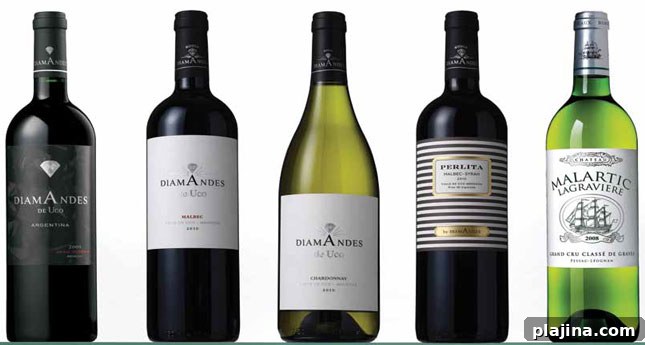
I’VE ALSO WRITTEN about Argentina’s distinctive path. Argentina embraced Malbec — a grape Bordeaux largely abandoned — and transformed it into the nation’s signature red. The rise of Malbec in South America has even drawn Bordeaux château owners to invest in Argentina to grow this grape that Bordeaux once discarded.
WE’VE FEATURED COLUMNS on a wide array of wine regions and styles: Austria, Germany, Greece, Switzerland, Australia, Portugal, Israel and Canada; New Zealand’s expressive Sauvignon Blanc and notable Pinot Noir; Spain’s offerings beyond Rioja and Sherry; and Italy’s Brunello, Amarone and Chianti Classico.
France remains a benchmark for fine grapes and classic wines. One of my personal favorites is Burgundy, renowned for outstanding Pinot Noir and Chardonnay. Burgundy is a relatively small region of stone villages and compact vineyard plots where many domaine owners still tend their vines personally. Unlike large, corporate estates found elsewhere, Burgundy often reflects a hands-on, Old World approach and deep dedication to craft.
I have also often written about Champagne, another favorite, focusing on smaller houses that produce a few hundred thousand bottles a year rather than the massive output of the most famous brands.
THE COLUMN HAS ALSO explored satisfying drinks beyond wine. I enjoyed traveling through Belgium to distinguish Abbey beers from Trappist beers. I traced the many possible origins of the Bloody Mary’s name, followed the global reintroduction of absinthe and compared the U.S. version with others, and profiled a Japanese restaurant in New York with more than 200 varieties of saké — not a glass of grape wine in sight.
STILL, WINE ACCOUNTS FOR most of our columns, and wine writing often drifts into ornate descriptions. It’s worth returning to the basics. The clear, golden liquid in a long-stemmed crystal glass is, fundamentally, an agricultural product. A $10 bottle shared at a relaxed dinner can bring as much pleasure as a $100 bottle served at a formal event. When tasting, trust your senses. Each of us carries a personal memory bank of smells and flavors. A sommelier might detect “ripe melon” while you perceive banana — take another sniff. If banana is what you consistently sense, then banana is your experience. Your reaction is the one that matters.
A close friend who is a leading wine agent and exporter in Burgundy grew up in Manhattan, and she often draws on those memories when describing a wine. I’ve heard her liken a Burgundy’s aroma to the smell of autumn leaves in Central Park and, in lesser wines, to exhaust from a Fifth Avenue bus. Burgundians might not share those exact references, but they respect her judgment — and the senses we use to describe wine are personal and valid.
Above all, remember that wine exists for pleasure. Trust your taste. If the wine in your glass satisfies you and brings enjoyment, then it is a good wine.
A Taste of Wine & Spirits
Absinthe
October 2010
Argentina Malbec
May 2012
Belgian Beer
November 2012
Bloody Mary
February 2011
Burgundy
September 2004
Champagne
June 2010
Chile
February 2004
Saké
March 2006
South Africa Pinotage
April 2006