
When everything runs smoothly, most travelers don’t notice the complex coordination behind their favorite luxury hotels — and that’s how it should be. Behind the scenes, however, a combination of careful planning, continuous training and precise execution ensures each guest enjoys a seamless stay.
Below are some of the key departments — and the people who lead them — that keep luxury hotels operating efficiently and inspire guests to return.
FOOD AND BEVERAGE
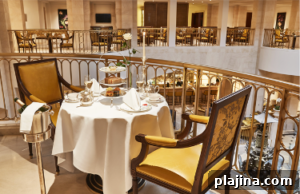
PHOTO: © HOTEL ADLON KEMPINSKI BERLIN
Upscale hotels often position themselves as destinations for outstanding cuisine. Achieving that reputation requires both creative vision and meticulous logistics.
“The logistics and communications in a hotel of our size can sometimes be extremely challenging,” says Philipp Pögl, food and beverage director at the 385-room Hotel Adlon Kempinski Berlin. “We employ more than 150 service staff and about 80 chefs while serving an average of 1,400 guests daily in our F&B outlets. Every team member must be fully briefed — including details such as guest dietary restrictions.”
Sustainability and local sourcing increasingly shape hotel menus. “We source eggs from an organic free-range farm near Berlin, and a suburban supplier provides cold cuts and our legendary Currywurst,” Pögl explains. “To reduce waste, since 2020 we partner with an app that allows us to offer leftover sandwiches, cakes, breads and pastries at discounted prices after outlets close. We also donate surplus bread to nearby zoos to feed animals.”
The pandemic accelerated operational changes, Pögl adds, including wider adoption of mobile payments and plans for a fast-casual takeaway concept.
Dining preferences have shifted as well. “People are looking for experiences,” says Chris Garvin, chef de cuisine at Galley, the restaurant at Hilton West Palm Beach. “Dinner is now more than just a meal. Our outdoor patio drew guests throughout the pandemic because people want to dine safely in pleasant settings. We expanded patio seating, introduced Tapas Tuesday to limit shared large plates, and brought back outdoor live music.”
MAINTENANCE AND ENGINEERING
Maintaining a hotel’s physical fabric is a constant task — especially for historic properties such as The Roosevelt New Orleans, a Waldorf Astoria Hotel that first opened in 1893.
“The first rule I learned the hard way is to never throw anything away,” says Jeff Dennison, the hotel’s director of engineering. “A broken marble fragment or a corner piece from a plaster baseboard can become a needed ‘puzzle piece’ for repairs. Avoiding quick fixes and restoring finishes to their original condition preserves texture, patina and the guest experience over time.”
Much of engineering’s work is deliberately invisible to guests. “Planning and anticipation are key,” Dennison adds. “That’s possible because engineering, front desk and housekeeping coordinate closely. Engineering staff must be flexible and ready to work any shift.”
Even modern buildings have specialized needs. In earthquake-prone Mexico City, Hilton Mexico City Reforma uses structural systems aimed at reducing collapse risk. “The hotel was built with reinforced concrete pillars supporting a plate more than 60 inches thick,” says Douglas Chacon, regional director of engineering. “While not a shock-absorption system, this design helps the building move in a controlled way during seismic events.”
Ongoing inspection and preventive maintenance — daily checks, drainage monitoring and pillar adjustments — keep facilities safe and comfortable. “We schedule work to minimize guest disruption, avoid peak times and prevent multiple maintenance activities from happening at once,” Chacon says.
FRONT OFFICE AND RECEPTION
The front desk is often guests’ first direct contact, yet many aspects of its work remain behind the scenes.
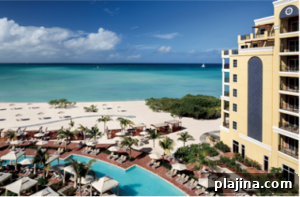
PHOTO: © RITZ- CARLTON ARUBA
At The Ritz-Carlton, Aruba, front-office staff are referred to as “ladies” and “gentlemen,” reflecting the brand’s elevated approach to hospitality. “Beyond technical skills, leaders teach our team how to express The Ritz-Carlton culture,” explains Rachele Oduber, front office manager. “They reinforce daily behaviors and habits while inspiring team members to create memorable moments. The Mystique is about how guests feel and the memories we create, not just the tasks we perform.”
To connect guests with authentic local experiences, the hotel encourages staff participation in local certification programs so they can share accurate information about Aruba’s history and landmarks. That knowledge helps them craft curated moments that highlight local culture and flavors.
In response to the pandemic, The Ritz-Carlton, Aruba increased contact-free options through its mobile app and adjusted guest escort policies. “Guest relations team members no longer walk guests all the way to rooms, and elevator use is limited to one party at a time to maintain distancing,” Oduber notes.
HOUSEKEEPING
Guests see the results of housekeeping — pristine rooms and clean public spaces — but not the training, coordination and quality-control that make it possible.
“Appropriate staffing is crucial,” says Sandra Kleinow, executive housekeeper at Britannia Hotel, a member of The Leading Hotels of the World in Trondheim, Norway. “After a 2019 renovation we promoted several cleaners to assistant roles to maintain quality across shifts.”
Consistency is maintained through visual standards and teamwork. “Our cleaners use a photo database that shows exactly how rooms should look, ensuring uniform presentation. Since cleaners can miss small details when turning over many rooms in a day, we back each other up with checks and inspections,” Kleinow explains.
Housekeeping also involves ongoing meetings to review standards throughout each day. “The pandemic changed some routines, but less than you might think because we already followed strict cleaning protocols,” Kleinow says. One practical change she implemented was asking reception to encourage guests to use “Do Not Disturb” signs while in their rooms, preventing unnecessary turndown interruptions and preserving privacy.
As hotels prepare for a post-pandemic future, creativity and adaptability will continue to shape how teams across departments craft safe, memorable and personalized guest experiences.