
The German city of Chemnitz, pronounced “Kem-nitz” and formerly known as Karl Marx Stadt, has been selected—together with Nova Gorica, Slovenia—as one of the two European Capitals of Culture for 2025.
Historically situated near two culturally vibrant Saxon cities, Chemnitz lies not far from Dresden on the Elbe, celebrated for its restored Baroque and Rococo center, and Leipzig, renowned for its musical heritage as the birthplace and workplace of composers like Wagner, Bach, Mendelssohn, the Schumanns and Mahler. Despite this proximity, Chemnitz followed a different path in the 20th century.
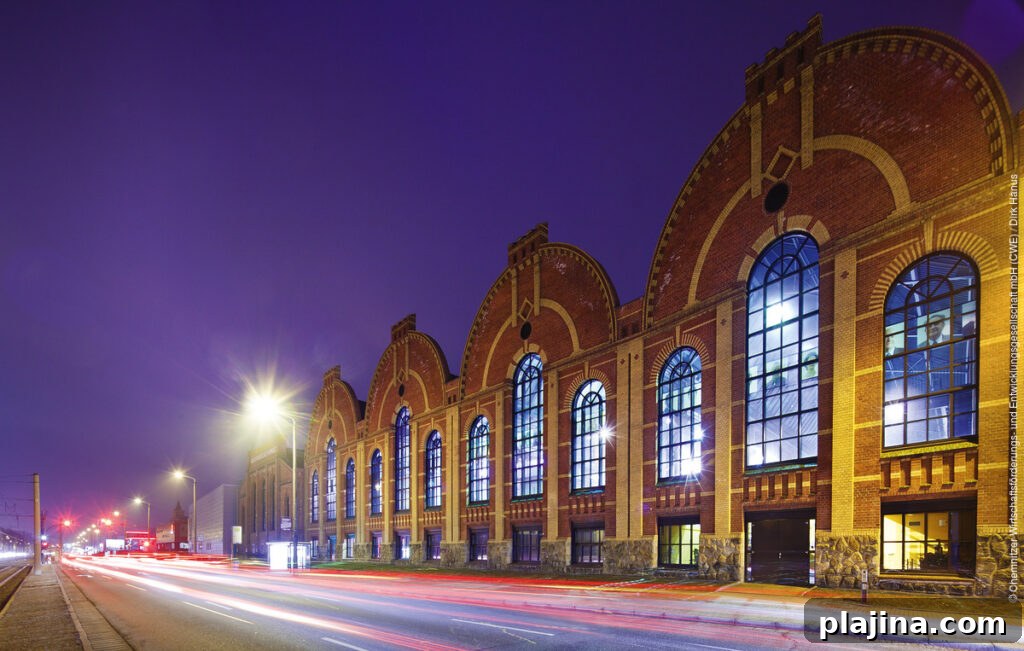
© Chemnitzer Wirtschaftsförderungs- und Entwicklungsgesellschaft mbH_Dirk Hanus
Writer William Cook recalls the Cold War era when Dresden and Leipzig maintained active cultural scenes while Chemnitz, renamed Karl Marx Stadt by East Germany’s government in 1953, felt isolated. The city’s Hauptbahnhof seemed quiet and timeworn compared with Leipzig’s busy central station, reinforcing a sense of being left behind.
Part of that identity shift came with the installation of a large bronze sculpture of Karl Marx—a towering head erected in the city center—despite Marx having no direct connection to the town. After German reunification in 1989, residents voted to restore the historic name Chemnitz, though the imposing Marx sculpture remained and has since become a notable local landmark and tourist attraction.
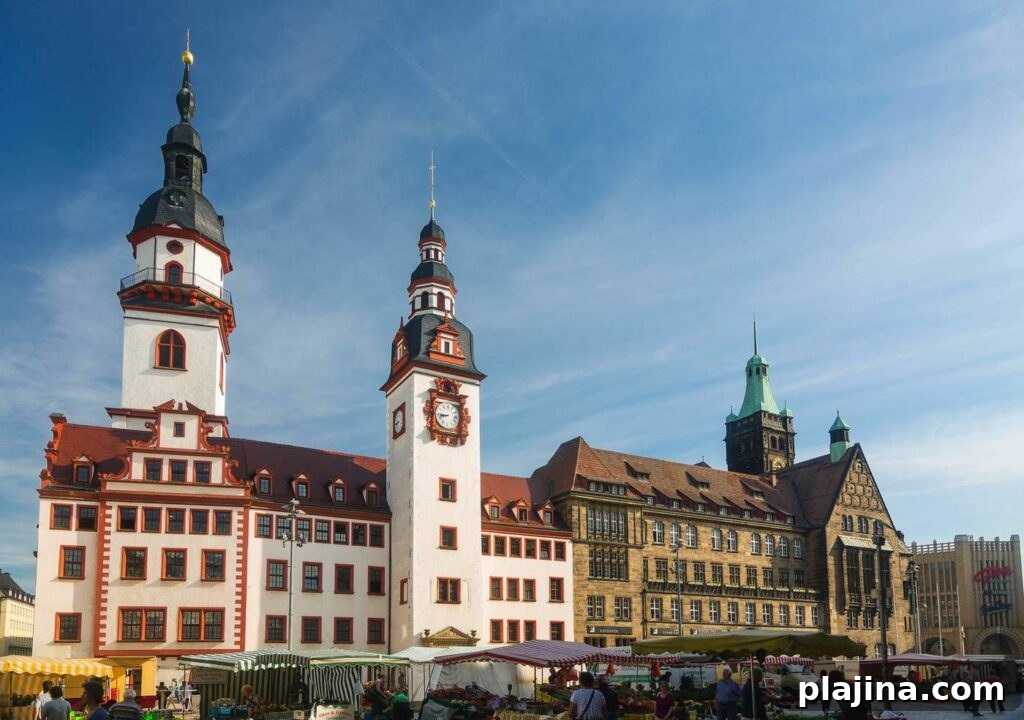
© German Tourism Board
Economic transition after reunification closed many factories and prompted a workforce exodus to West Germany. Over time, however, Chemnitz’s industrial experience, lower costs and a skilled creative workforce attracted new investment from Western European companies. This shift helped to stem the brain drain and set the stage for ongoing revitalization.
When Chemnitz’s bid to become a 2025 European Capital of Culture was confirmed in 2020, local tourism and cultural organizations launched an ambitious program to highlight the city’s unconventional appeal. Adopting the slogan “C the Unseen,” they developed more than 100 projects and around 1,000 cultural exhibits to feature in 2025.
Four major projects form the backbone of Chemnitz 2025, created to draw both leisure and business visitors. #3000Garages focuses on converting small public spaces into community-driven creative hubs and urban development sites. Generous Neighbors brings together residents, companies and educational institutions to increase urban greenery through hundreds of new gardens and tree plantings across the city.
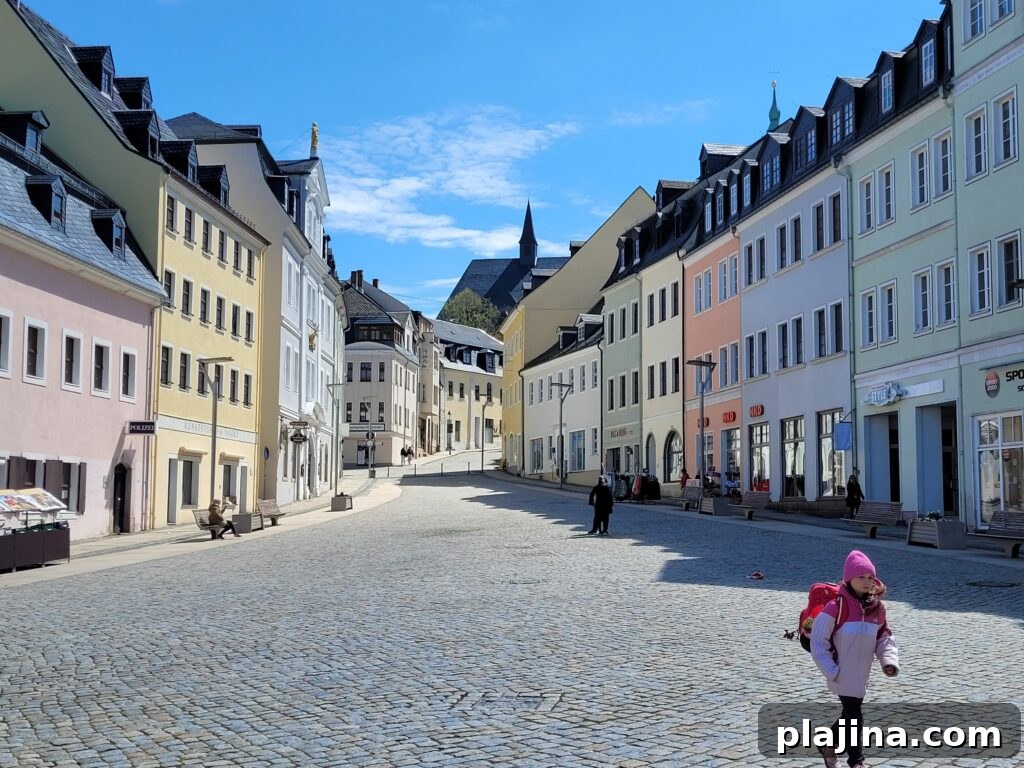
© Ron Bernthal
The Purple Path is a large-scale art and sculpture trail linking Chemnitz with 38 towns and villages across Saxony. Spanning locations reachable within 10 to 50 minutes by car, the trail will present about 70 contemporary installations by international and regional artists. Along the way, visitors can discover small craft shops, bakeries, cafés and distinctive local businesses shown on the Purple Path map. These sites are accessible by car, train, local buses or organized tours.
Complementing the Purple Path are the Maker Hubs for the Cultural Region—collaborative spaces where designers, artisans, entrepreneurs and emerging skilled workers can meet to experiment, produce and launch cultural initiatives. A nine-member jury selected eight Makerhub sites, each integrated into the Purple Path network.
One example is Schneeberg, a scenic town about 40 minutes southwest of Chemnitz, chosen as one of the Makerhub locations. A historic building on Fürstenplatz is being repurposed into a makerspace open to the public for research, experimentation, production and cultural programming. The project is supported by the town, West Saxon University of Applied Sciences, local artisans and youth groups.
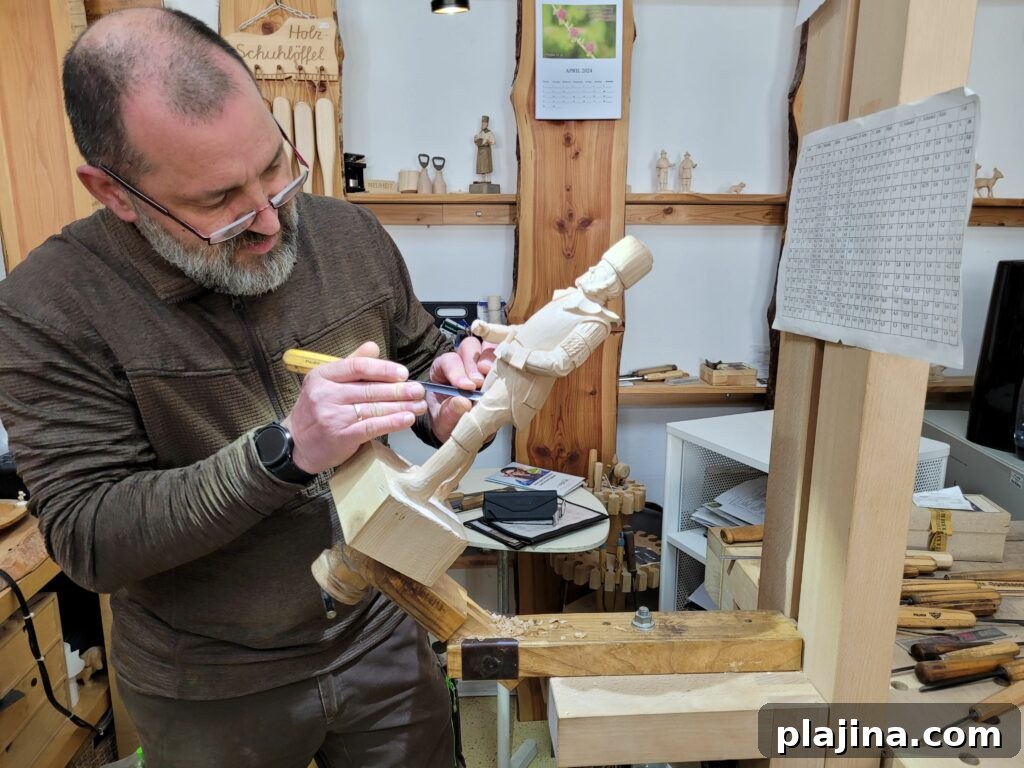
Lars Neubert © Ron Bernthal
Schneeberg, with roughly 16,000 residents, already invites visitors to meet local designers and artisans. Highlights include the small design and craft shop Atelier-Haengengeblieben run by Pia Hackner and Wilhelm Reichel, Nils Bergauer’s handmade leather glove manufactory—one of the few custom glove makers still operating in Germany—and wood sculptor Lars Neubert of Holz & Kunst Erleben, who crafts art objects using traditional hand tools.
“With the Makerhubs, places are being created in the region that will have an impact long beyond the Capital of Culture year,” said Stefan Schmidtke, managing director of European Capital of Culture Chemnitz2025 GmbH. The initiative aims to make the collaborative spirit of European makers tangible and enduring across the region.