
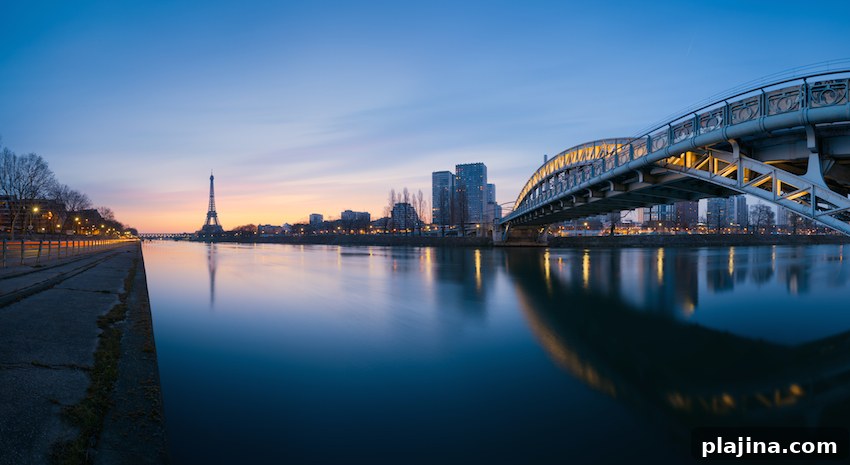
Paris long has been celebrated as a superb walking city, and a recent project makes exploring it on foot even more pleasant and accessible.
A former stretch of the Georges-Pompidou expressway that once carried commuter traffic along the Seine has been transformed into a peaceful, two-mile promenade. The new route runs from the Tuileries Gardens beside the Louvre to the Bastille area in the city’s east, creating a continuous riverside walkway that invites slow strolls, sightseeing and leisure activities.
Opened to pedestrians in early April, the path has been welcomed by residents and visitors eager for safer, quieter riverside access. Some commuters who previously used the roadway voiced concerns, saying the change could add up to 20 minutes to their daily travel. A petition calling for the walkway’s removal prompted debate at city hall.
In response, the Paris City Council emphasized sustainable travel alternatives and investments that reduce reliance on cars. The city highlighted nearby bicycle lanes, dedicated rollerblading routes and expanded pedestrian corridors as practical options for daily commutes, while also pointing to public transit improvements that help absorb displaced traffic. Officials framed the project as part of a broader effort to lower emissions, improve air quality and reclaim public space for people rather than vehicles.
The new riverside promenade offers more than a straightforward route from A to B. With uninterrupted views of the Seine, frequent seating, and easy access to cultural landmarks and parks, the walkway encourages recreational use as well as practical travel. The redesign also prioritizes safety: wider paths separate faster-moving cyclists and rollerbladers from pedestrians, and lighting and landscaping improvements make the corridor welcoming at different times of day.
Beyond immediate transportation impacts, the transformation aims to strengthen the city’s public realm. By converting a noisy, car-oriented artery into a calm urban waterfront, Paris has increased green space, improved pedestrian connectivity between neighborhoods, and created a linear destination for street performers, pop-up markets and seasonal events.
Critics argue that changes to traffic patterns require careful planning to avoid creating congestion elsewhere, and city leaders acknowledge that ongoing monitoring and adjustments will be necessary. Planners say the goal is to balance efficient movement with quality of life, using complementary measures such as boosted public transit service, bike-sharing expansions and targeted traffic management to smooth the transition for commuters.
For visitors, the promenade presents an opportunity to experience the Seine at a relaxed pace, linking many iconic sights along a single continuous route. For residents, the new space offers daily benefits: cleaner air, quieter streets and a safer corridor for walking and cycling. While the shift away from car priority may take time to settle, the riverfront conversion reflects Paris’s long-term ambition to prioritize sustainable mobility and more livable neighborhoods.