
Viewing the dynamic city of Munich only through the lens of Oktoberfest overlooks its broader appeal as a center of commerce, innovation and culture. The city’s commercial roots go back to the early 1300s, when Munich secured a valuable salt-trading monopoly. In recent decades the economy has diversified and accelerated, driven by finance, advanced technology, trade fairs and conferences. Global and national companies such as Siemens, BMW, Linde and Allianz are based here, alongside more than 22,000 high-tech firms prominent in telecommunications, aerospace and aviation.
Despite its rich historic fabric and classic architecture, Munich has a modern edge that attracts meeting and event planners from around the world. A prime example is BMW Welt, whose fresh, contemporary design earned the Location Award 2013 in the designer location category. Its Event Forum set new records, hosting 48,000 guests across 444 events. Professional services include comprehensive project management, full staffing, technical support, and provision of furniture and fittings.
BMW Welt offers a mix of indoor and outdoor meeting and function spaces: museum rooms, the Michelin-starred EssZimmer restaurant, a glass-walled Business Club overlooking BMW Welt Square, and dedicated Event Forum facilities. Incentive programs are plentiful and varied, from plant tours and company tournaments at Olympiapark SoccArena to tailored driving experiences on racecourses through the BMW Driving Experience.
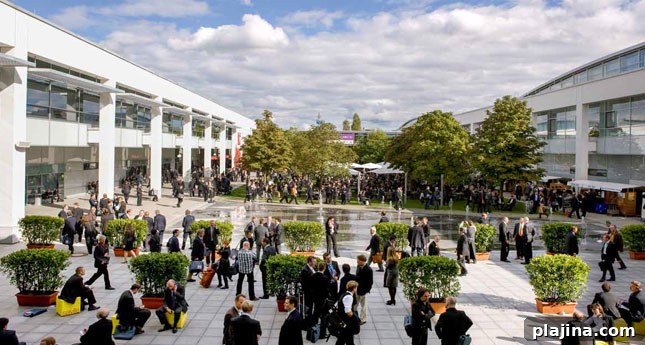
One of Europe’s premier conference sites is the international trade fair complex Messe München (Munich Exhibition Centre), which has expanded to include the ICM – Internationales Congress Center München and the MOC Exhibition Center. The venue calendar often features major events; recent and upcoming conferences have included Communication World, Food & Life Expo, Electronica, the FECAVA EuroCongress and the GSAVA Congress.
At the ICM, organizers can combine sophisticated meeting technology—separate control rooms, simultaneous-translation booths, mobile lighting bridges, customizable stages and advanced data and video projection—with the vast exhibition halls of Messe München to accommodate gatherings of up to 12,000 participants. This flexible technical infrastructure has made the ICM especially popular for international medical and pharmaceutical conferences.
The MOC Exhibition Center offers more than 320,000 square feet of halls, naturally lit atria and showrooms configured for a wide variety of events. Its segmented design, with separate elevators, foyers and entryways, benefits smaller, private functions. The center’s showroom concept simplifies event flow with 142 showrooms and breakout rooms ready for immediate use.
Messe München hosts some of the world’s leading trade fairs. For example, the LASER World of PHOTONICS attracted 1,130 exhibitors and sold every available booth. The event’s continued growth led to plans for additional exhibit space and a closer integration with the World of Photonics Congress.
Supporting infrastructure has expanded as well. A new Ramada Hotel & Conference Center opened adjacent to Messe München with direct access to the nearby underground station. The Ramada includes seven multipurpose exhibition rooms, an event hall, modern conference technology and on-site meeting planners.
Beyond convention centers and hotels, Munich’s cultural venues provide memorable backdrops for meetings and events. The city has more than 100 galleries and museums, many of which offer event spaces that blend history, art and architecture with contemporary facilities.
Options range from the refined Neoclassical Glyptothek, which houses Greek and Roman sculptures, to the famous art museums in the Kunstareal district. The Alte Pinakothek and Neue Pinakothek provide striking settings for meetings and receptions. The Alte Pinakothek, one of the world’s oldest galleries, displays works by Raphael, Rubens, Poussin and Rembrandt, while the Neue Pinakothek showcases modern masters including Monet, Van Gogh and Cézanne.
Nymphenburg Palace © Hiro1775 | Dreamstime.com
For distinctive historic ambience, Nymphenburg Palace offers a range of function rooms and halls. Spaces include the Hubertus Hall (up to 392 guests), Orangery Hall (up to 170), Johannis Hall (up to 90) and the Iron House (up to 60). The Geranium House can be reserved for smaller exhibitions, adding flexibility for cultural or corporate presentations.
Other centrally located historic venues include the Altes Rathaus (Old Town Hall) and the stately Münchner Künstlerhaus, both convenient by public transport. Munich’s brewery halls also serve as large, atmospheric venues: Löwenbräukeller’s main room can seat up to 1,650 in theater-style arrangements, Hacker-Pschorr Bräuhaus accommodates 600, and Paulaner Bräuhaus seats about 180.
In the city center, the Bavarian-themed Platzl Hotel features seven banquet and conference rooms with modern technology for up to 140 guests. Its Muller-Pfister-Stube, seating up to 95, dates back to 1573 and adds historical character. The hotel is a short walk from Marienplatz and the Glockenspiel.
Also centrally based, the Hans Seidel Foundation Conference Center offers nine daylight-filled meeting rooms suitable for a range of event sizes. For practical planning support, the Convention Bureau Munich helps organizers with venue selection and logistics. Local DMCs such as DMC Munich provide on-the-ground expertise and creative incentive ideas—from private tram city tours with Bavarian cuisine to themed evenings, classic car rallies and playful team competitions featuring traditional Bavarian activities—ensuring events are both efficient and memorable.