
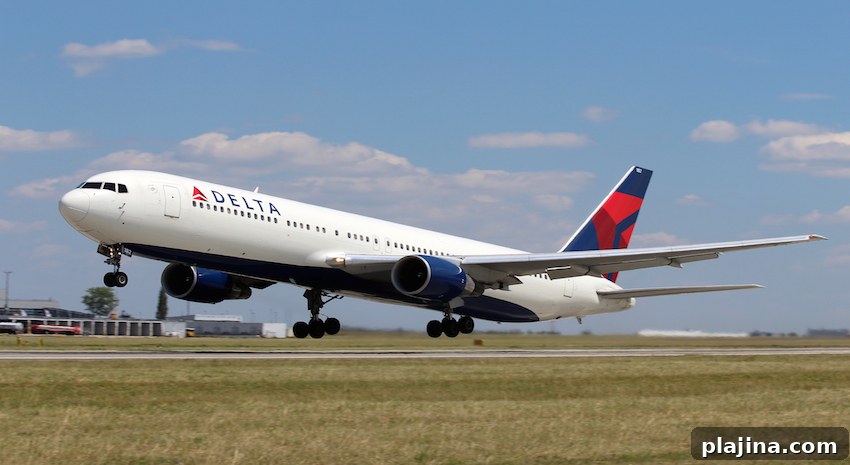
Delta Air Lines has become the first North American carrier to take delivery of Airbus’s new A350 aircraft, receiving the inaugural plane last month. This addition marks the start of a fleet renewal that will modernize long-haul operations and improve passenger comfort while lowering fuel consumption.
Delta has ordered 25 A350s to replace its aging Boeing 747-400 fleet. The A350 brings more advanced in-cabin amenities, quieter operations, and significantly better fuel efficiency compared with the aircraft it replaces. These improvements support the airline’s goals for reduced operating costs and a more sustainable long-haul network.
“Our new flagship A350 fits well in Delta’s long-haul network, combining an exceptional customer experience with strong operating economics and fuel-efficiency as we retire older, less-efficient aircraft,” said Ed Bastian, CEO of Delta.
Airbus’s A350 is expected to deliver roughly a 20 percent improvement in operating cost per seat relative to the Boeing 747-400, a meaningful gain for long-haul route economics. Alongside those savings, Delta is introducing upgraded cabin products aboard the A350, including its new Delta One suites. These suites feature a full-height door to provide complete privacy for passengers who choose the airline’s top-tier premium offering.
The interior layout on Delta’s A350 emphasizes both premium comfort and denser, more comfortable economy seating. The aircraft will be configured with 32 Delta One suites and 48 Delta Premium Select seats, offering travelers enhanced recline, additional legroom, and upgraded meal service in premium cabins. Delta’s main cabin on the A350 will seat 226 passengers, using the airline’s largest economy seats. Economy seating includes memory foam cushions designed to improve comfort on long flights and help reduce fatigue on transoceanic routes.
Delta plans to deploy the A350 initially on its Detroit (DTW) to Tokyo Narita (NRT) route beginning October 30. After that launch, the aircraft will primarily serve other Pacific routes, such as Seoul (ICN) and Beijing (PEK), where the combination of range, cabin comfort, and fuel efficiency is particularly valuable for long-haul international operations.
Replacing the 747-400s with A350s allows Delta to offer passengers a more modern travel experience while taking advantage of the A350’s aerodynamic design and advanced engines to lower emissions and reduce operating costs. The A350’s quieter cabin and improved cabin pressurization and humidity also contribute to a more comfortable flying experience on these longer flights.
Delta’s investment in the A350 reflects a broader industry trend toward newer, more fuel-efficient widebody aircraft as airlines balance capacity needs, passenger comfort, and environmental considerations. By upgrading to the A350, Delta is positioning its long-haul fleet to meet both customer expectations for premium amenities and the airline’s objectives for operational efficiency.
Over time, the newly configured A350s will gradually replace older aircraft on the long-haul network, helping Delta streamline maintenance, reduce fuel burn, and improve per-seat economics. Passengers flying on A350-equipped routes can expect a refreshed cabin experience, enhanced privacy options in Delta One, upgraded Premium Select service, and more comfortable economy seating designed for extended flights.
As Delta rolls out additional A350s from its 25-aircraft order, travelers on international Pacific routes should see the new product appear more frequently in schedules, offering a consistent, modern travel experience across the airline’s long-haul network.