
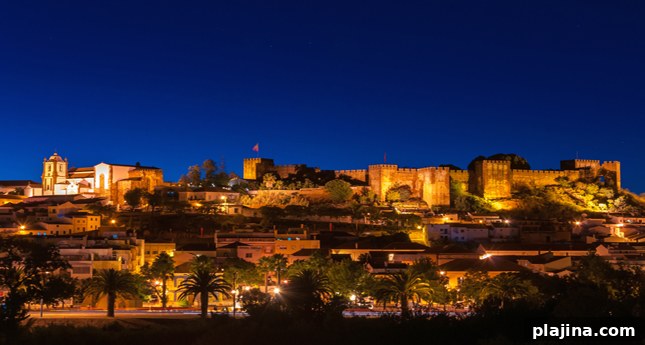
A few miles inland from the Algarve’s coastline, and not what most visitors expect in this beach-focused region, stands one of Portugal’s finest castles. Perched atop the tranquil hilltop town of Silves, its ten towers rise from an uninterrupted line of battlemented parapets that enclose an interior area of approximately 4.6 square miles. Several towers feature vaulted halls and Gothic doorways added during later medieval renovations, giving the fortress a blend of architectural periods.
In its heyday Silves was the heart of the Muslim Algarve: a prosperous cultural center that, in the 11th century, rivaled and in some accounts surpassed Lisbon. Contemporary writers compared it to Córdoba for its mosques, palaces and bustling medina. Over subsequent centuries the town and its castle experienced conquest by Crusaders who expelled the Moors and were later damaged by earthquakes, yet the fortress endures as the most intact example of Moorish military architecture in Portugal.
Ongoing archaeological excavations within the castle walls continue to reveal layers of history, uncovering remains from the 12th-century city as well as earlier Roman and Phoenician occupation. These finds help illustrate the site’s long continuum of settlement and strategic importance. Winding paths and serene gardens inside the enclosure provide peaceful places for a slow stroll and to absorb the atmosphere of the complex.
One prominent feature is the vaulted roof of a vast cistern. Visitors can descend narrow stairways into its cavernous interior to appreciate the engineering that supplied water to the fortress. The cistern’s presence highlights the practical as well as defensive functions of the castle complex.
For sweeping panoramas, walk the full length of the curtain wall. From the ramparts you can look down over the town’s terracotta-tiled roofs and out across orange and almond groves that spread toward the distant mountains. These views reinforce why Silves was both a defensible stronghold and an attractive center of settlement through many eras of Iberian history.