
The University of Tokyo and Sony Corporation have created a small collar-mounted device for cats that combines a tiny camera, GPS and Bluetooth. The unit posts real-time updates indicating whether a cat is eating, running or sleeping. In another example of Tokyo’s blend of technology and novelty, a recent rooftop wedding in Hibiya Park featured marriage vows read by “I-Fairy,” a four-foot-tall robot made by Kokoro Company, complete with flashing eyes and plastic pigtails. New cigarette vending machines around the city use electronic sensors that analyze skin and facial features to verify a customer’s age before dispensing tobacco.
Shimizu Corporation has proposed the Mega-City Pyramid, an ambitious plan to build a vast glass pyramid over Tokyo Bay. If realized, the structure would dwarf the Great Pyramid at Giza and house as many as 750,000 residents. The concept relies on advanced materials such as carbon nanotubes that are not yet commercially available, but the project reflects Tokyo’s appetite for visionary urban design and the confidence that engineers will eventually overcome technical hurdles.
Tokyo embraces the future, encouraging inventors and designers to pursue bold, sometimes eccentric ideas. PricewaterhouseCoopers ranks Tokyo first worldwide for skyscraper construction activity and third for the share of residents with higher education. This concentration of talent drives innovation in areas ranging from urban wind farms and floating botanical communities to affordable, low-emission electric vehicles designed for city drivers.
The Tokyo metropolitan area, home to over 34 million people, offers services and infrastructure many cities aspire to. Crime rates are relatively low and public spaces are kept clean. Air and water quality are closely monitored, and the extensive train and subway networks maintain an outstanding on-time performance. Earthquake-resistant construction standards are consistently applied to new buildings, and property owners are encouraged to retrofit older structures to meet current safety codes.
Modern Tokyo rose from a long, complex history. Originally known as Edo, it became the seat of the Tokugawa shogunate in 1603 and later transitioned to the imperial capital in 1868 when the emperor regained authority and Edo was renamed Tokyo. The city endured devastating disasters—a massive earthquake and fires in 1923 and destructive bombing in World War II—making its postwar transformation into a leading global economic and cultural hub particularly remarkable.
Japan’s new prime minister at the time aimed to boost exports and tackle deflation, challenges compounded by stronger international competition in electronics and a demographic decline. Tokyo still displays bustling consumer enthusiasm—when the iPad launched in Japan, long lines formed in fashionable Harajuku—yet the era when Sony consistently led global consumer gadget trends has given way to fierce competition from American and South Korean firms. Japan faces a persistently low fertility rate and a rapidly aging population; the share of residents over 65 has grown substantially and is projected to rise further, pressures that could shrink the workforce and strain public services over time.
Despite these challenges, Japan remains the world’s second-largest economy, and Tokyo—home to the largest metropolitan economy globally and one of the world’s largest stock exchanges—continues to move at a fast pace. Domestic companies make notable contributions: SoftBank, for example, operates the country’s fastest-growing mobile carrier and a major broadband network, while branching into search and e-commerce. Transport improvements continue too: Keisei Railroad introduced the 100-mph Sky Access line from Narita International Airport to central Tokyo, cutting travel time to around 36 minutes. In Sumida a new 2,080-foot digital broadcast tower under construction will become the world’s tallest free-standing tower on completion, and like many recent projects it promises striking design and renewed commercial activity nearby.
Diversions
The Edo-Tokyo Museum (1-4-1 Yokoami, Sumida-ku) offers a wide-ranging introduction to the city’s history from the 17th century to today; the building’s modern architecture is an attraction in itself. The Tokyo National Museum (Ueno Park) is Japan’s oldest museum, with five galleries dedicated to Japanese and Asian art and cultural history.
Bunkamura in Shibuya is a premier cultural complex that includes Orchard Hall, home to orchestral and ballet performances; Theatre Cocoon for stage productions; and Le Cinéma, a respected film venue.
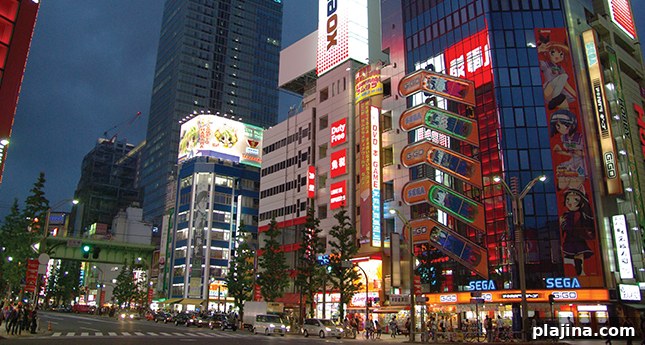
Shibuya at night is a riot of glass towers and neon lights—often compared to an amplified Times Square. Ginza is Tokyo’s premier shopping district, Akihabara is the center for electronics bargains and hobbyist culture, and Roppongi offers lively nightlife with everything from large restaurants and clubs to tiny counter-style bars called nomiya. In Kappabashi-dori near Tawaramachi station, you can buy the highly realistic plastic food models that many restaurants display outside their doors—memorable and sometimes costly souvenirs.
Department stores like Isetan in Shinjuku showcase specialty foods and regional delicacies, while Tsukiji Market remains one of the world’s most fascinating seafood markets. Operating from the pre-dawn hours, Tsukiji brings hundreds of types of fish and seafood to wholesalers and restaurateurs, creating a vibrant, hectic atmosphere best experienced early in the morning.
For a view of Tokyo’s creative edge, visit Tabloid Tokyo in Minato-ku, a former printing press converted into studios, galleries and offices. The space has become a hub for artists and designers, featuring a café and a rooftop terrace with a view of Rainbow Bridge.
Just The Facts
Time Zone: GMT+9
Phone Code: 81 (Japan); 3 (Tokyo)
Currency: Yen
Entry/Exit Requirement: U.S. passport holders should have a passport valid for at least three months beyond their intended stay and proof of onward travel. No visa is required for stays up to 90 days for U.S. visitors.
Official Language: Japanese. English is commonly spoken in business hotels, shops and international restaurants.
Key Industries: Banking, insurance, transportation, construction, publishing, music and broadcasting, electronics, fashion and tourism
Lodging
Hotel Okura
A five-star hotel in central Tokyo blending modern comforts with traditional Japanese style. 2-10-4 Toranomon, Minato-ku, tel 81 3 3582 0111
Imperial Hotel
A legendary landmark known for refined Japanese hospitality; historically associated with notable architectural redesigns. 1-1 Uchisaiwai-cho 1-chome, Chiyoda-ku, tel 81 3 3504 1111
Mandarin Oriental, Tokyo
A modern high-rise hotel with 179 rooms and suites offering city and bay views, including a high-floor spa. 2-1-1 Nihonbashi Muromachi, Chuo-ku, tel 81 3 3270 8800
Dining
Cha Cha Hana
A cozy neighborhood spot featuring regional specialties like grilled Japanese yam and stuffed scallops. 1-1-1 Kabukicho, Shinjuku-ku, tel 81 3 5292 2933
Fukuzushi
A long-established sushi bar in a lively evening neighborhood, celebrated for its high-quality sushi. 5-7-8 Roppongi, tel 81 3 3402 4116
Yamasaki
A four-table restaurant run by a female chef that earned Michelin recognition, offering a refined, intimate dining experience. Fukuya Building 2F, 4-2 Kagurazaka, Shinjuku-ku, tel 81 3 3267 2310
Checking In With Wayne Graczyk
Baseball journalist for The Japan Times and Nippon Television
How Long Have You Been Living In Japan?
Originally from Clark, New Jersey, I have lived in Japan for 41 years after arriving with the U.S. Air Force. I live in Kichijoji, a suburb about 30 minutes from downtown Tokyo by express train, and have a Japanese wife and two grown children. I studied Japanese at Sophia University in Tokyo, and living with my late mother-in-law for 25 years helped me develop strong language skills.
What Are The Positive And Negative Aspects Of Living In Tokyo?
Tokyo impresses with its safe, clean streets, efficient rail and subway systems, and the politeness of its people. Pollution levels are relatively low, and electric vehicles help keep emissions down. I appreciate almost everything about living here, though the Roppongi nightlife area could be improved and smoking remains more common than I’d prefer. High prices are balanced by salaries and bonuses that make the city manageable for many residents.
What Is On Your Must-see List For Visitors?
Highlights include Meiji Shrine, Asakusa Kannon Temple, Tokyo Dome and the Japan Baseball Hall of Fame and Museum, Tokyo Disneyland and DisneySea, Tokyo Tower, and a visit to a sumo stable. Several affordable museums and tours—such as the Transportation Communications Museum, the Ramen Museum and the NHK studio tour—offer unique cultural insights.
How Are You Involved With Japanese Baseball?
I compile and edit the English-language Japan Pro Baseball Fan Handbook & Media Guide, write a weekly Japanese baseball column for The Japan Times, and cover Tokyo Giants home games for Nippon Television, translating comments from foreign players for broadcast.
What Can Spectators Learn About Japanese Culture From Watching Baseball In Japan?
Japanese baseball highlights the country’s emphasis on the group over the individual. Teams prioritize unity and the organized cheering sections show respect even for opponents. This group-oriented mindset extends to workplaces and schools, fostering loyalty, strong work ethics and high-quality craftsmanship. Overall, Tokyo and Japan continue to adapt and maintain a high standard of living for residents while keeping pace with global changes.