
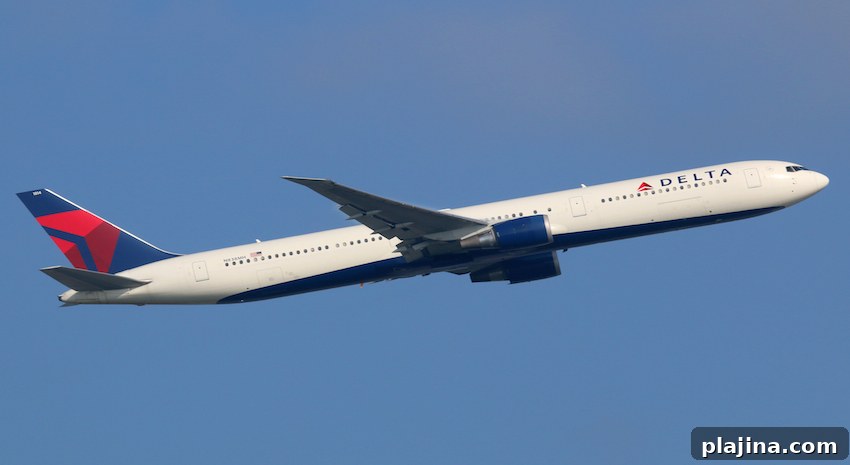
Delta Air Lines requested that more than 10 out of every 10,000 passengers voluntarily give up their seat and take a later flight, making it the major U.S. carrier with the highest rate of voluntary bumping in the most recent analysis.
Bumping happens when airlines oversell flights to compensate for expected no-shows or when operational issues—such as delays or equipment problems—require swapping to a smaller aircraft. In those situations, carriers ask passengers to accept later flights or different routings to accommodate the change.
United Airlines and Southwest Airlines also had relatively high bump rates in 2016, shifting an average of 7.7 and 7.2 passengers per 10,000, respectively. Those figures come from research published by milecards.com that focused on airline credit card and rewards program data and included operational statistics.
The report covered U.S. airlines with at least 1 percent of domestic scheduled service passenger revenues and that operate aircraft with 30 or more passenger seats. It used system-wide data for scheduled domestic service and included international segments that originated in the United States.
Passengers traveling on smaller regional carriers faced the greatest likelihood of being bumped—about 15.9 per 10,000 passengers. Most of those moved off flights did so voluntarily; only 8.3 percent of bumped passengers were involuntary. Overall, the industry saw a marked improvement, with the rate of bumped passengers falling about 40 percent between 2010 and 2016.
Carriers such as JetBlue, Frontier and Hawaiian Airlines reported some of the lowest bump rates. These airlines tend to serve a higher share of leisure travelers—who are generally more flexible and willing to change plans on short notice—helping keep involuntary bumping low.