
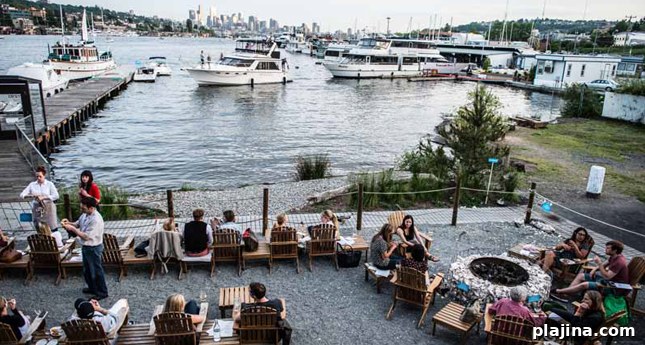
In 1981, Seattle’s tourism bureau held a contest to find a new nickname for the city on Puget Sound. Sarah Sterling-Franklin, a California resident who owned a summer home near Seattle, won with “The Emerald City.” She explained the choice by calling Seattle “the jewel of the Northwest, the queen of the Evergreen State,” praising the city’s elegance, magic and natural beauty.
More than three decades later, Seattle continues to live up to that name. Despite rapid population growth, it remains one of the nation’s greenest cities. Influenced by the Olmsted brothers, who helped design Seattle’s park system in the early 20th century, roughly 11 percent of the city’s land is dedicated to parks and green space, and tree-lined streets are common. National forests blanket the surrounding hills, and the 14,411-foot, snowcapped Mount Rainier dominates the skyline, reinforcing Seattle’s close relationship with nature.
Today, “green” in Seattle also signifies prosperity. The region is home to a notable concentration of wealthy entrepreneurs and philanthropists, including founders and leaders of major technology, retail and media companies. Their presence has shaped the local economy through corporate investment and charitable giving.
Seattle’s commercial history stretches back to the early 20th century. Swedish immigrant John Nordstrom opened his first store in 1901, while William Boeing, who purchased a small shipyard in 1910 to build seaplanes, became the city’s first major industrial figure. Although The Boeing Company moved its corporate headquarters to Chicago in 2001, the company still maintains its largest manufacturing facility in nearby Everett and remains a major regional employer.
High-tech companies now drive much of Seattle’s growth. The region has seen strong tech job increases in recent years, and was recognized as a top area for technology employment. Rapid expansion by tech firms has put pressure on real estate, construction and transportation systems. Amazon alone has announced plans to add millions of square feet of office space over the coming years, a growth that will require thousands of new housing units and influence much of the city’s development planning.
Neighborhoods that were once quiet—Queen Anne, Ballard and Capitol Hill—are experiencing intense revitalization. Mixed-use developments now host startups, global tech firms, restaurants, bike shops and independent boutiques. In South Lake Union, Amazon is building a large urban campus, and new glass condominium towers are attracting young professionals. Critics and observers describe the city as evolving into an expensive, elite technopolis.
Amazon’s Phase IV building in the revitalized downtown neighborhood of South Lake Union © Michael Walmsley
Many newcomers praise Seattle’s combination of urban sophistication and easy access to nature. Residents point to a vibrant food, wine and coffee culture alongside scenic views of mountains and waterways. Major and boutique tech employers—ranging from global corporations to local startups—contribute to the city’s reputation as a desirable place to live and work.
Seattle’s demographic profile skews young and ambitious, with a strong concentration of residents in their mid-20s to mid-30s. This has helped fuel innovation and entrepreneurial activity. Between 2012 and 2013, the city recorded one of the largest population increases among major U.S. cities, and growth continues in many neighborhoods and suburbs.
The hospitality industry has responded to rising visitor numbers with new hotel developments and mixed-use projects. Several large projects are planned or underway, including high-rise towers that combine hotel rooms, residences and retail space. Developers are also targeting convention and boutique hotel capacity, particularly in and near downtown and popular districts such as Pike Place Market.
Seattle’s dining scene now rivals other West Coast culinary centers in both diversity and design. New restaurants emphasize regional ingredients and international influences, often set in thoughtfully designed spaces. From waterfront dining to neighborhood bistros, the city offers a wide array of culinary experiences that reflect its cosmopolitan sensibility and local food culture.
City officials emphasize the importance of balanced urban investment. Creating attractive neighborhoods means investing in parks and open space, transportation infrastructure, arts and mixed-use development that blends retail and housing. These efforts aim to support a lively urban environment where residents and businesses want to gather.
Infrastructure projects are shifting downtown. The replacement of the 60-year-old Alaskan Way Viaduct with an underground tunnel is one of the largest undertakings, freeing up waterfront land for redevelopment. While the project faced delays during tunneling, it remains a central component of the city’s plan to improve mobility and open new opportunities for waterfront development.
Public transit investments are also expanding. Light rail connects the airport to downtown and extensions into neighborhoods such as Capitol Hill and the University District are progressing, with new stations expected to encourage additional commercial and residential growth along transit corridors.
Local tools and resources help residents and investors track change. Interactive maps and apps that display ongoing construction and planned projects make it easier for the public to follow the city’s revitalization efforts and understand how neighborhoods are evolving.
SCENIC DRIVES
An easy 47-mile drive northeast of downtown reaches Wallace Falls State Park in about an hour. Cross Lake Washington on Route 520, take I-405 North to Exit 23/Route 522, then follow Route 2 East toward Gold Bar. At the park (a modest entrance fee applies) you can hike to a 265-foot waterfall and enjoy views of the North Cascades. For a classic roadside stop, try Zeke’s Drive-In in Gold Bar for burgers and milkshakes.
Another pleasant outing is a trip to Vashon Island. From the Fauntleroy Ferry Terminal, a 20-minute car ferry carries visitors to the island, followed by a short drive along Vashon Island Highway. The route passes small farms, wooded hills and shoreline vistas. The island features galleries, cafés, a farmers market and the Point Robinson Lighthouse. Cottages and B&Bs provide overnight options, and frequent ferry service connects the island to the city year-round.