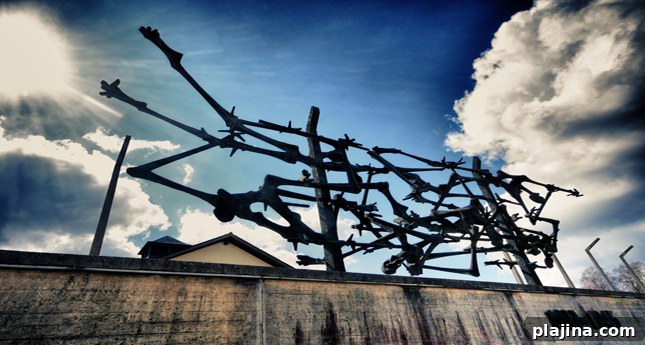
Seventy years after its liberation, a visit to Dachau Concentration Camp — about 30 minutes by train northwest of central Munich — confronts visitors with difficult questions.
The first question is whether visiting is appropriate at all. It can feel jarring that a site of deliberate and extreme suffering has become a place people travel to, complete with a kiosk and café. Equally troubling is the way the camp has been maintained and restored over decades, leaving many buildings and grounds in a preserved, almost frozen state rather than allowing them to return to nature.
Another concern is the behavior of some visitors. Most people approach the site with the solemnity the place demands, but occasional lightheartedness—people joking, or posing for smiling selfies—can seem disrespectful and starkly out of place.
Yet, spending time at the camp shifts perspective. Over three hours of walking the grounds and reading the displays, the weight of the site becomes undeniable. Dachau, the first Nazi concentration camp where tens of thousands perished, has an emotional force that is difficult to escape. That impact became especially clear in the small Catholic chapel on the grounds. An impromptu gathering of American students formed a circle and sang two hymns; the moment moved many people to tears.
Leaving the memorial, earlier objections often feel less significant. The camp continues to affect almost every modern visitor who passes through its gates, prompting reflection on the roots of such crimes and the conditions that allow them to recur. When visitors engage with those questions—about culpability, ideology, indifference and memory—the memorial fulfills an essential role in education and remembrance.
Maintaining the site also serves practical and ethical purposes. Conservation and curated interpretation preserve evidence and testimony that might otherwise be lost. Exhibitions, guided tours and personal testimonies help visitors understand the historical context and the human cost, while the preserved structures act as tangible reminders of what occurred there. Responsible stewardship aims to honor victims and foster informed reflection rather than to create a static spectacle.
At the same time, the presence of amenities and conservation work raises important debates about how best to remember atrocities. Memorials must strike a balance between accessibility and reverence. Providing facilities can make the site more accessible to diverse visitors, including survivors, descendants and younger generations who need to learn this history. But those conveniences must be managed so they do not undermine the gravity of the place.
The behavior of individual visitors also matters. Respectful conduct—listening, reading, observing silence in certain areas and refraining from trivializing photographs—helps preserve the solemn atmosphere. Educational programming, clear signage and staff guidance play roles in shaping appropriate conduct and encouraging reflection rather than tourism as entertainment.
Ultimately, the value of a visit depends on the attitude people bring. Approached with humility, curiosity and a willingness to confront uncomfortable truths, Dachau operates as a powerful site of remembrance and learning. It compels visitors to consider how ordinary structures and systems were transformed into instruments of persecution, and it asks us to remain vigilant against the dehumanizing forces that allow atrocities to happen.
For many, the experience is a call to action: to remember responsibly, to educate future generations and to challenge prejudice and indifference wherever they appear. As long as the memorial prompts those difficult but necessary conversations, it continues to serve a vital purpose.