
We wake before dawn for a sunrise tai chi class on a hotel deck in Kowloon, Hong Kong. Our instructor blends instruction on the origins of tai chi with an hour-long session of measured movements and breath coordination. Practiced widely across Hong Kong’s parks, waterfronts and scenic spots, tai chi feels like meditation in motion.
The slow, strengthening flow proves more demanding than expected but also deeply rewarding. Refreshed and energized, our small group of colleagues sets out to explore Kowloon, the busy peninsula north of Hong Kong Island that mixes commerce, culture and vibrant street life.
We begin in Tsim Sha Tsui, a dense area of shops, malls, restaurants and offices at Kowloon’s southern tip. It’s also a cultural focal point with museums and the Avenue of Stars tracing the Victoria Harbour waterfront. Modeled after Hollywood’s Walk of Fame, the avenue honors figures from Hong Kong cinema; amid unfamiliar names I pause at the bronze statue of Bruce Lee.
This marks the start of a three-day post-business itinerary that takes us through Kowloon, Hong Kong Island and the New Territories, sampling fine dining, lively nightlife and abundant shopping along the way.
Hong Kong Space Museum © Au_yeung225 | Dreamstime.com
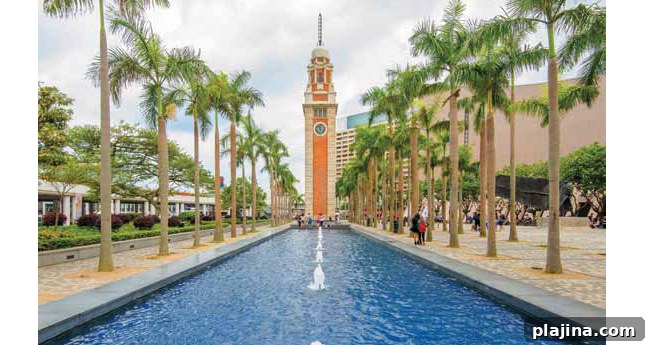
In Kowloon we pass the Hong Kong Space Museum, which consists of two wings: the east wing under the dome houses the Hall of Space Science and the Space Theatre, while the west wing contains the Hall of Astronomy. Nearby stands the historic 1915 Clock Tower, a remnant of the old Kowloon-Canton Railway terminus.
Kowloon is an arts hub. The Hong Kong Art Museum preserves Chinese cultural heritage and showcases local works, including Chinese paintings and calligraphy. Along the waterfront the Hong Kong Cultural Centre hosts the Hong Kong Philharmonic Orchestra and various performing ensembles.
Our guide points out the West Kowloon Cultural District, a developing arts precinct being built in phases. When complete it will include multiple performance venues, open piazzas and M+, a museum for 20th- and 21st-century visual culture, design and architecture.
Shopping is another Kowloon specialty. At the Jade Market we stroll past rows of jade pieces—green dragons, purple Buddhas and colorful pendants. Despite resisting the urge to buy, I haggle for two small dragon pendants and can’t resist taking them home.
Nearby the Yuen Po Bird Garden in Mongkok offers a different cultural scene: bamboo cages of songbirds line the stalls alongside bags of crickets and other live food for the birds. The market is as much a local institution as the more formal museums.
On the way to lunch we visit the Taoist Wong Tai Sin Temple, Sik Sik Yuen. We admire its nine-dragon wall and watch worshippers practice kau cim fortune-telling—lighting incense, kneeling before the altar and drawing fortune sticks from a bamboo cylinder. The 1921 temple is richly decorated with red pillars, blue friezes and colorful carvings.
For a quieter interlude we head to Nan Lian Garden in Diamond Hill, a peaceful landscape inspired by Tang Dynasty design. The garden’s Pavilion of Absolute Perfection, water features and carefully arranged plantings provide a soothing break. An on-site vegetarian restaurant continues a post-war culinary tradition that has lasted more than five decades.
Golden Pavilion in Nan Lian Garden at Diamond Hill, Kowloon © Ixuskmitl | Dreamstime.com
In the afternoon we shop along Nathan Road, Kowloon’s main thoroughfare, and browse the Ladies Market nearby. It’s a bargain hunter’s paradise with T-shirts, carvings, handbags, electronics and a wide array of souvenirs and accessories.
As evening falls we return to Tsim Sha Tsui and stroll Knutsford Terrace, an open-air row of restaurants and pubs. A stop for foot reflexology revives us before we dive into the bustle of the Temple Street Night Market—a vibrant maze of stalls selling clothes, trinkets and street food.
The next morning we ride the Peak Tram to Victoria Peak and Sky Terrace 428 for views over the city. Low clouds limit visibility on our visit, but glimpses of Victoria Harbour hint at the dramatic skyline that appears on clearer days.
Another vantage point is the Hong Kong Observation Wheel along the Central Waterfront Promenade. The promenade links key waterfront sights and, as development continues, will create an extended coastal walkway connecting ferry piers, parks and civic spaces.
We visit the Hong Kong Maritime Museum to learn about the city’s seafaring past, then walk through Central where double-decker trams—operated by Hong Kong Tramways since 1904—add color to the streetscape.
On Hong Kong Island’s southern shore we have lunch at Aberdeen aboard Jumbo Kingdom, a famous floating restaurant. A sudden shower sends us seeking shelter on the top deck until the sun returns and lights the harbor.
We drive past stately homes at Repulse Bay and head to Stanley Market, where a network of stalls sells Chinese-style paintings, brand-name clothing, jewelry and souvenirs in a lively, tourist-friendly setting.
In late afternoon the Star Ferry crosses Victoria Harbour back to Kowloon. From the International Commerce Centre’s sky100 observation deck we take in sweeping harbor views—an ideal vantage point as daylight fades.
Local cuisine © Deedreamstime | Dreamstime.com
For a dose of history and dining we visit the 1881 Heritage complex, housed in the former Hong Kong Marine Police headquarters. The restored site includes a boutique heritage hotel, dining venues and shops. We choose classic Chinese fare at Loong Toh Yuen and enjoy the combination of historic ambiance and contemporary service.
On our final day we attend races at Sha Tin Racecourse, a venue that hosted equestrian events during the 2008 Beijing Olympics. Betting on the races provides a fun, social way to engage with locals and adds excitement to the afternoon.
That evening we board Aqua Luna, a restored traditional Chinese junk, for a private cruise on Victoria Harbour. From the deck we toast with Champagne and enjoy hors d’oeuvres while the skyline unfolds around us.
We cap the trip with A Symphony of Lights, the nightly multimedia show that illuminates more than 40 buildings on both sides of the harbor. Afterwards we sample Central’s nightlife in Lan Kwai Fong, where bars, live music and late-night crowds create an energetic contrast to the trip’s calm tai chi beginning.
Hong Kong Info to Go
Hong Kong International Airport connects to about 180 destinations worldwide through more than 100 airlines, and ongoing expansion aims to accommodate growing traffic. The city’s extensive ferry network makes travel to Macau and nearby Chinese cities convenient. High-speed rail links and major infrastructure projects continue to improve regional connectivity.
Where to Stay in Hong Kong
InterContinental Hong Kong A large waterfront hotel with luxurious rooms and acclaimed dining options including SPOON by Alain Ducasse, Yan Toh Heen and The Steak House. 18 Salisbury Road, Tsim Sha Tsui.
Langham Place Mongkok A European-style hotel in the heart of Mongkok’s shopping district, featuring Michelin-recognized dining. 555 Shanghai St., Mongkok, Kowloon.
The Ritz-Carlton, Hong Kong Located on the upper floors of the city’s tallest building, the hotel offers panoramic views and the Ozone bar overlooking Victoria Harbour. International Commerce Centre, 1 Austin Road W., Kowloon.
Restaurants in Hong Kong
Hello Kitty Chinese Cuisine A themed dim sum restaurant offering colorful Cantonese dishes with an emphasis on healthier ingredients. Shop A–C, Lee Loy Mansion, Canton Road, Kowloon.
Ho Lee Fook A lively restaurant inspired by Hong Kong’s cha chaan tengs and vintage Chinatown flavors, known for inventive modern dishes. G/F No. 1-5 Elgin St., Central.
Pierre A fine-dining destination offering modern French cuisine with views of Victoria Harbour; located in the Mandarin Oriental. Mandarin Oriental, Hong Kong, Connaught Road, Central.