
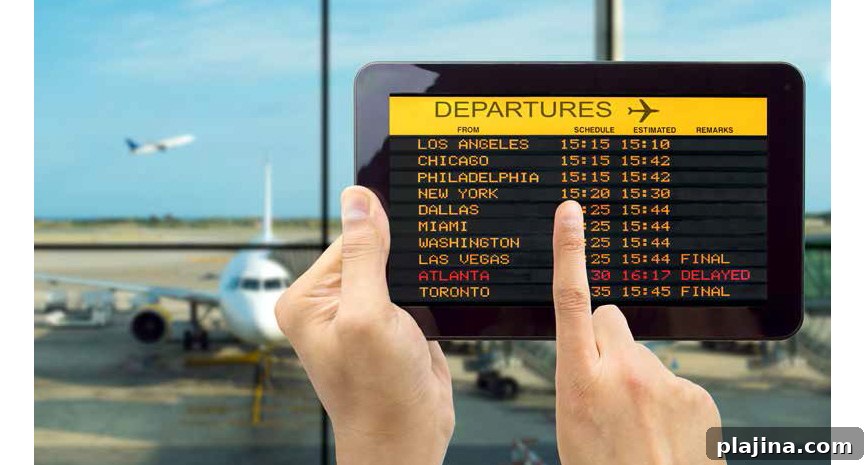
The marriage of technology and travel continues to accelerate, bringing new services and conveniences to travelers almost weekly. Airports have followed airlines, hotels, and rewards programs into the mobile app space: according to SITA’s 2016 Airport IT Trends Survey, 90 percent of airports worldwide are running major programs or trial projects around mobile apps.
Today, roughly half of airports prefer using mobile apps to distribute important notices such as flight disruptions; about 61 percent use email and phone, and 34 percent rely on social media. Beyond basic alerts, emerging technologies allow airport apps to become context- and location-aware, delivering help to passengers in real time. Seventy-four percent of airports expect to trial such features within five years, and 78 percent anticipate trials within ten years.
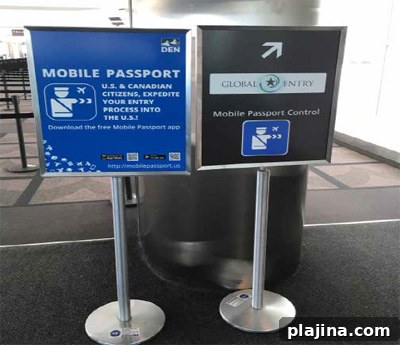
Denver International Airport is the first to partner with the Mobile Passport Control app to help travelers breeze through customs. © DENVER INTERNATIONAL AIRPORT
Airports are not only designing apps to improve passenger experience; they are also looking to monetize them. By 2019, 84 percent of airports planned to offer purchasing capabilities in their apps. Twenty-nine percent intended to support purchases via smartwatches, and about 34 percent were enabling alternative payment methods such as Apple Pay.
“Mobile investments continue to attract a good portion of IT spending, and there are strong indications that airports are actively looking to recoup this investment by evolving their apps beyond check-in and basic flight information toward revenue-generating services,” said Barbara Dalibard, CEO of SITA, and Angela Gittens, Director General of Airports Council International.
Dallas/Fort Worth International Airport (DFW) is one example of an airport expanding app features to drive revenue. The DFW app lets travelers search more than 200 shops, dining options, and services from a mobile device, and it can display spending options within a five-minute walk of any gate. Since its late-2015 debut, the app has expanded from flight info, weather, maps, dining, shopping, and parking to include improved search, intuitive wayfinding, support for more than six languages, and an Apple Watch app.
“More than 90 percent of DFW passengers carry smartphones and want travel information instantly. The DFW Mobile App and our Apple Watch app allow us to provide customers real-time information tailored to their journey and are another example of how we leverage technology to provide an experience that is warm, welcoming, and efficient,” said Sean Donohue, CEO of DFW Airport.
Hartsfield–Jackson Atlanta International Airport followed with iFlyATL in spring 2016. The app provides real-time parking availability, wait times, gate assignments, flight times, and listings for more than 300 dining and shopping options. It also highlights airport art and galleries. A standout feature lets travelers use a photo tool to locate their parked car easily after returning to the airport.
Outside the U.S., airports in Asia show strong appetite for mobile innovation. Bengaluru International Airport released an app that uses Google Indoor Maps — the first in India to do so — and offers real-time flight tracking, gate updates, one-touch Wi‑Fi connection, and location-based notifications. The app also delivers exclusive retail and dining offers to users.
“At Bangalore International Airport Limited, our aim is to transform our customers’ airport experience,” said Sanjay Reddy, Managing Director of BIAL. “Every new digital introduction will combine innovation and emotion because we strongly believe digital is more than just technology. The BLR Airport app is an example of how we are leveraging technology to make travel through the airport simple and easy.”
As air travel grows across Asia, many airports are adopting similar mobile solutions to reduce congestion. In China, in-app flight alerts, airport purchases, and cashless payments are already common at many airports, with expectations that major airports will widely support these features by 2019. Airports are also increasingly promoting in-app purchases and offers via social media.
Still, travelers and industry experts question whether downloading an app for every airport is practical. Business and leisure travelers frequently pass through multiple airports, and multiple apps can become burdensome. Cormac Corrigan, cofounder of CJ Ignition, and Mark Lenahan, an independent travel technology consultant, studied airport app profitability and user behavior.
The most common feature airports provide is flight-status notifications, offered by 46 percent of airports. But airline apps already deliver the same alerts and are downloaded far more often: airline apps are downloaded about 14 times more frequently than airport apps. With major airlines carrying roughly 1.5 billion passengers annually, their apps see about 117 million downloads. Large airports serving around 1.3 billion passengers experience only about 7.2 million downloads.
The study also questions whether app development budgets are well spent when user retention is low. Across e-commerce, travel, and utility apps, only about 3.3 percent of users remain active 30 days after installation. “The big challenge for airports is that, as a passenger, you are essentially anonymous to the airport. The airlines and agencies know your itinerary, but airports do not,” Corrigan and Lenahan note. Time spent in the airport is short relative to the entire journey, and airlines already maintain a strong, established relationship with passengers throughout the customer journey.
Despite retention concerns, the study acknowledges airport apps’ revenue potential. Aeronautical revenue (fees charged to airlines) has been flat or declining for many airports, while retail and commercial revenue grows as passenger numbers increase. That trend explains why many airport apps are designed to drive purchases.
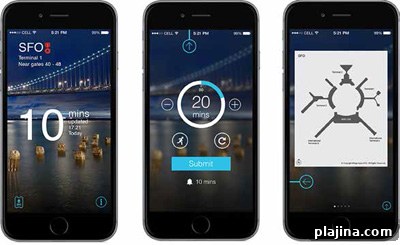
MiFlight app gives passengers estimated security line wait times. © MIFLIGHT
Airports also face competition from third-party apps that consolidate airport and flight information so travelers don’t need a separate app for each airport. Apps like GateGuru and FlightTrack keep users informed about gate changes, delays, and amenities, while MiFlight crowdsources security wait-time estimates from other travelers, which some users find more accurate.
Rather than compete head-on, many airports are partnering with third-party services. Concession-focused platforms such as Airport Sherpa deliver food from airport restaurants to gates, and Grab allows travelers to pre-order and pick up meals — the service is available at more than a dozen North American airports and continues to expand.
Denver International Airport partnered with the Mobile Passport Control app, the first authorized app to accelerate processing for U.S. and Canadian citizens. Travelers submit passport details and a customs declaration via smartphone, reducing wait times in international arrivals. Denver installed specialized scanners that read QR codes generated by the app, supplying customs officers with required information. The airport estimates 50–70 percent of arriving international travelers may be eligible to use the app.
Despite external competition and mixed opinions on retention and profitability, airports worldwide plan to continue launching and enhancing mobile apps. As travel technology evolves to make journeys smoother, more convenient, and more responsive to individual needs in real time, airports will keep exploring new ways to use apps both to improve passenger experience and to generate revenue.