
The intersection of ecotourism and community-based tourism creates a powerful partnership that benefits both the people and wildlife that share a place.
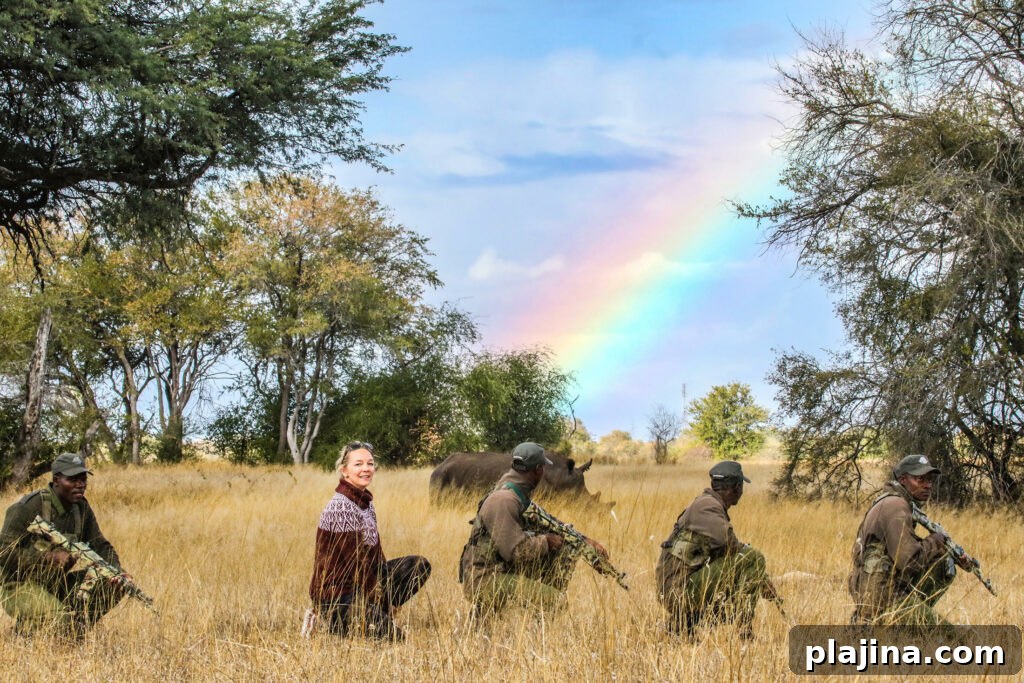
In 2022 a landmark rhino conservation project began at the edge of Zimbabwe’s largest national park, setting a precedent for protecting a species that was heavily poached from this area in the early 2000s. The initiative not only focuses on recovering the white rhino population but also ensures tourism revenue flows directly to the communities living alongside these animals. In late June of the following year, two white rhinos, Thuza and Kusasa, cautiously emerged from the holding boma where they had spent five weeks acclimating and began exploring the plains around southeastern Hwange National Park — a momentous milestone for the region.
“For 20 years we haven’t had white rhino in this location,” said Mark Butcher, managing director of Imvelo Safari Lodges, a principal partner in the Community Rhino Conservation Initiative (CRCI), which is charged with returning rhinos to the Hwange area. “They’re such an important part of the plains of southeast Hwange; it’s just fantastic to see.”
© Imvelo Safari Lodges
The Community Rhino Conservation Initiative represents the first time in Zimbabwe that rhinos have been translocated to community-managed land. There, they are protected and monitored by a locally recruited community protection unit called COBRAS, made up of villagers from surrounding communities. This model emphasizes local stewardship, giving residents a direct role in guarding and benefiting from wildlife recovery.
Visitors who stay at Imvelo’s Camelthorn Lodge, which sits on land belonging to Ngamo village, can walk close to these magnificent animals accompanied by COBRAS rangers. Guests are informed that revenue from their stays supports rhino protection and funds community projects — from drilling boreholes to provide fresh water and supplying lunches for schoolchildren to upgrading local healthcare facilities.
“Community-based tourism is incredibly important, as local people not only benefit economically but also gain intangible benefits such as pride in their home and the power to make decisions that reflect their culture and their community,” said Casey Hanisko, president of the Adventure Travel Trade Association. When communities share ownership over conservation efforts and receive direct returns from tourism, outcomes improve for both people and wildlife.
Plans to expand the sanctuary and introduce more rhinos to neighboring community land in 2023 will create additional jobs for men and women across the region. Residents of Ngamo village and surrounding areas are already seeing tangible benefits from community-based tourism and the rhino reintroduction. “I see a lot of development coming into my village,” said Vusa Ncube, 33, an Imvelo guide who had never seen a rhino before joining the CRCI. “It’s a very, very big thing for us, a very special thing for me. Not only to see these animals back here but because my kids have better social services than what I had growing up.”