
As the ferry leaves port, the sounds and fumes of Dakar give way to the cooling sea breeze. After several days immersed in Senegal’s vibrant, colorful and dusty capital, my short crossing to a nearby island promises a quieter pace — and an emotionally demanding visit. I am heading to Gorée, an island long associated with the Atlantic slave trade.
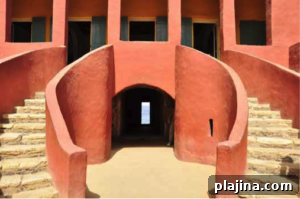
© SMANDY | DREAMSTIME.COM
Over centuries, the Portuguese, Dutch, British and French fortified this small island, and many of the battlements and colonial buildings remain. Narrow cobbled streets wind between the weathered facades, but most visitors make a beeline for a single, stark monument: the House of Slaves. Inside are cramped, dim cells where captives were once held, and a narrow stone passage that leads to a bright rectangle at the far end — the Door of No Return.
Today people stand silently before that doorway, imagining the millions of Africans forcibly transported across the Atlantic and never returned. For many, Gorée is a place of mourning and of pilgrimage; descendants of those taken away sometimes come back to remember and to reconnect. While some historians debate the precise scale of Gorée’s role in the slave trade, the island’s atmosphere and memorials make it an important and moving stop for anyone visiting Dakar.
Dakar itself sits on an arrow-shaped peninsula that juts into the Atlantic — the westernmost point of the African mainland. The markets are exhilarating and chaotic: streets filled with people, vehicles and occasional livestock, stalls piled high with fabrics, fish and produce. Basic French will get you by in many places, but if you don’t speak the language it’s wise to hire a guide or translator, since English is not widely used here.
At sunset I find myself beneath the African Renaissance Monument, a 160-foot copper sculpture of a man, woman and child on a hill facing the ocean. Built in 2010 by North Korean engineers and funded at significant cost, the monument has provoked criticism over taste and expense. Yet regardless of opinion, it stands as a striking symbol of a city that is asserting its identity and looking toward new horizons.