
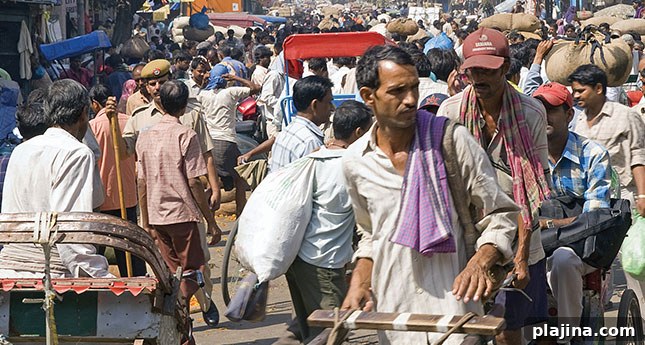
Two things strike you immediately upon arriving in Delhi: chaos and color.
As the eighth-largest metropolis in the world, Delhi’s density and scale make disorder almost inevitable. With a city proper population of roughly 12.2 million and many more in the metropolitan periphery, traffic congestion is a persistent reality. At peak times the roads can grind to a halt for hours, rivaling — and often surpassing — the worst congestion seen in other major cities.
Old Delhi, founded on pathways that date back to the second millennium B.C., remains a maze of narrow lanes and bustling bazaars. Amid the confusion lies a unique and fascinating blend of cultures: bicycle rickshaws piloted by turbaned men, the mingled aromas of spices and smoke, tiny stalls hung with baubles and bangles, and open-air clinics squeezed between mechanic shops. Everywhere you look, color dominates.
The dyes used for fabric here seem to intensify hues, making saris in neon pinks and electric blues appear almost surreal as they flash by. The vibrancy of the streets can feel as if you’ve stepped onto the set of a film — evocative, dramatic and endlessly photogenic.
Delhiites navigate the city by bus, auto rickshaw and the expanding Delhi Metro. Large-scale construction tied to the Commonwealth Games brought further disruption but also promises long-term improvements. The Games Village being built along the east bank of the Yamuna River will house thousands of athletes and officials and sits near landmarks such as the Baha’i Lotus Temple, Humayun’s Tomb, Akshardham Temple and India Gate. Major investments in flyovers, beautification projects and metro expansion account for a significant portion of the development budget and aim to modernize the city’s infrastructure.
Hosting the Commonwealth Games marks a milestone for Delhi as a sports and international destination. In preparation the city has undergone rapid transformation, including transportation upgrades and urban renewal projects. These efforts reflect broader ambitions to elevate Delhi’s global profile and catalyze long-term economic growth.
Delhi has a distinct political status, with its own legislative assembly, lieutenant governor, council of ministers and chief minister. Following the Indian Rebellion of 1857, the city fell under direct British rule, and in 1911 King George V shifted India’s capital from Calcutta to Delhi. The city remains an influential center for national politics, and historically supports major political parties such as the Indian National Congress.
Even in the more planned “New” Delhi — laid out in the 1920s with broader boulevards — traffic can be unpredictable. Events like parades sometimes take place late at night when the streets are least congested, a practical solution to navigating the busy cityscape.
Despite gridlock, Delhi is a cosmopolitan, multicultural metropolis with a growing middle class, an average income that reflects rising standards, and a low registered unemployment figure. A thriving technology and telecommunications sector, robust media presence and diverse service industries all contribute to a dynamic economy. The city published numerous newspapers in multiple languages and serves as the primary commercial hub of northern India. Delhi also ranks among the world’s more expensive office markets, reflecting robust demand for premium commercial space.
Beyond commerce, Delhi’s historic and cultural attractions — including multiple UNESCO World Heritage sites — make it well worth exploring. Three such sites stand out for their architectural and historical significance.
Diversion
Begin with the Red Fort, a 17th-century complex built by Mughal emperor Shah Jahan. A synthesis of Persian, Indian and European design influences, the fort served as the Mughal capital until 1857 and remains a focal point for national events; the prime minister addresses the nation from here each Independence Day. In the evenings a sound-and-light show tells the fort’s history for visitors.
Qutub Minar, a 238-foot minaret, is the tallest free-standing brick minaret in the world and stands within a park that holds several other historic ruins. Humayun’s Tomb, completed in 1570, was the first significant garden tomb on the subcontinent and served as an architectural inspiration for later monuments, including the Taj Mahal.
The Baha’i Lotus Temple, completed in 1986 and shaped like a blooming lotus, welcomes visitors of all faiths to observe services in a serene setting. For many travelers, a trip to Agra to see the Taj Mahal — a few hours by road or train — remains an essential excursion; its beauty is even more striking in person than in photographs.
Nature and family attractions include the National Zoological Park, one of Asia’s largest zoos, housing a wide variety of species from across the globe. The zoo offers visitors the opportunity to see animals such as lions, tigers and elephants in expansive enclosures.
For shopping, Connaught Place (officially Rajiv Chowk) in New Delhi is a premier district built in the British colonial era, offering an array of shops and dining options and serving as a central commercial and social hub.
Delhi’s nightlife is lively and varied. Popular spots range from intimate basement bars that showcase rock and eclectic music to larger hotel-based lounges that draw crowds with live DJs and themed nights. Many venues require modest cover charges and often offer special promotions on select evenings.
Info To Go
Indira Gandhi International Airport (DEL) lies about 14 miles from central Delhi. The most convenient and safest way into the city is to arrange transport through your hotel in advance; a taxi to most hotels typically costs no more than about $12. While buses are available, many travelers prefer taxis or metro connections. The Delhi Metro continues to expand to improve connectivity across the city.
Just The Facts
Time Zone: GMT+5.5 (standard)
Phone Code: 91 (India), 11 (Delhi)
Currency: Indian rupee
Entry/Exit Requirements: U.S. citizens require a valid passport and a valid Indian visa obtained in advance.
Official Language: Hindustani is widely spoken; English is the principal written and business language in many contexts.
Key industries: Information technology, telecommunications, hotels, banking, media and tourism, construction, power, health and community services, real estate and retail.
Lodging
Le Méridien New Delhi
Located near the city center and within easy reach of government and cultural sites, this hotel features a spa that blends traditional Ayurvedic therapies with modern treatments. Windsor Place, tel 91 11 2371 0101
Shangri-La’s Eros Hotel, New Delhi
An upscale option set amid landscaped gardens in the government district, offering refined service, fine dining and strong security. 19 Ashoka Road, Connaught Place, tel 91 11 4119 1919
Taj Palace Hotel, New Delhi
A luxury hotel set on expansive grounds within the Diplomatic Enclave, known for exceptional hospitality and dining. Sardar Patel Marg, Chanakyapuri, tel 91 11 2611 0202
Dining
Bukhara
A celebrated restaurant known for its rustic tandoor dishes and slow-roasted specialties. Reservations are recommended. ITC Maurya, Sardar Patel Marg, Diplomatic Enclave, Chanakyapuri, tel 91 11 2611 2233
Khan Chacha
A bustling market eatery popular with locals for its roomali rotis, mutton kebabs, chicken tikkas and aloo rolls. Flat 50, Lodi Estate, Khan Market, tel 91 11 4368 0449
Punjabi By Nature
A well-regarded Punjabi restaurant known for its flavorful street-style snacks, including gol guppas. Raja Garden, MGF City Square Mall, tel 91 11 4717 8000
Checking In With Vinay Maheshwary
Director, Tourism International
What Are The Strongest Businesses In Delhi Today?
Service industries, information technology and business process outsourcing are particularly strong. Widespread English education helps the city attract international business, and contact centers provide significant employment opportunities for young people.
What Is The Current Economic And Development Climate In Delhi?
Delhi is experiencing economic growth driven by a thriving middle class and rising consumer demand. Major infrastructure projects include metro expansions and new flyovers to ease traffic and support large international events. Though construction can be disruptive, long-term benefits include improved transit, new hotels and upgraded public spaces that help position Delhi as a global city.
How Is The Tourism Industry Faring In Delhi?
Tourism faced recent challenges from global economic conditions and extreme weather, but prospects are improving as infrastructure and promotional efforts accelerate. The city anticipates a rebound as travel resumes and events draw visitors.
What Is Your Favorite Site In Delhi?
Karol Bagh is a bustling shopping district filled with hundreds of shops selling clothing, electronics, jewelry and a wide variety of goods. It’s a lively, authentic place to experience local commerce and sample diverse cuisines.