
Rosé used to be thought of as a seasonal wine for warm-weather sipping, but that idea is outdated. Retailers, sommeliers and wine lovers have embraced rosé year-round because it pairs exceptionally well with food and is simply enjoyable on its own. A well-crafted, dry rosé can accompany a wide variety of dishes — essentially anything except the heaviest, darkest meats — making it one of the most versatile wines to have on hand.
Contrary to a common myth, rosé is not made by blending red and white wines. True rosé is produced solely from red grape varieties. During winemaking, juice, skins and seeds ferment together; once the liquid reaches the desired pink hue, the winemaker separates the juice from the skins so it does not develop into a full red wine. Fermentation then continues without the skins, leaving a wine in a range of pink shades.
Those shades can range from delicate salmon to coral and deeper pinks, and the flavor profile varies as well. Below are several rosés that demonstrate the diversity and appeal of this style.
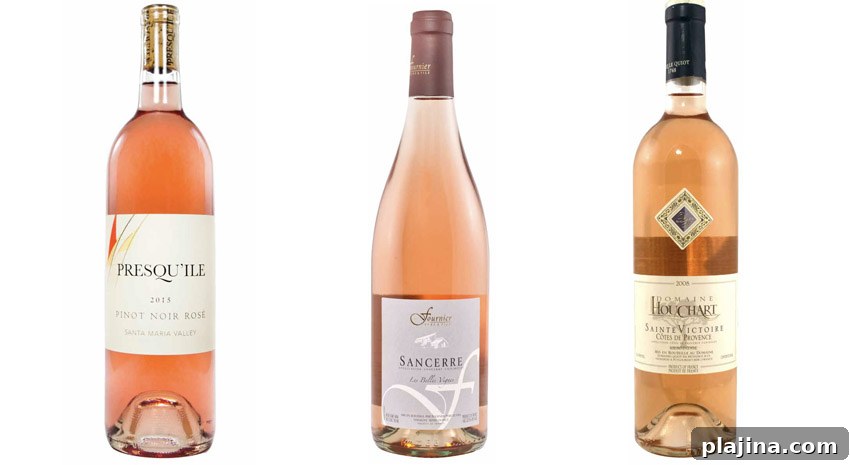
Domaine Houchart Sainte Victoire Côtes de Provence 2016 ($18) is a balanced blend of four grape varieties that offers a pretty pink-coral color, a light-to-medium body and an intensely fruity aroma with a long finish. Crisp and mildly spicy, this French rosé fills the mouth and leaves a satisfying impression.
Fournier Père & Fils Sancerre Les Belles Vignes 2016 ($28), made entirely from Pinot Noir in France’s Loire Valley, shows a salmon-pink hue and delivers an elegant, citrus-driven profile. Bright and refined, this rosé features a pronounced, flavorful nose.
Presqu’ile Pinot Noir Rosé 2015 ($22), from California’s Santa Maria Valley, is composed 100 percent of Pinot Noir and offers a rich, fruity character with lively acidity and depth. It is vibrant and zesty, with clear notes of ripe strawberry and raspberry.
Decoy Rosé 2016 ($20) is an aromatic, salmon-toned wine from California made from a lively, well-balanced blend of Pinot Noir and Syrah. Light-bodied with bright acidity, it presents floral and strawberry aromas and a refreshing palate presence.
These examples illustrate how rosé spans a spectrum of styles—from crisp and citrusy to rich and fruity—making it a valuable and versatile choice for both everyday meals and special occasions. Whether you prefer a delicate, food-friendly bottle or a more robust, fruit-forward expression, there is a rosé suited to almost every dish and palate.