
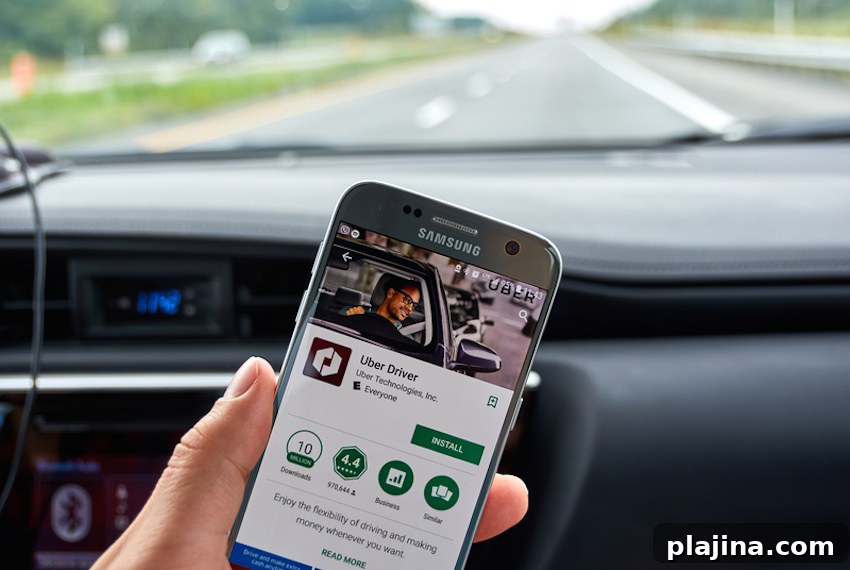
Opening the Uber app will soon offer more than just the option to call a private driver. Through several new partnerships, Uber is expanding its platform to include a range of transit services so riders can choose the best way to travel from point A to point B.
One of the new options focuses on environmentally friendly, short-distance trips: dockless electric bikes. Launched earlier this year in San Francisco, the bike service—operated under the JUMP brand—lets users locate and unlock electric bicycles directly from the Uber app. These bikes require no fixed docking stations, making them a flexible choice for quick errands, last-mile connections and congested urban commutes. After the initial San Francisco rollout, JUMP bikes were also introduced in Washington, D.C., providing residents with a faster and greener way to navigate busy streets, particularly during peak hours.
For longer drives that require more independence, Uber’s “Uber Rent” offering will let users book short-term car rentals through the same app. Developed in partnership with Getaround, a car-sharing platform, this feature enables riders to reserve vehicles that come with insurance and fuel included in the quoted price. The collaboration simplifies the rental process by keeping booking, pickup details and payment inside the Uber ecosystem. As an introductory incentive, Uber Rent will allow a first rental of up to 10 hours at no cost to the user, making it attractive for one-day trips or errands that go beyond the range of typical ride-hailing.
To better integrate with city transit systems, Uber has also teamed up with Masabi, a company that provides mobile ticketing for public transportation. Through this integration, riders in participating cities will be able to buy subway, bus and metro tickets within the Uber app rather than switching between separate applications. Masabi’s ticketing technology is already active in several major metropolitan areas, and adding it to Uber’s platform aims to streamline multi-modal journeys: users can combine a bike ride, a short rental or a rideshare with public transit ticketing in a single, cohesive experience.
These additions signal Uber’s shift toward becoming a broader mobility platform rather than purely a ride-hailing service. By bundling dockless e-bikes, short-term rentals and integrated public transit tickets into the existing app, Uber is offering more choices for riders with different needs, budgets and environmental preferences. The flexibility benefits commuters looking to avoid traffic, travelers who need a temporary car for the day, and everyday users who rely on public transit but want the convenience of purchasing tickets on their phones.
Operational details, such as the precise availability of each service and the list of supported cities, vary by region. Users should check the Uber app for current options in their area. As Uber rolls out these features more broadly, the company appears to be positioning itself as a one-stop mobility marketplace that supports multimodal trips—helping people decide whether to bike, rent a car, catch a train, or call a ride depending on time, cost and convenience.