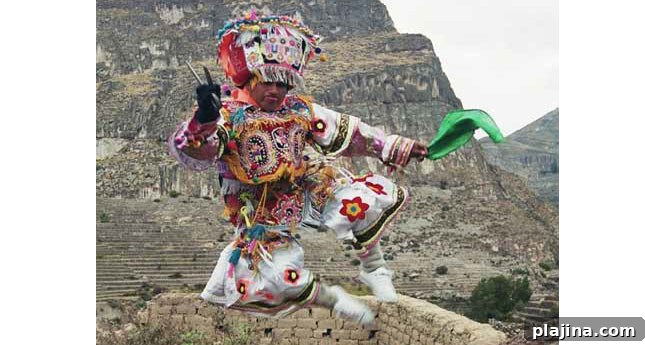
In a remote village high in the Peruvian Andes, a practice unfolds that would surprise anyone raised on conventional safety rules. From childhood many of us hear a simple, absolute warning: “Don’t play with scissors.” Yet here, in the village square, that rule is turned upside down.
Two men stand before a lively crowd, competing for attention and applause. They are not merely holding scissors — they are dancing with them. They leap, spin and cartwheel, wielding the blades as part of a daring, athletic performance accompanied by live music. Performed openly in daylight, the spectacle seems to flout common sense and modern safety norms.
Regular readers of this column understand that cultural context matters. What may look reckless to outsiders often has deep historical and social roots. In this case, the activity is the Danza de las Tijeras, the Peruvian scissors dance, recognized by UNESCO as Intangible Cultural Heritage. That designation acknowledges the dance’s social significance and helps protect its practice, even when it appears startling to onlookers.
For the Quechua communities of the highlands, the scissors dance is not mere exhibitionism; it is a defining cultural ritual combining athletic contest, spiritual expression and artistic skill. Dancers train to perform intricate, demanding moves while maintaining rhythm and balance, and competitions traditionally lasted an entire day. The ritual’s intensity is part of its power: dancers often appear trance-like, focused and unflinching as they cut arcs through the air with a single hand.
Local folklore adds another layer to the performance. According to tradition, dancers who don the elaborate costumes enter a temporary pact with non-Christian spiritual forces. While wearing this regalia they are said to be barred from entering churches, and the pact is believed to end only when the costume is removed. This element links the dance to a broader history of resistance and cultural survival.
Indeed, the scissors dance carries echoes of the Andes’ encounter with Spanish conquest five centuries ago. At a time when indigenous beliefs and practices were suppressed, the ritual served as a form of spiritual and symbolic defiance. Dancers claimed access to extraordinary strength and endurance by giving their bodies over to otherworldly influence. Accounts of past performances describe extreme demonstrations — lying on beds of broken glass or piercing the flesh with knives and nails — acts meant to show mastery over pain and fear.
Over time, as Christianity spread through the Andes, the scissors dance was gradually recontextualized and incorporated into communal celebrations, including Easter and Christmas festivals. Despite this integration, the ritual retained its competitive edge and its emphasis on daring feats.
In the internet age, remote traditions travel quickly. Video platforms bring footage of these performances into bedrooms and living rooms around the world, exposing young viewers to practices that challenge familiar safety rules. To some, seeing the UNESCO designation beside such daring acts can make them seem validated, even glamorous.
Still, parents and caregivers continue to rely on everyday authority to set boundaries. Across cultures, a simple, firm response often settles the matter where explanations and cultural arguments fail. For many families, a clear household rule removes doubt and risk without undermining respect for other communities’ traditions.
Four short words capture that universal parental authority: “Not in this house.”