
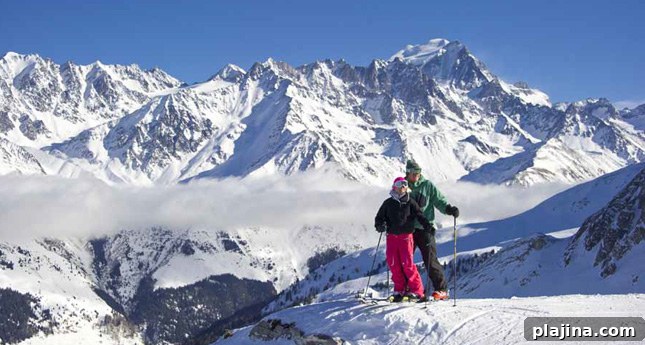
The story of how winter tourism took hold in Switzerland is well known. In 1864, hotelier Johannes Badrutt, proprietor of the former Pension Feller, famously invited his English summer guests to try wintering at his St. Moritz property. So confident was he that they would enjoy the experience that he promised to cover their stay and travel if they did not. More than 150 years later, the Swiss Alps remain one of the world’s most coveted winter destinations, where challenging slopes and high-end amenities combine to create an iconic ski-holiday experience.
High in the Engadin Valley in southeastern Switzerland, St. Moritz sits more than a mile above sea level. Its ski area is divided into four sectors and linked by nearly 60 lifts, offering a winning mix of reliable snowfall and abundant sunshine — factors that helped make it the birthplace of modern winter tourism. The resort’s reputation has long attracted visitors from around the world, from classic film stars to contemporary celebrities.
Corviglia, the resort mountain above St. Moritz, is the area’s most frequented skiing zone and is reachable by funicular and cable car. Most runs there cater to intermediate skiers, though beginner slopes and some black runs provide variety for different skill levels. The mountain is often bustling with stylish skiers and snowboarders gliding across well-groomed snow. Higher up, Piz Nair — rising above 10,000 feet and second in height in the Engadin Valley after Corvatsch — offers tougher back bowls and off-piste terrain for confident skiers and boarders. A full day exploring these slopes rewards visitors with sweeping Alpine panoramas and pristine winter scenery.
Badrutt’s Palace Hotel © Badrutt’s Palace Hotel
Off the mountain, St. Moritz’s appeal continues. The town can be as lively as the slopes, with plenty to do even for visitors who choose not to ski. Its streets, shopping, and cultural offerings fill days with engaging options.
Caspar Badrutt, Johannes’s son, opened Badrutt’s Palace Hotel in 1896. The hotel remains a symbol of St. Moritz’s glamour, regularly hosting high-profile guests who come for its luxurious rooms, renowned restaurants, and nightlife. King’s Club, the hotel’s well-known night venue, is popular for its energetic atmosphere, varied clientele, and DJ-driven soundtrack.
Glacier 3000 ski gondola climbing the mountain © David Watts Jr. | Dreamstime.com
Across Switzerland, the idea of a ski resort as more than a place to ski is widespread. West of St. Moritz, Gstaad blends active mountain pursuits with refined European luxury. Newer properties such as The Alpina Gstaad deliver red-carpet service and top-tier spa facilities, while an extensive network of pistes and cross-country tracks keeps visitors engaged. A ride up to Glacier 3000 from Gstaad, a 45-minute journey, rewards travelers with expansive views that include many of the region’s most famous peaks.
W Verbier © W Hotels
About 60 miles to the south, Verbier anchors the 4 Vallées ski region. Where St. Moritz and Gstaad are steeped in classic alpine elegance, Verbier pulses with a younger, livelier energy. The resort is as famous for its après-ski and nightlife as for its varied terrain. Beginners typically train on nursery slopes, while advanced skiers head to Mont Fort for steep, often mogulled lines and off-piste opportunities. From Mont Fort’s 10,900-foot vantage, skiers take in dramatic views as they descend toward the valley.
Verbier offers a mix of chic chalets and boutique hotels. The W Verbier, a mountain outpost introduced in recent years, combines contemporary design with chalet comforts and practical services like lift pass packages and a ski-in bar. When the lifts stop turning, the resort’s evening scene comes alive: bars and clubs draw crowds late into the night, creating a lively social atmosphere that complements the daytime mountain adventures.
Switzerland Info to Go
International travelers typically arrive in Switzerland through major airports such as Geneva (GVA) — ideal for resorts in the French-speaking regions including Valais — or Zürich (ZRH) for German-speaking areas like St. Moritz. From these hubs, visitors can choose to drive or rely on Switzerland’s punctual and scenic train network to reach mountain destinations. Trains offer comfortable travel and memorable views as they traverse bridges, tunnels, and glaciers.
Where to Stay in Switzerland
The Alpina Gstaad This chalet-style, 56-room hotel represents a high-end investment in Alpine hospitality, notable for its Six Senses Spa and luxurious facilities. Alpinastrasse 23, Gstaad $$$$
Badrutt’s Palace Hotel An enduring icon on the shores of St. Moritz Lake, this historic palace has hosted celebrities and royalty for generations, offering classic luxury and a central location. Via Serlas 27, St. Moritz $$$$
W Verbier A ski-in/ski-out hotel that blends contemporary urban design with mountain comforts, featuring elevated dining options and modern amenities. Rue de Médran 70, Verbier $$$$
Restaurants in Switzerland
Chesa Veglia Housed in a 17th-century farmhouse — the town’s oldest building — Chesa Veglia contains several dining options. Grill Chadafö specializes in expertly prepared meats, from veal to venison. Via Veglia 2, St. Moritz $$$
La Cordée Restaurant Located in La Cordée des Alpes hotel, this restaurant focuses on Italian-influenced dishes with international touches. Dining at the bar provides a front-row view of the kitchen. Route du Centre Sportif 24, Verbier $$$
Restaurant Sommet Inside The Alpina Gstaad, Chef Marcus G. Lindner’s Michelin-starred restaurant showcases inventive modern European cuisine and an extensive wine list. Alpinastrasse 23, Gstaad $$$$