
“There is no reason why a woman cannot go wherever a man goes, and further. If a woman be fond of travel, if she has love of the strange, the mysterious and the lost, there is nothing that will keep her at home…” — Harriett Chalmers Adams, 1920.
When I boarded a Greyhound bus alone from Sydney to Darwin in my early 20s, I had no idea who Harriett Chalmers Adams was. I had only an urge to travel and a willingness to take chances. I answered an ad at a travel center posted by a solo Swiss woman with a car. We spent a month driving down the west coast to Perth, camping or sleeping in the backseat most nights—a modern, improvised Thelma and Louise. That trip was the start of many solo journeys that followed, including nearly a year traveling in Southeast Asia and five months backpacking across East Africa, where I climbed Mount Kilimanjaro with a local guide.
I hadn’t heard of Adams then, but I have long since recognized the spirit she embodies: fearless curiosity and a determination to see the world on one’s own terms. Many pioneering women traveled long before commercial flights, modern gear, or translation apps—often relying on horses, trains and boats. Their stories are a powerful reminder that travel has always been fuel for courage and change.
Born in California in 1875, Harriett Chalmers Adams covered more than 100,000 miles in South America, often traveling by horseback, train and boat. A nearly three-year journey with her husband in the early 1900s launched her career: she lectured for National Geographic and went on to write over 20 articles for the magazine during a 30-year career. Adams helped found the Society of Women Geographers and, during World War I, served as the only female war correspondent for Harper’s Magazine in Europe, reporting from the trenches on the French front lines.
Adams pursued an unusual goal: to visit every country that was, or had been, a Spanish colony. She retraced Christopher Columbus’s route across the Americas and met with around 20 indigenous tribes—likely the first white woman to do so, according to contemporary accounts. She later followed Ferdinand Magellan’s route from Spain to the Philippines, famously saying, “I’ve never found my sex a hinderance; never faced a difficulty which a woman, as well as a man, could not surmount; never felt a fear of danger; never lacked courage to protect myself.”
Women explorers far precede Adams. The Icelandic voyager Gudrid Thorbjarnardóttir, known as the “Far-Travelled,” likely crossed the Atlantic to North America around the year 1000 and traversed Europe on foot more than once, as recounted in the Old Norse sagas. Jeanne Baret, a French botanist born in 1740, became the first woman to circumnavigate the globe in 1766—though she traveled disguised as a man because French law forbade women from being on naval vessels. Her contributions to botany were essential to the expedition’s success.
Austrian Ida Laura Pfeiffer, called the “World’s First Solo Female Travel Writer,” traveled extensively between 1846 and 1855 through Southeast Asia, the Americas, the Middle East and Africa. She was a member of the Berlin and Paris geographical societies and one of the first women whose travel journals were translated into multiple languages.
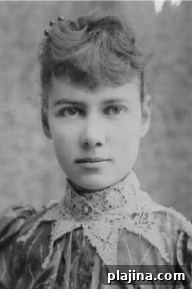
PHOTO: © LIBRARY OF CONGRESS, PRINTS & PHOTOGRAPHS DIVISION;
American journalist Elizabeth Cochran Seaman, known as Nellie Bly, dramatically shortened the imagined limits of the globe with her 1889–1890 trip around the world in 72 days. Traveling by steamship, train, horse and rickshaw, Bly covered roughly 24,899 miles and wrote the book Around the World in Seventy-Two Days, cementing a record and inspiring generations of women adventurers.
Freya Stark explored remote parts of the Middle East in the early 20th century, guided by the credo that knowledge is best gained through firsthand experience. She traveled across Lebanon, Persia and northern Yemen, among other places, and produced influential books such as The Valleys of the Assassins and Letters from Syria. Stark knew multiple languages and remained an active writer well into old age.
© RECORDS OF THE U.S. COAST GUARD, RG 26, NAID 6708612
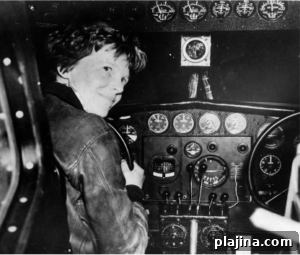
Pioneers of flight include Amelia Earhart, the first woman to fly solo across the Atlantic in 1932. Earhart worked various jobs to pay for flying lessons and purchased a yellow biplane she called The Canary. Her records for altitude and speed broke barriers, though her attempt to circumnavigate the globe in 1937 ended in the mysterious disappearance over the Pacific. Bessie Coleman, who earned her pilot’s license in France in 1921 because U.S. flight schools barred her for race and gender, became the first African American and Native American woman pilot and thrilled crowds with aerobatic performances.
Earlier aviation milestones include French balloonist Sophie Blanchard, the first professional female balloonist who performed for Napoleon, and the space achievements of Valentina Tereshkova, the first woman in space in 1962, and Sally Ride, the first American woman in space in 1983.
On land, Annie Londonderry (Annie Cohen Kopchovsky) is credited as the first woman to bicycle around the world, setting out from Boston in 1894 and completing a 15-month odyssey that included ocean crossings and extended cycling segments. Irish cyclist and author Dervla Murphy set out in 1963 on a seven-month solo bicycle trip from Ireland to India and later published Full Tilt and more than two dozen books.
Other notable firsts include Eva Dickson, the first woman to cross the Sahara by car in 1932, and Krystyna Chojnowska-Liskiewicz, who in 1978 became the first woman to sail solo around the world. Junko Tabei of Japan became the first woman to summit Mount Everest in 1975 and later completed the Seven Summits, surviving an avalanche and continuing her conservation work to protect high-alpine environments. Emma “Grandma” Gatewood, at 67, was the first woman to hike the Appalachian Trail alone in a single season and later completed the trail three times.
© FEATUREFLASH | DREAMSTIME.COM
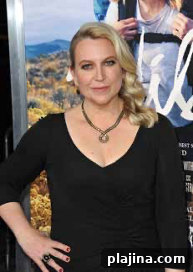
Contemporary explorers continue the tradition. Cheryl Strayed’s memoir Wild recounts her solo 1,100-mile hike on the Pacific Crest Trail, a transformative journey undertaken in 1995. Swiss adventurer Sarah Marquis has completed extraordinary solo treks, including an 8,700-mile walk across the Australian Outback and a multi-year trek from Siberia to Australia; National Geographic honored her as Adventurer of the Year in 2014.
New Zealand explorer Helen Thayer, named one of the most important explorers of the 20th century, walked 1,600 miles across the Gobi Desert and became the first woman to travel solo to the magnetic North Pole. Her words capture the essence of exploration: “Anybody can be an explorer if they want to be. You can be an astronaut if you want. Figure it out, what you want to do, and then go do it.”
These women—ancient voyagers, disguised botanists, solo cyclists, pilots, climbers and long-distance hikers—share a common legacy: they expanded what was possible and inspired others to follow. Whether traveling by foot, sail, plane or bicycle, their stories remind us that curiosity, resilience and the willingness to leave home can change a life and, often, the world.