
© MAIELNASHAR | DREAMSTIME
What were your ancestors doing 4,500 years ago? Statistically, some of them were likely involved with the Egyptian pyramids—either constructing them or occupying them as pharaohs. That thought can be startling when you first reach Cairo and see these ancient monuments looming over the landscape.
Keep that perspective in mind as you approach the Pyramids of Giza. The city’s busy streets, full of color and noise, give way to an unexpectedly familiar sight: the pyramids rising from the desert. Their immense size and age overwhelm you. Realizing these structures are part of a shared human story—stretching back more than 160 generations—adds to the experience.
When people mention “the pyramids,” they usually mean the Giza complex: a desert plateau near the Nile that contains the Great Pyramid, the Pyramid of Khafre and the Pyramid of Menkaure, along with smaller pyramids and the Great Sphinx.
There are far more pyramids across Egypt than most visitors expect—at least 138 in Egypt and around 200 more in Sudan. Pyramids likely evolved from earlier burial mounds and ceremonial tumuli that appeared in many ancient societies.
In Egypt those simple earth mounds became enormous stone monuments constructed from limestone and granite blocks, sometimes weighing up to 2.5 tons. The Great Pyramid alone is built from roughly 2.3 million blocks, each transported and positioned with methods that still provoke debate among scholars.
Although we see bare stone today, the pyramids originally looked very different: smooth white limestone casing stones once covered the surfaces, and a gilded capstone would have sparkled at the summit.
The setting has changed, too. Modern Cairo now extends to the edges of the Giza plateau. The first view can be breathtaking, yet visitors often feel a tinge of disappointment: crowds of tourists, souvenir sellers and camel operators can interrupt the atmosphere and make photography challenging.
Ignore the distractions. Everyone visiting has a connection to this place as part of humanity’s past. With patience you can sidestep the noise and appreciate the remarkable achievement these monuments represent.
Contemporary comforts in Cairo would have surprised the ancient inhabitants. Staying at a luxury hotel with pyramid views offers conveniences—air-conditioning, minibars, slippers and Wi-Fi—that even the wealthiest pharaohs never experienced.
© EVREN KALINBACAK | DREAMSTIME
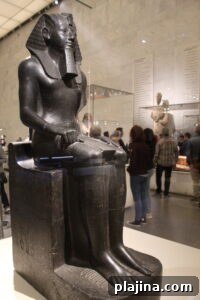
For many years the Egyptian Museum in downtown Cairo housed the country’s most famous antiquities. The museum retains a classic, explorers’-era charm, though its facilities and displays can feel dated.
New museums have expanded how Egypt’s past is presented. The National Museum of Egyptian Civilization, opened in 2021 near an artificial lake south of downtown, holds more than 50,000 objects including a notable collection of mummies. Its exhibits broaden the story of Egypt to include Greek and Roman influences, Islamic history, and the development of modern Egypt.
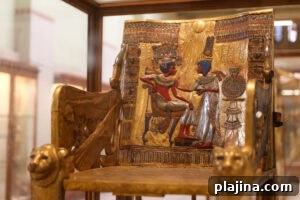
Another major addition is the Grand Egyptian Museum near the Giza plateau. While its full public opening has been staged in phases, parts of the museum are accessible by guided tour. It promises striking architecture and an extensive Ancient Egyptian collection, including many of Tutankhamun’s treasures.
Part of the pyramids’ enduring fascination is how many mysteries still surround them. As recently as March 2023, researchers announced a newly detected chamber in the Great Pyramid discovered through advanced scanning methods. Its purpose remains unknown, and each new finding prompts fresh questions about the pyramids and the people who built them.
INFO TO GO
International flights arrive at Cairo International Airport, about 9 miles northeast of downtown Cairo and roughly 18 miles from the Giza pyramid complex. Many Giza hotels offer airport limousine service; private airport transport companies also provide transfers at various price points.