
SAUDI ARABIA IS CHANGING, with Jeddah at the forefront. Historically the kingdom’s most liberal city, Jeddah has long offered more social leeway than other parts of the country, despite being the gateway for millions of pilgrims heading to nearby Mecca. Even during periods of strict enforcement by the Committee for the Promotion of Virtue and the Prevention of Vice, residents and visitors often found Jeddah comparatively relaxed.
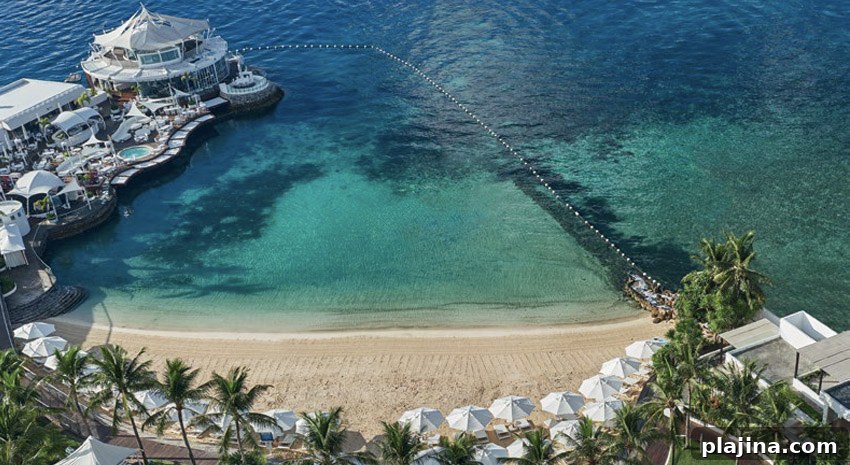
One of my favorite places to stay is the Mövenpick Resort Al Nawras, a private-island property off Jeddah’s North Corniche that features 91 private villas. From behind the drapes you can see a glass-walled garden, a private pool and the deep blue sweep of the Red Sea beyond.
The hotel’s Al Wadaa Restaurant is an excellent choice for a substantial breakfast. Choose a table with a sea view and enjoy a generous buffet in a relaxed setting that encourages conversation. Looking out toward the horizon from there, it’s easy to forget you are in a city of some four million people.
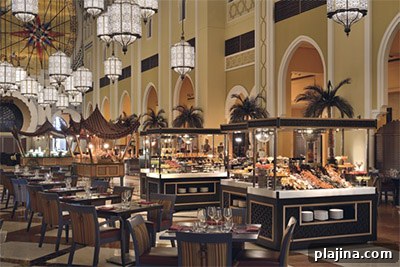
Al Wadaa Restaurant buffet at Mövenpick Resort Al Nawras © MÖVENPICK HOTELS & RESORTS
That sense of separation fades the moment you leave the resort. Cross the short bridge to the mainland and you encounter the city’s frenetic traffic. Driving in Saudi Arabia can be intense, and many visitors prefer to use taxis until they become familiar with local road customs.
One of the kingdom’s most consequential recent changes was lifting the ban on women driving, ending what had been the last national prohibition of its kind.
The climate is extreme in summer: temperatures frequently exceed 100°F with very high humidity. Men typically wear formal business attire, so a lightweight suit is recommended; in certain settings, like construction-site visits, a short-sleeved shirt with a tie may be acceptable.
Dress expectations for women remain more conservative, although they are gradually evolving. Women are generally expected to wear an abaya in public and to cover their heads; however, standard international business attire is usually acceptable during meetings. As the country continues to open up, these norms are likely to keep shifting.
Jeddah offers a wide range of dining options representing global cuisines. For an upscale lunch, Mataam al Sharq at the Waldorf Astoria provides an elegant setting and private dining rooms for groups of 10–40, serving Middle Eastern dishes prepared under the direction of a Lebanese chef.
On the city’s outer edge, the slim silhouette of the Jeddah Tower (formerly the Kingdom Tower) rises from the desert fringe. Planned as the first kilometer-high skyscraper, it is set to be the landmark of the larger Jeddah Economic City development.
At the same time, King Abdulaziz International Airport has been undergoing a major expansion intended to transform it into a worldwide hub, ultimately increasing annual capacity significantly and including a dedicated Hajj terminal for millions of pilgrims. Future transport plans also include high-speed rail links to Mecca.
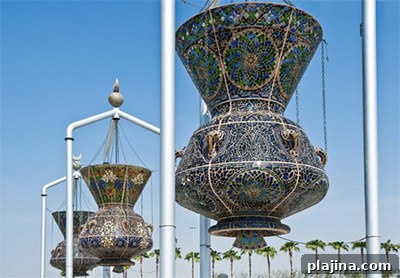
The Mameluke Mosque Lanterns in the Corniche area © GIUSEPPEMASCI | DREAMSTIME.COM
In the evenings many residents gather along the Corniche to walk as the sun sets. I prefer to begin at the Sculpture Museum, an outdoor park featuring works by Henry Moore, Alexander Calder, Joan Miró and others, then take a slow walk southward. Even with a sea breeze, the air can remain heavy, so pacing yourself is wise.
A good pause on the Corniche is the Culture Café and Lounge, which serves Arabic coffee, milkshakes and tempting pastries. From its air-conditioned interior you can look across the bay to King Fahd’s Fountain, which shoots a dramatic jet of water nearly a thousand feet into the air and is illuminated by hundreds of spotlights after dark.
Saudi Arabia presents challenges for many Western visitors: the public space is governed by strict religious and legal norms that restrict other faiths, criminalize atheism in severe terms, and impose harsh penalties for same-sex activity. Nonetheless, economic reforms, cultural initiatives and social changes are underway, and cities like Jeddah are often the first places where those changes become visible.