

© EVERST | DREAMSTIME.COM
Dressed in a thick insulated float suit, I glide across the icy water of Norway’s Trollfjord in a rigid-inflatable boat, surrounded by towering cliffs and dramatic waterfalls. Our guide eases the boat to a slow drift and points skyward: a large sea eagle has begun to follow us. He lifts a fish from a container at his feet and tosses it into the air. The eagle snatches it cleanly, then circles above as we continue through the fjord toward shore.
The sea eagles are real, but the atmosphere around Scandinavia’s fjords often feels magical. Centuries of folklore—stories of kings and maidens, serpents, Vikings and wizards—add an otherworldly layer to the landscape. Whether those myths are literal truth or poetic metaphor, they only complement the obvious fact that the fjords’ natural beauty is breathtaking and immediate.
There are many ways to experience this region. By boat, on foot, or by car, travelers encounter unforgettable scenes and charming coastal towns dotted with historical sites and natural attractions. Each approach brings different advantages: boats offer intimate access to water-carved cliffs, hiking reveals secluded viewpoints and hidden waterfalls, and driving provides flexibility to connect multiple scenic stops in a single route.
Norway’s fjord network is vast and varied. Sognefjord, often called the king of fjords, sweeps past shoreline villages like Vik, where medieval buildings such as Hopperstad Stave Church (dating to 1130) and the late 12th-century Hove Stone Church still stand. Near the Atlantic Road and Moldefjord lies the town of Eide and the marble cave Bergtatt. Inside Bergtatt, floating wooden rafts glide across an underground lake while candlelight and soft music create a serene atmosphere; visitors can even taste water from the spring that feeds the lake.
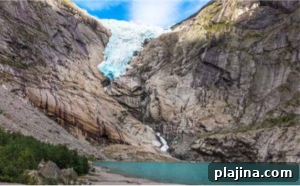
© IGOR TEREKHOV | DREAMSTIME.COM
Other notable Norwegian fjords include Eidfjord, edged by sheer mountains that echo movie-worthy scenery and feature the Hardangervidda Nature Centre; Nordfjord, dominated by rugged peaks and serving as a gateway to hikes at the receding Briksdal Glacier with opportunities for coffee and waffles at local inns; and the UNESCO-listed Nærøyfjord, famed for its narrow channel flanked by towering, snow-dusted cliffs.
Sweden and Denmark have fewer fjords than Norway, but they offer excellent hiking and outdoor activities. North of Göteborg, the hills around Singlefjord contain traces of Viking-era fortifications and provide scenic trails. Sundsvall Fjord, north of Stockholm on Sweden’s western coast, is a seasonal hub for mountain biking and kayaking.
In Denmark’s North Jutland, Limfjord and Mariager Fjord present sweeping vistas that mix rolling farmland with tranquil valleys and a range of hiking and cycling routes. The island of Mors, in Limfjord’s deeper waters, is an appealing cycling destination. From there you can cross the fjord by boat, join an oyster safari, kayak or sail, and wander cobblestone streets in fishing villages such as Mariager.
Accessibility varies: some fjords are easily reached by road, while others remain remote and best explored from the water. Where coastal roads are sparse or winding, a small-ship cruise offers a relaxed and close-up way to experience fjord scenery. Several cruise operators run itineraries focused on Scandinavia’s waterways, giving passengers access to narrow inlets, coastal communities and dramatic shorelines without the stress of planning every transfer.
INFO TO GO
Major international airports that serve fjord cruise ports include Oslo Gardermoen Airport (OSL), Stockholm Arlanda Airport (ARN) and Copenhagen Kastrup (CPH). For those driving through Norway, Oslo Gardermoen and Bergen Airport, Flesland (BGO) provide convenient starting points for fjord exploration. Rental cars are available at all these airports; request an automatic transmission in advance if you need one. Many cruise lines offer prearranged transfers between airports and departure ports—arrange these ahead of time to ensure smooth connections.