
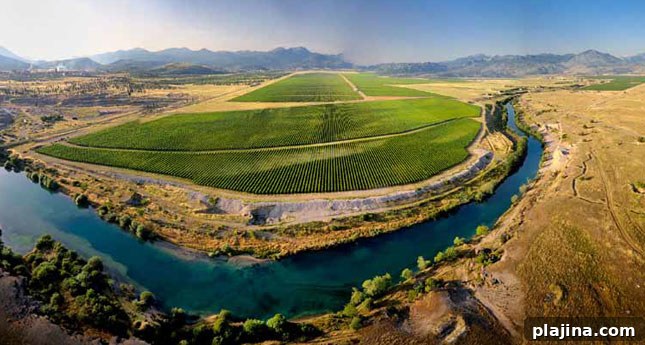
At least 53 countries around the world produce wine, yet Montenegro is often left off many lists despite a long winemaking tradition. This small nation of about 600,000 people is home to Europe’s largest continuous vineyard, covering roughly 5,700 acres. Operating primarily under the Plantaže brand, Montenegro exports wine to 35 countries, including the United States. While international varieties such as Cabernet Sauvignon are grown, Montenegro places special emphasis on its native red grape, Vranac. Around 70 percent of the country’s vineyards are planted with red grapes, and of those plantings roughly 70 percent are Vranac.
To grasp what Vranac offers, consider Zinfandel as a useful comparison. Zinfandel arrived in California from southern Italy in the mid-1800s, where it is known as Primitivo; that variety reached southern Italy from Croatia, where it is called Crljenak. Croatia sits to the north of Montenegro across the Adriatic Sea, and while Vranac is not identical to Zinfandel, it is regarded as a close relative.
Vranac is particularly well suited to summer barbecues. The wines typically show an ink-deep color and flavor profiles centered on black cherry and black currant. They are dense in body and often display spicy and vanilla notes from oak aging. Robust and expressive, Vranac lives up to its name, which can be translated as “Black Stallion.”
Among white varieties, Montenegro favors its indigenous Krstač. The grape clusters resemble a cross in shape, which is reflected in the name krstač, meaning “cross.” Krstač yields pale-yellow wines with delicate floral aromatics, a medium body and a dry, flavorful profile. These wines pair beautifully with fish, light meats and mild cheeses.
Montenegrin Chardonnay tends to produce full-bodied wines with distinct character. Cabernet Sauvignon—often labeled simply as “Cabernet”—is generally dark and medium-full, featuring earthy aromas. Merlot from Montenegro can be even deeper in color and offers a vigorous red style that pairs well with grilled meats.
Price is another reason these wines are popular for casual summer drinking. Most Montenegrin bottles sell in the $10 to $12 range, while wines labeled “Barrique,” indicating oak barrel aging, typically cost around $25.
Historically, Montenegro was part of Yugoslavia after World War I and later entered a political union with Serbia until it voted for independence in 2006. Today its native varieties and growing wine industry demonstrate that Montenegro can compete on flavor, tradition and value.