
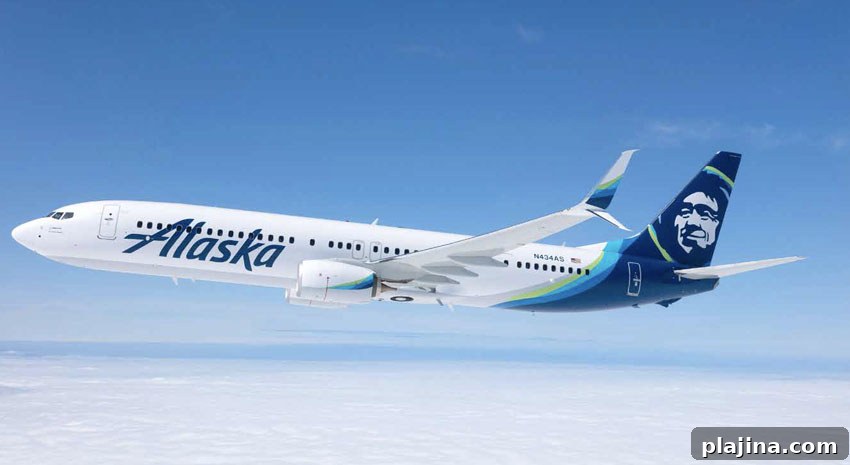
UNLESS YOU LIVE IN THE PACIFIC NORTHWEST, chances are you haven’t heard much about Alaska Airlines — until recently. After its $2.6 billion, all-cash acquisition of Virgin America, the carrier has expanded rapidly and is becoming a more familiar name nationwide.
The hooded Eskimo logo now appears on flights to 117 destinations, with nearly 1,200 daily departures across the United States, Mexico, Canada and Costa Rica. Major West Coast hubs include Seattle (SEA), Portland (PDX), Anchorage (ANC), San Francisco (SFO) and Los Angeles (LAX). Some aircraft still carry the Virgin America branding; Alaska Air Group — the parent company for Alaska Airlines, Virgin America, Horizon Air and SkyWest Airlines — planned to complete the repaint and brand integration in 2019.
The acquisition elevated Alaska Air Group to the fifth-largest U.S. carrier, increasing its route network and flight options from the Pacific Northwest. Under CEO and chairman Brad Tilden, the company emphasizes low fares, profitable route growth and an effort to become the easiest airline to fly, while continuing to prioritize passenger comfort and fuel efficiency.
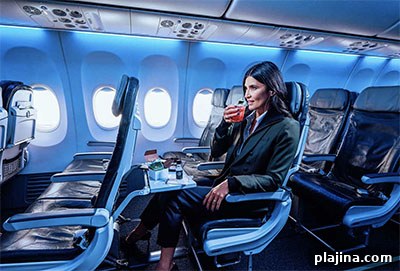
Premium Class © ALASKA AIRLINES
Frequent flyers consistently praise Alaska’s Mileage Plan, and industry rankings back that up. For the third consecutive year, Alaska Airlines topped U.S. News & World Report’s list of Best Airline Rewards Programs. That ranking evaluates ease of earning award travel, benefits, network coverage, flight volume, award availability and overall airline quality.
A key advantage of Mileage Plan is how members earn miles. Alaska’s program awards miles based on distance flown as well as spending, allowing travelers to accumulate rewards faster than many competitors. “Unlike other programs in the industry, our members earn miles based on how far they fly on us — not just what they spend — and we offer a generous upgrade policy for elite members,” said Sangita Woerner, vice president of marketing for Alaska Airlines.
Alaska has also earned strong customer-satisfaction accolades. J.D. Power ranked Alaska Highest in Customer Satisfaction Among Traditional Carriers in North America for ten consecutive years from 2008 through 2017.
The airline’s loyal customer base often shares stories of excellent service. Midgi Moto, owner of Juneau Food Tours, posted about losing a Kindle on a flight from Juneau to Anchorage and having it returned after contacting Alaska through Facebook — an everyday example of responsive customer service.
Alaska Airlines also pursues creative passenger experiences and partnerships. It chartered a special solar-eclipse flight for invited astronomers and guests in 2017, giving passengers prime viewing from 35,000 feet. The carrier partners with leading wine regions across Oregon, Idaho, Washington and California, allowing up to a case of wine to fly for free when packed for shipping.
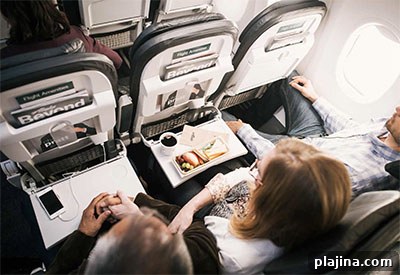
Cabin experience © ALASKA AIRLINES
Fans in Seattle get perks too: Alaska has offered early boarding to passengers wearing a Russell Wilson jersey on flights departing the city, a playful nod to the local NFL star. The carrier has also blended popular Virgin America amenities into its own service, adding mood lighting and curated music to mainline aircraft. Alaska rolled out free movies and Free Chat on Virgin America flights, features already available on Alaska’s fleet, and announced plans to install satellite Wi-Fi across its mainline fleet.
Before acquiring Virgin America, Alaska maintained an all-Boeing 737 mainline fleet built around Seattle, with 156 Boeing 737s averaging about 8.7 years of age. Horizon Air and contractor SkyWest Airlines operate regional aircraft, including Bombardier Q400s and Embraer E175s. In 2016, the group ordered 30 Embraer E175s, with several already delivered by mid-2017.
Virgin America’s leased fleet — primarily Airbus A320 family aircraft — added 65 jets to the combined operations, with many leases extending through 2021. Alaska planned to merge those aircraft into a single fleet after obtaining a single operating certificate from the FAA, with integration and repainting expected in 2019. Following the acquisition, Alaska Air Group employed about 20,000 people and operated roughly 280 aircraft.
CEO Tilden said the company made steady progress integrating Virgin America. The combined network added roughly 30 markets, many focused around the Bay Area, expanding Alaska’s presence in California. Tilden described a strategy to apply the Pacific Northwest playbook to California: offer nonstop service to top destinations customers want most.
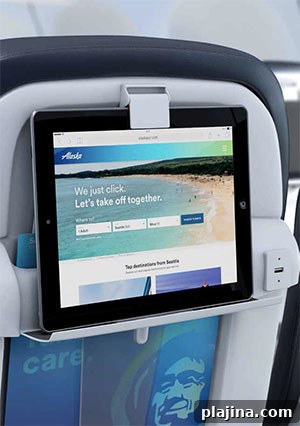
Seat-back tablet holder © ALASKA AIRLINES
Integrating fleets and cultures presented challenges. The addition of Airbuses raised decisions about maintaining a mixed fleet versus returning to an all-Boeing lineup—choices that affect pilot hiring and training. Cultural differences between Alaska’s punctual, homegrown hospitality and Virgin’s stylish, urban vibe also required careful alignment. Operational pressures, including pilot shortages at regional partner Horizon Air, contributed to some delays and cancellations in the Northwest.
Alaska’s recognizable livery — the Eskimo face on the tail — was refreshed in January 2016. “It’s the same person, the same symbol — but he is bigger, bolder and more impactful,” marketing vice president Sangita Woerner said. Tilden added that the icon reflects a company with deep roots and a forward-looking vision.
ABOUT ALASKA AIRLINES
Route system: 117 destinations in four countries
Alliance: Codeshare agreements with select oneworld members and other carriers
Loyalty program: Alaska Mileage Plan
Fleet: Approximately 280 aircraft including Boeing 737; Airbus A319, A320 and A321; Bombardier Q400; and Embraer E175
Markets: North America (United States, Canada, Mexico) and Central America (Costa Rica)
Hubs: Seattle (SEA), Anchorage (ANC), Portland (PDX), San Francisco (SFO) and Los Angeles (LAX)