
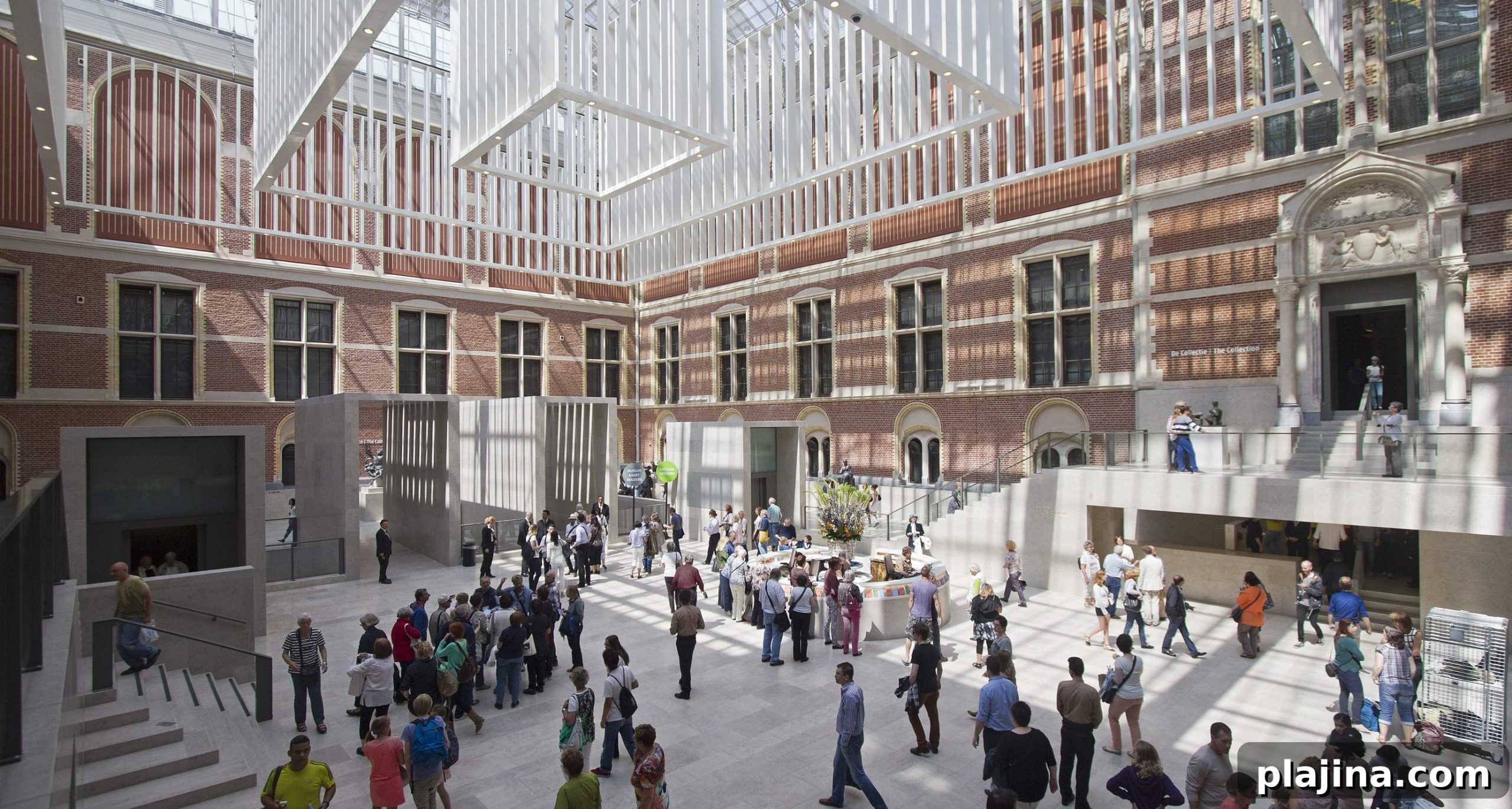
“Truth be told, I’m not much of a fan when it comes to art. Walking through a museum for hours on end sounds incredibly boring, which is why I was somewhat skeptical about touring the Rijksmuseum, Amsterdam’s most famous exhibit of Dutch art and history…”
I visited the Rijksmuseum with low expectations, assuming it would be a long, static stroll past paintings and artifacts. I left pleasantly surprised. The museum presents Dutch art and history in a way that feels lively, accessible, and deeply engaging, even for someone who doesn’t usually seek out art galleries.
The building itself is impressive — a mix of historic architecture and thoughtful modern updates that make the collection easy to navigate. Wide halls, clear signage, and well-placed seating give visitors room to absorb the works without feeling rushed. Lighting and display techniques highlight the detail in many masterpieces, and the layout encourages a natural progression through periods and themes, helping visitors understand context rather than simply passing from painting to painting.
What changed my mind most was the diversity of the collection. Yes, there are world-famous masterpieces, including iconic Dutch Golden Age works, but the museum also showcases lesser-known pieces, decorative arts, and historical objects that together tell a fuller story of the Netherlands. Portraits, landscapes, ship models, and everyday items create a tapestry of social and cultural history that adds depth to the headline attractions.
Curatorial choices help bring the past to life. Informative labels and thematic displays explain the significance of the pieces, while special exhibitions often delve into specific artists or movements with fresh perspectives. Audio guides and occasional guided tours offer further context and enrich the experience without feeling pedantic.
For visitors who might expect a rigid, formal atmosphere, the Rijksmuseum surprises with accessibility. Families, casual tourists, and art enthusiasts all find something to appreciate; children’s activities and interactive elements make parts of the collection approachable for younger audiences, while scholars and aficionados can linger over technical details and provenance information.
Practical tips enhance the visit: arrive early to avoid peak crowds, give yourself at least a few hours to explore, and consider focusing on a few galleries rather than trying to see the entire museum in one visit. There are also pleasant cafés and bookstores on-site, offering a comfortable break between galleries.
Overall, the Rijksmuseum succeeds at making art and history engaging for a broad audience. If you think a museum will be boring, this one might just change your mind — as it did mine — by presenting its treasures with clarity, narrative, and a welcoming atmosphere that invites curiosity rather than obligation.