
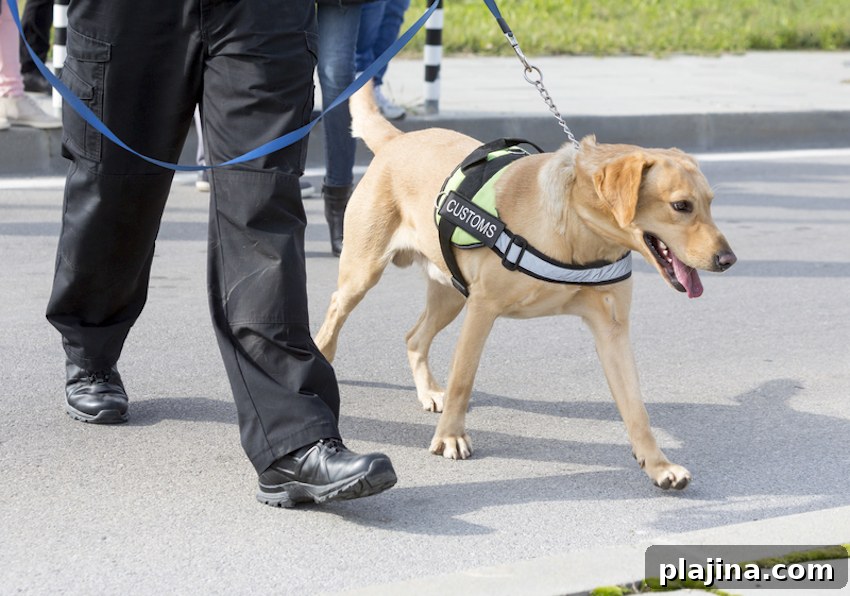
The Transportation Security Administration has shifted its canine program toward breeds with floppy ears, citing passenger comfort and approachability as key reasons. These dogs are used across airports to detect explosives and narcotics.
“We find the passenger acceptance of floppy ear dogs is just better. It presents just a little bit less of a concern,” TSA Administrator David Pekoske said. “Doesn’t scare children.”
Across the country, the TSA deploys more than 1,200 detector dogs. The program includes a growing share of sporting breeds—such as Labrador Retrievers, German Shorthaired Pointers, Wirehaired Pointers, Vizslas, and Golden Retrievers—whose softer appearance is believed to put travelers at ease. Traditionally used working breeds with erect ears, including German Shepherds and Belgian Malinois, remain valuable for certain roles, but are less prevalent in recent acquisitions.
In the past year, roughly 80 percent of the dogs purchased by the TSA were sporting breeds. The agency purchases animals from breeders and invests substantially in training, spending an estimated $26,000 to $42,000 per dog and pairing each animal with a trained human partner for operational deployment.
While the trend favors floppy-eared sporting dogs, the TSA says it will not exclude pointy-eared breeds entirely. Working breeds that meet the agency’s performance and suitability criteria will continue to be considered for the program.
By emphasizing breeds that appear less intimidating to the public—especially children—the TSA aims to balance effective security screening with a passenger-friendly presence in airports, while maintaining rigorous standards for detection capability and handler teamwork.