
The travel lexicon is evolving: while terms like long-haul, bag fees and discount carriers remain common, new vocabulary and technologies are reshaping how we travel for the better.
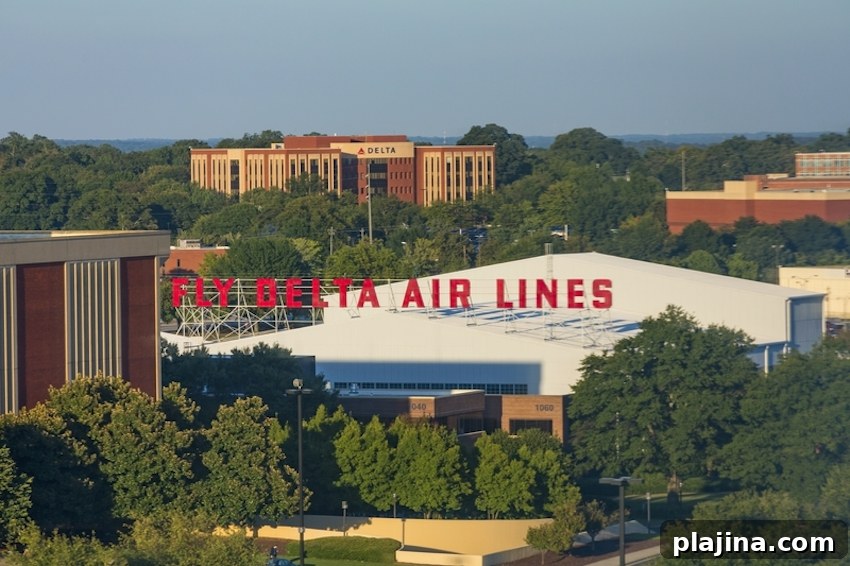
One of the most significant shifts involves biometric scanning. Several airlines and airports are expanding tests of facial-recognition systems to streamline identity checks and speed boarding. Delta Air Lines, for example, has piloted biometric boarding at Hartsfield-Jackson Atlanta International Airport, using face scans in place of manual passport inspections to accelerate the process and reduce queues.
Other airports and carriers across the United States are exploring similar implementations. Airports in Boston (BOS), Detroit (DTW), Los Angeles (LAX) and Orlando (MCO) have programs in various stages of testing, and ground-transport and rental services such as Hertz are also adopting biometrics to shorten rental and pickup procedures. These deployments aim to improve throughput and the passenger experience while maintaining required security and privacy safeguards.
Inflight offerings are changing as well, with cabin classes broadening to match diverse traveler preferences and budgets. The rise of tiered seating—from basic economy to standard economy, and premium economy—lets passengers choose a mix of price and comfort tailored to their needs. Budget-conscious travelers can opt for no-frills fares, while those who prioritize space and amenities can select upgraded options without committing to full business class.
Ultra-long-haul routes remain an area of both opportunity and challenge. Nonstop flights that span 17 hours or more, such as Houston (IAH) to Sydney (SYD) or Washington, D.C. (IAD) to Hong Kong (HKG), offer a compelling alternative for passengers who prefer to avoid layovers. But these flights are expensive to operate: greater fuel consumption, crew costs and logistics mean airlines often rely heavily on higher-yield passengers to make such routes viable. As a result, carriers may configure these aircraft with more premium seating or make strategic pricing decisions to ensure profitability.
Overall, passengers can expect travel to become faster and more customizable. Biometric technologies promise smoother processing at airports and rental counters, while a clearer range of fare classes allows travelers to pay only for the services they value. At the same time, long nonstop routes will continue to be evaluated for economic sustainability, with airlines balancing demand for convenience against the high cost of operating extended flights.