
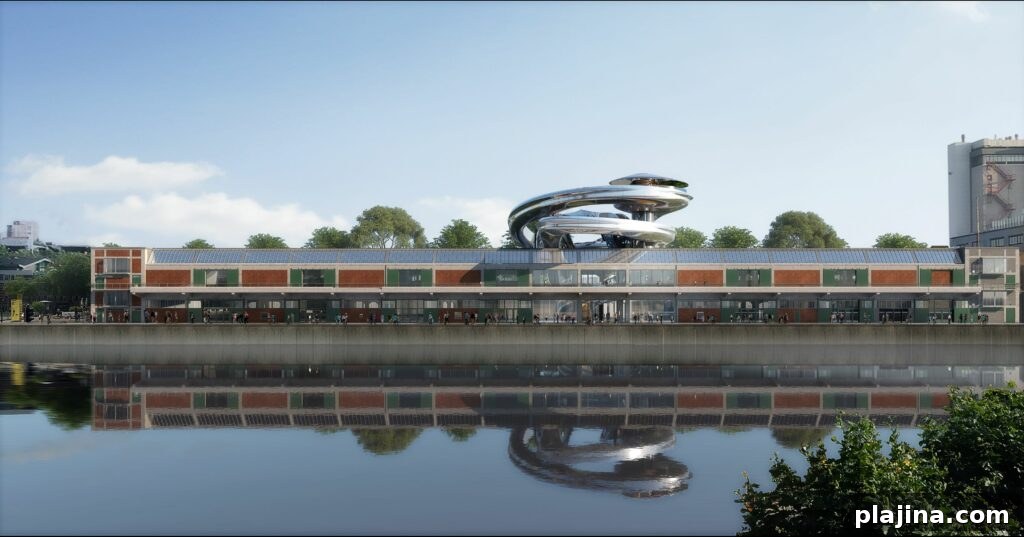
Leave it to design-forward Netherlands to transform a 172,000-square-foot 1923 warehouse — once part of the world’s largest storehouse — into a boldly reimagined museum now known as FENIX Museum of Migration Rotterdam.
Situated on the south bank of the River Maas in Rotterdam’s historic port district, the former warehouse played a central role in storage and shipping for the Holland America Line. Across the 19th and 20th centuries, that company carried millions of migrants whose journeys began or ended at the port’s docks.
© MAD Architects
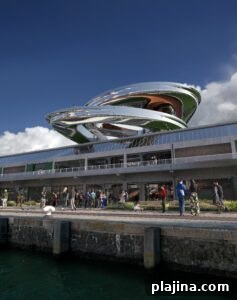
Scheduled to open in early 2025, the museum is designed by Ma Yansong of MAD Architects, the Beijing-based studio known for expressive, poetic architecture. The building’s most striking element is the Tornado: a sweeping, ascending structure that rises from the ground floor and extends through the roof to a rooftop platform. Evocative of rising air and uplift, the Tornado symbolizes the journeys of migrants worldwide while offering visitors a new perspective on the city, with sweeping views across the River Maas as they ascend its stairs.
Inside, two expansive floors of gallery space will host the museum’s combined art and historical collections alongside newly commissioned works from emerging international artists. Contributions come from a diverse group that includes Paris-based Beya Gille Gacha, Rotterdam-based Efrat Zehavi, Korean artist Chae Eun Rhee, Raquel Van Haver and U.S.-based Hugo McCloud. More than 200 acquisitions have already been made, each examining migration through the lenses of contemporary art and lived experience.
The ground floor will present three major projects. The Maze is a monumental installation composed of 2,000 suitcases donated from around the world; visitors will be invited to explore the personal stories behind those cases and the people who once owned them.
© MAD Architects
Another major project, Family of Migrants, draws inspiration from Edward Steichen’s Family of Man and fills a second large ground-floor gallery with hundreds of documentary images and portraits. The installation traces themes of human movement, family bonds, the peril of voyages and farewells, and will include iconic photographs by more than 200 photographers representing over 60 countries.
Plein, a 24,500-square-foot flexible ground-floor space, will serve as the third cornerstone of programming. Curated in collaboration with Rotterdam’s communities, Plein will host a constantly changing schedule of events and performances, ensuring the space is different every day. For example, Plein will mark Chinese New Year with celebrations of the food and culture of the community that established Europe’s first Chinatown.
“FENIX’s story is Rotterdam’s. And its story is of the world. One of arrivals and departures, and of constant change to face the future,” said Anne Kremers, director of FENIX. “In its landmark new home, FENIX will inspire a profound new curiosity about the world we live in.”
“When MAD Architects were asked to work on FENIX, we knew we had to create a dialogue with the existing building and its surroundings, and with a past full of stories of migration, memories, and uncertainty,” said Ma Yansong, founder and principal partner of MAD Architects. “Designing the new structure required showing the conversation between future and past, and so continuing the building’s story. The Tornado points toward the future while remaining rooted in the past. For me, it is a metaphor for the journeys of migrants who passed through this building.”