
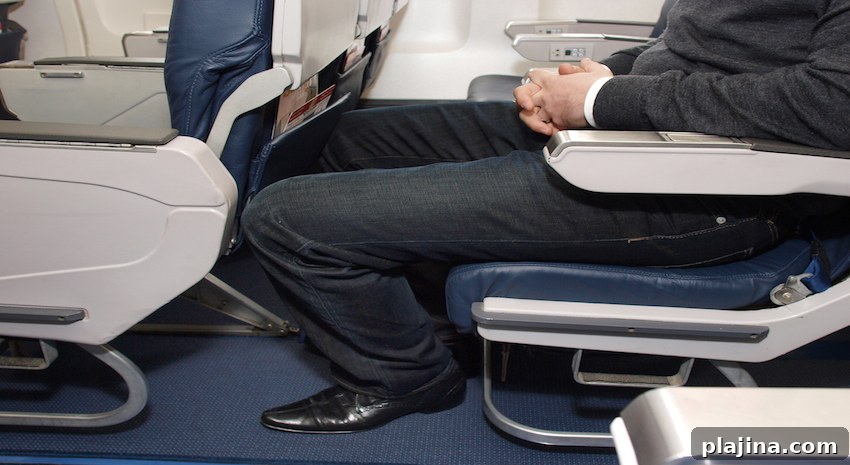
A new bill introduced in Congress would increase minimum airplane seat dimensions and the distance between rows. If enacted, the legislation would require the Federal Aviation Administration to set and enforce baseline measurements for both seat width and the space between rows.
At present, airlines may install as many seats as they choose, provided the aircraft can still be evacuated within 90 seconds in an emergency. The proposed Seat Egress in Air Travel Act would go further by mandating that airlines reconfigure existing seating that falls below the federal standards.
Over the past four decades, personal space on many commercial flights has steadily declined, reducing passenger comfort and raising concerns about safety and accessibility. A similar measure introduced in 2016 did not pass, but lawmakers and consumer advocates are hopeful that this renewed effort will gain more traction. Frequent flyers and passenger-rights groups have welcomed the proposal, arguing that clearer minimums would improve comfort, safety, and predictability across carriers.
The bill’s focus on minimum seat width and seat-pitch aims to address several issues. Wider seats and greater legroom can reduce the physical strain of long flights, lower the risk of injury during turbulence, and make it easier for people with mobility needs to board, sit, and move about the cabin. For families and passengers traveling with children, longer seat pitch can improve the ability to use child restraints and enhance overall stability during takeoff and landing.
Implementing standardized measurements would likely involve operational and economic trade-offs for carriers. Airlines may need to reduce the number of seats on some aircraft or reconfigure cabins to comply with the new rules. That could affect ticket pricing, route economics, and fleet utilization. Supporters of the bill argue that any impact on capacity is balanced by improved passenger well-being and potentially fewer injuries and disputes on board.
Regulatory change would also require the FAA to develop clear testing and compliance procedures. Inspectors would need standards for measuring seat width and pitch, and timelines would be necessary to phase in upgrades for affected aircraft. The bill would presumably include provisions for grandfathering, retrofit timelines, and technical guidance to help airlines plan modifications while maintaining safe operations.
Beyond technical standards, the debate touches on customer expectations and market differentiation. Some carriers already advertise more generous seats in certain fare classes or on specific aircraft; broader regulation would level the playing field by ensuring a baseline of comfort for all passengers. Advocacy groups say that clear, enforceable minimums could reduce contentious interactions between passengers and crew over space-related disputes.
As the bill moves through legislative committees, stakeholders from the aviation industry, consumer groups, disability advocates, and labor organizations are likely to weigh in. Lawmakers will balance safety, accessibility, consumer interests, and the economic realities of airline operations when considering final language and any amendments.
Whether the Seat Egress in Air Travel Act ultimately becomes law depends on political support, industry cooperation, and the FAA’s ability to implement practical standards. If passed, the measure would mark a significant shift in how passenger space is regulated on U.S. flights, with potential benefits for comfort and safety for millions of travelers each year.