
Airplanes—enclosed spaces with many people in close proximity—have long made germ-conscious travelers uneasy. When the World Health Organization identified the novel coronavirus SARS-CoV-2 as a public health concern in January 2020 and declared COVID-19 a pandemic two months later, airline cleaning practices moved to the forefront of passenger awareness. Since then, airlines and public health authorities have continually updated protocols and techniques to maintain safe environments for passengers and crew and to help make air travel as safe and comfortable as possible.
The travel industry was among the hardest hit by the pandemic. During the early months of the crisis, air travel plunged as travel bans and restrictions curtailed tourism. Concerns from passengers and crew led carriers to adopt stricter safety measures. Many of these measures followed guidance from the Centers for Disease Control and Prevention, while some were developed by airlines themselves as additional protections for employees and travelers.
New protocols typically involve layered sanitation procedures and more frequent cleaning of high-touch surfaces. Before COVID-19, cabin cleaning often meant removing trash between flights with a more thorough cleaning at the end of a day’s operations. Current procedures are far more detailed: seats, armrests, tray tables, touchscreens, overhead bins, galleys and lavatories are disinfected more often. Airlines now use stronger disinfectant solutions, personal protective equipment, and advanced cleaning technologies, which together make the risk of exposure to germs and viruses onboard very low.
One rapidly adopted method for quick and effective interior disinfection is electrostatic spraying of the cabin. Air Canada, an early adopter of onboard face-covering requirements, added electrostatic spraying to its CleanCare+ program as a way to disinfect passenger and crew areas between flights.
Electrostatic spraying is a fast, efficient way to treat the entire cabin in minutes. A fine mist of disinfectant is sprayed across every interior surface, including lavatories and the flight deck. The disinfectant solution is atomized and given an electrical charge so droplets are attracted to and wrap around surfaces, reaching nooks and crevices that handheld wiping can miss.
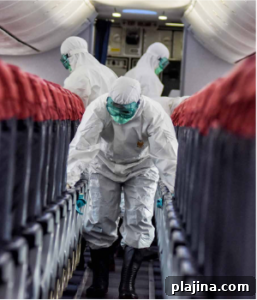
PHOTO: © ANKS RACHMAN | DREAMSTIME.COM
Many carriers apply electrostatic spraying after each landing and combine it with targeted cleanings during flight. Airlines have also upgraded to hospital-grade disinfectants effective against a broad range of pathogens, including coronaviruses. For example, American Airlines uses disinfectants approved on the EPA’s List N to sanitize seats, touchscreens, galleys and lavatories between flights, and it conducts nightly deep cleanings with an “ultra-clean” procedure every 45 days. Swiss International Air Lines follows similar routines, performing intensive cleans with specialized disinfectants each time aircraft arrive in Zürich or Geneva.
Emirates, known for its focus on passenger comfort and service, has also expanded its cleaning and hygiene measures. Restrooms are cleaned and disinfected every 45 minutes during flights, and aircraft receive a thorough deep cleaning upon return to Dubai. Onboard items such as mattresses, pillows, blankets and headphones are sterilized and sealed; cutlery and cookware are sterilized before use; and menus are distributed on single-use sheets or provided verbally to reduce shared touchpoints. Passengers (except very young children) are required to wear masks, and crew members on many flights are equipped with PPE including masks, face shields and gloves.
Perhaps the single most important factor in cabin hygiene is the use of High Efficiency Particulate Air (HEPA) filters. These systems, standard on commercial aircraft since the 1980s, play a key role in keeping cabin air clean and breathable.
Fresh air is drawn from outside the aircraft, heated to temperatures that help reduce viral load, cooled and then circulated through HEPA filters. Cabin air is refreshed roughly every three minutes, removing circulating particles and delivering air vertically to limit airflow along the length of the cabin. This circulation pattern reduces the spread of airborne contaminants between rows.
HEPA filtration captures particles with about 99.97 percent efficiency—comparable to standards in hospital operating rooms. In addition to trapping microscopic bacteria and viral particles, HEPA filters reduce airborne allergens such as dust and pollen, further improving cabin air quality beyond the immediate needs of the global health crisis.
Alongside enhanced cleaning and filtration, airlines introduced procedural changes to reduce shared touchpoints. Communal reading materials like newspapers and magazines have largely been removed; digital alternatives, such as apps that provide in-flight reading, serve passengers instead. Many carriers now present safety briefings via video, and when printed safety cards remain in use, they are disinfected between flights.
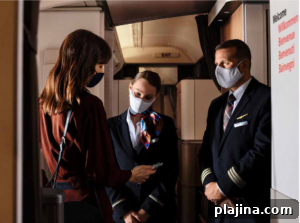
PHOTO: © SWISS INTERNATIONAL AIR LINES
In accordance with CDC guidance requiring masks on aircraft, many airlines provide masks, disinfectant wipes and hand sanitizer to passengers. British Airways, for instance, distributes “personal protection packs” containing disinfectant wipes, hand sanitizer and a sealable bag for disposing of used items like masks.
As public health concerns continue to shape travel choices, airlines keep evolving their cleanliness standards. Travelers now prioritize sanitation alongside traditional concerns like delays, and carriers are responding with effective cleaning measures and operational changes designed to keep passengers and crew safe while air travel recovers from the challenges of the pandemic.