
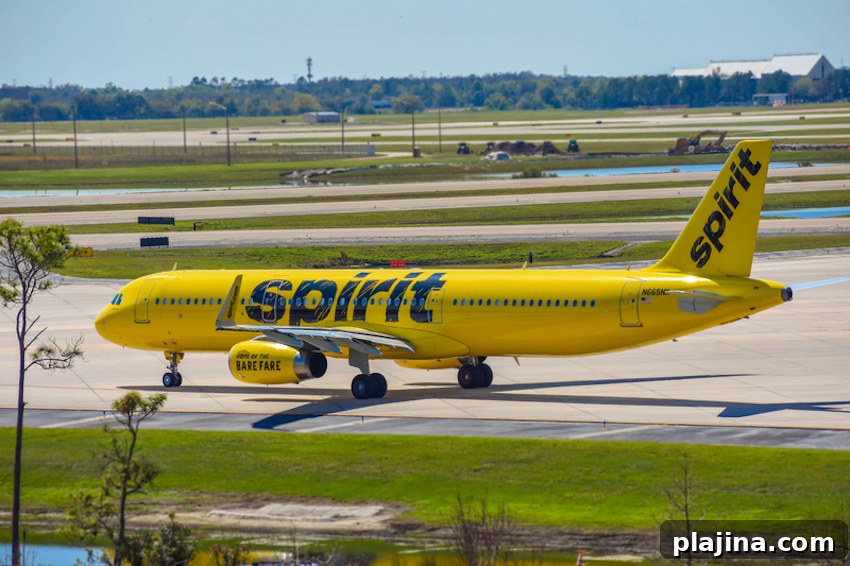
Spirit Airlines has the highest involuntary bump rate of any U.S. carrier, according to a recent U.S. Department of Transportation report. Although involuntary bumping affects a small fraction of overall travelers—roughly 15,000 passengers out of some 630 million who flew during the study period—it remains a significant customer experience issue, and Spirit passengers are more likely to face it than those flying on most other major carriers.
The DOT analyzed data from April 2017 through April 2018 and found that Spirit Airlines involuntarily denied boarding at a rate of 78 passengers per million boarded. That rate was the highest among the airlines included in the analysis. Frontier Airlines followed with 55 involuntary bumps per million boarded, Southwest Airlines recorded 41 per million, Alaska Airlines 28 per million, and American Airlines 24 per million.
Overbooking is a common industry practice: airlines are legally allowed to sell more tickets than available seats to offset no-shows and maximize revenue. Most carriers prefer to resolve overbooking situations by seeking volunteers who will give up their seats in exchange for compensation, rather than forcibly removing passengers. Typical incentives offered to volunteers include cash, travel vouchers, or frequent flyer miles, and these voluntary arrangements are intended to minimize the number of travelers who are involuntarily denied boarding.
In terms of raw headcount rather than per-million rates, Southwest Airlines had the largest number of bumped passengers during the reporting period. Southwest involuntarily denied boarding to 6,411 travelers, but it also carried far more passengers overall—about 157.7 million boarded—so its rate per million was lower than Spirit’s.
On the lower end of the spectrum, some carriers reported very low involuntary bumping rates. JetBlue and American Airlines had relatively low rates of involuntary denied boardings in the DOT data, with JetBlue reported at roughly two involuntary bumps per million boarded and American at about three per million in some summaries. Those lower figures indicate that while involuntary bumping still occurs across the industry, its frequency varies substantially from one airline to another.
For travelers concerned about the possibility of being bumped, there are a few practical steps that can reduce the chances of involuntary denied boarding. Check in as early as possible, as boarding priority often depends on check-in and ticketing status. Frequent flyers and passengers with elite status, as well as those who purchase higher fare classes or add premium seating, typically receive higher priority if flights are oversold. Finally, if a flight appears oversold at the gate, consider volunteering for alternate travel arrangements in exchange for compensation rather than risking involuntary denial of boarding.
In summary, while involuntary bumping is rare relative to the total number of passengers who travel each year, the DOT data highlights meaningful differences across airlines. Spirit Airlines had the highest rate of involuntary denied boardings during the April 2017–April 2018 window, and travelers who prioritize minimizing that risk may want to factor an airline’s bumping record into their travel decisions.