
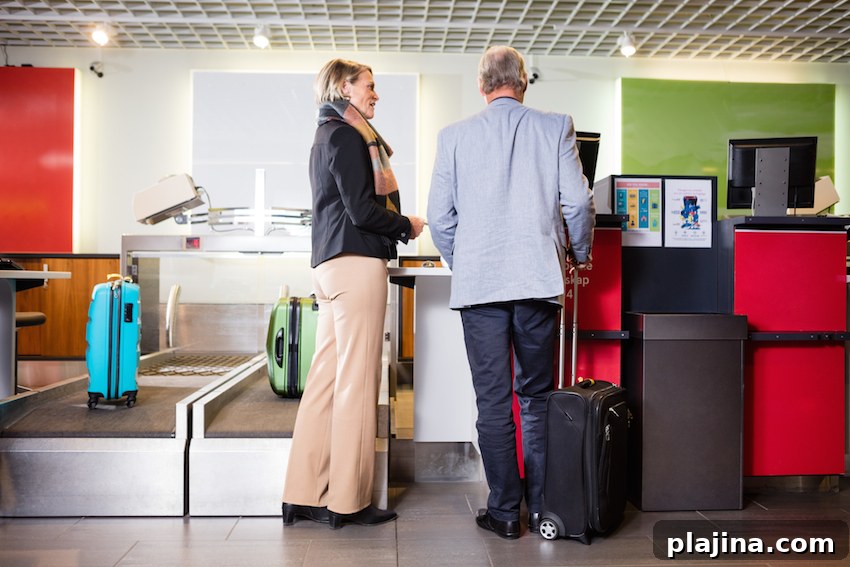
Airport check-in desks are rapidly disappearing and may soon be rare or nonexistent at many airports worldwide. As airlines increasingly provide full check-in services through mobile apps, the long lines at traditional check-in counters are becoming a thing of the past.
Mobile check-in allows travelers to complete the process up to 24—and sometimes 48—hours before departure. Passengers can choose seats, confirm carry-on allowances, and download boarding passes directly to their phones. These capabilities reduce the need for staffed desks and the substantial floor space they occupy.
Several airports are redesigning terminals to reflect this shift. Fort Lauderdale–Hollywood International Airport and Washington Reagan National Airport, for example, have renovated their lobbies and removed the large, often cumbersome counters that once defined entrance halls. At Fort Lauderdale, travelers move through a single security checkpoint before accessing any of the three concourses, a layout made possible in part by fewer permanently staffed check-in areas.
Freed-up space in Terminal 1 has been repurposed to improve the passenger experience. New shops and restaurants, expanded seating areas with charging stations, and public art installations have replaced old counters. The renovation even added a casual taco and tequila bar, demonstrating how airports are converting transactional spaces into social and commercial destinations.
This evolution benefits both passengers and airports. Travelers enjoy faster, more convenient preflight processing and more pleasant public spaces, while airports can generate new revenue from retail and dining options. As mobile and self-service technologies continue to improve, the remaining check-in desks are likely to be reserved for special cases—such as unaccompanied minors, complex itineraries, oversized baggage, or passengers who need extra assistance—rather than serving the majority of ticketed travelers.
Though some passengers still prefer in-person assistance, the trend toward app-based check-in is reshaping terminal design and passenger flow. The result is a quieter, less congested entry experience and terminals that prioritize comfort, convenience, and services that travelers value in the hours before departure.