
One of the world’s most iconic carriers, Pan American World Airways suspended operations on Dec. 4, 1991, after more than 64 years in business. A combination of factors — terrorism, rising fuel prices and an economic downturn — led to the airline’s decline. Today, Pan Am’s legacy is preserved at the Pan Am Museum in Garden City, New York. The Pan Am Museum Foundation opened its newest exhibit, “The Pan Am Saga — From Its Beginnings in 1927 to Its Slow Demise and Eventual Fall in 1991,” on Dec. 5, marking 30 years since the airline’s final flights.
The Pan Am Museum Foundation is the only organization with a permanent, physical museum solely devoted to Pan American World Airways. Its mission is to preserve and share the institutional and personal stories of Pan Am to educate and inspire future generations. The museum presents the airline’s history and culture through permanent displays, digital content and collaborative partnerships.
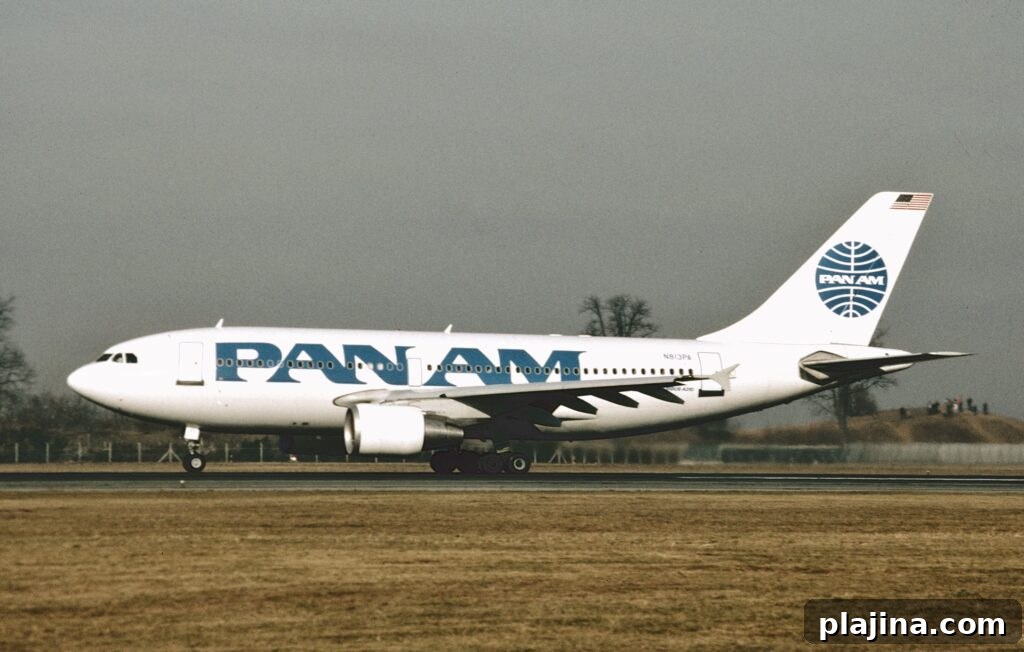
© Allan Clegg | Dreamstime.com
To coincide with the new exhibit, the Pan Am Museum Foundation highlighted “30 Achievements that Define Pan American World Airways,” a list of milestones that reflects the airline’s innovation and influence in commercial aviation:
- 1927: First American airline to operate a permanent international air service.
- 1928: First American airline to use radio communications.
- 1928: First American airline to carry emergency lifesaving equipment.
- 1928: First American airline to order and purchase planes built to its own specifications, beginning with the Sikorsky S-40.
- 1929: First American airline to employ cabin attendants and serve meals in flight.
- 1929: First airline to develop and apply instrument flying techniques.
- 1931: First American airline to develop and operate four-engine flying boats.
- 1935: First airline to operate scheduled trans-Pacific service.
- 1939: First airline to provide trans-Atlantic passenger and mail service.
- 1942: First airline to complete an around-the-world flight.
- 1944: First airline to propose a plan for low-cost, mass transportation on a global scale.
- 1947: First airline to operate a scheduled commercial around-the-world service.
- 1948: First airline to offer tourist-class service beyond the continental United States.
- 1950: First commercial airline to participate in the Korean airlift.
- 1952: First airline to use aircraft specifically configured for tourist-class trans-Atlantic service, the Douglas DC-6B.
- 1955: First airline to place orders for U.S. commercial jet transports.
- 1958: First airline to operate scheduled trans-Atlantic service with American-built jets, the Boeing 707.
- 1962: First airline to reach 100,000 trans-Atlantic flights.
- 1962: First airline to establish a global electronic reservations system, Panamac.
- 1963: First airline to operate Boeing 707-321C pure-jet freighters.
- 1965: First airline to operate around-the-world jet freighter service.
- 1966: First airline to place an order for the Boeing 747.
- 1967: First airline to achieve fully automatic approach and landing in scheduled service.
- 1968: First airline to transmit engine data and position information from aircraft to ground in under a second via a data-link system that routed information to a home-office computer for distribution.
- 1969: First airline to install onboard computers to analyze engine performance and display malfunctions to the crew.
- 1970: First airline to operate the Boeing 747 in regular scheduled service.
- 1974: First airline to open the largest single-air terminal in the world at John F. Kennedy International Airport in New York City.
- 1976: First airline to take delivery of and inaugurate service with the Boeing 747 SP.
- 1978: First international airline to introduce a new class of service tailored to business travelers and full-fare economy passengers, known as Clipper Class.
- 1981: First U.S.-flag airline to re-establish regularly scheduled flights to the People’s Republic of China.