
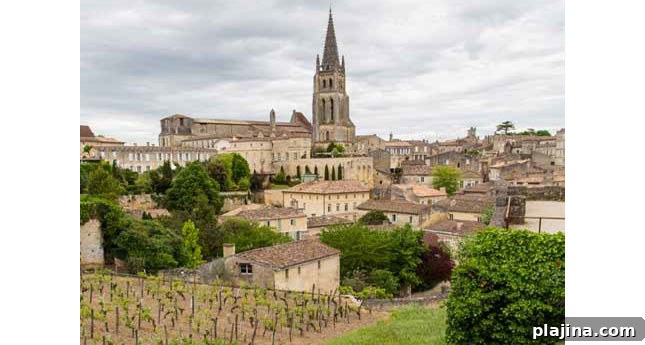
Saint-Émilion is a small, hilly medieval town where nearly every shop along its steep, narrow streets sells wine. Located about 25 miles east of Bordeaux, it is the oldest winemaking area in the Bordeaux region and a place where Merlot reigns. While many people associate Bordeaux reds with Cabernet Sauvignon, Saint-Émilion’s soils favor Merlot, producing rich, full-bodied wines in which Cabernet Sauvignon typically plays a supporting role.
Recent standout vintages in Bordeaux include 2009 and 2010, and many excellent examples from those years were tasted both in Saint-Émilion and at tastings in New York. At Château D’Arcole, one of Bordeaux’s earliest organic estates and an early biodynamic certificate holder, the blend of 70 percent Merlot and 30 percent Cabernet Sauvignon produced a 2009 with balanced fruit aromas and flavors and a developing satiny texture. The 2010 from D’Arcole is rich and well-structured, showing vanilla from oak aging and silky tannins. (Approx. $35–$40)
Château Faugères’s 2009 displays deep color, an intense and appealing bouquet, and a rich, well-integrated palate. The 2010 is deeply colored, round, and offers notes of anise and black cherry. The estate plants about 85 percent Merlot across its vineyards. (Approx. $50–$55)
Both Château Dassault 2009 and 2010 are notable for their rich color, fragrant noses, and ripe, juicy profiles that finish long and satisfying. The 2009 is based on roughly 75 percent Merlot, while the 2010 increases Merlot to about 83 percent; Cabernet Franc and a small amount of Cabernet Sauvignon complete the blends. (Approx. $40–$45)
Château Fombrauge grows about 80 percent Merlot, with 12 percent Cabernet Franc and 8 percent Cabernet Sauvignon. The 2009 offers attractive, fruit-forward character with an earthy whisper on the nose. The 2010 is bright and approachable, delivering rich fruit flavors and a medium-long finish. (Approx. $50)
With its ancient streets, vineyard-rich hills, and a clear preference for Merlot in both plantings and style, Saint-Émilion is a true paradise for lovers of Merlot-based Bordeaux.