
In recent years, Colombia has experienced stability and economic growth that would have seemed unlikely a few decades ago. Bogotá, the nation’s capital, exemplifies this progress, increasingly attracting business travelers and investors from around the world.
International arrivals to Bogotá have risen steadily: more than 1.1 million international visitors arrived in 2015, an increase of 13.2 percent over the previous year. Of those arrivals, over 76,000 attended international events such as conventions and incentive trips, highlighting Bogotá’s growing importance as a business hub.
While La Candelaria, the city’s historic center, preserves Bogotá’s 16th-century colonial roots, many neighborhoods now reflect modernization and improved economic conditions. Upgrades to El Dorado International Airport have strengthened global connections, linking the city to roughly 43 countries. Recent additions to the route network included the first flight from İstanbul operated by Turkish Airlines and new service between Madrid and Bogotá using modern long-haul aircraft.
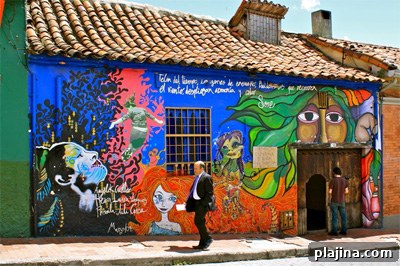
Creative graffiti in La Candelaria © ULI DANNER | DREAMSTIME.COM
Political and economic stability has played a major role in Bogotá’s resurgence. Compared with several regional peers, Colombia has experienced relatively steady performance in recent years. The security situation has also improved significantly, making the country safer for visitors and business operations. Both public and private sectors have worked to foster a business-friendly environment that supports investment and international events.
Bogotá’s infrastructure investments have gained international recognition. The TransMilenio bus rapid transit network is often cited as a global example of effective bus rapid transit systems. The city has also been praised for green initiatives: it was the first major Latin American metropolis to introduce the ciclovía, a weekly event that closes main thoroughfares to motorized traffic so cyclists, joggers and pedestrians can enjoy expanded public space.
International meetings and conventions remain central to Bogotá’s economic strategy. Corferias, the Bogotá International Center for Business and Exhibitions, is the city’s largest meeting venue, with six pavilions capable of hosting up to 7,000 attendees for trade fairs and conferences. The city’s group-business capacity will expand further with the opening of Ágora Bogotá, which will accommodate up to 6,000 people and include a 3,500-seat auditorium, making it the largest convention space in the city.
To raise Bogotá’s international profile, the Greater Bogotá Convention Bureau joined the BestCities Global Alliance as a full alliance partner, linking the city with an international network of prominent convention destinations.
The city already offers nearly 500 hotels and more than 31,000 rooms, with additional developments underway. Investors and hoteliers have capitalized on Colombia’s improving economic climate, expanding room supply and often increasing competitiveness for business travelers. Major international chains—AccorHotels, Carlson Rezidor, Hilton Worldwide, IHG, Marriott International, NH Hotel Group and Starwood—maintain a presence in the city. Newer upscale properties, including W Bogotá and Four Seasons Hotel Bogotá, have reinforced the city’s appeal to business travelers. The Grand Hyatt Bogotá is also scheduled to open as part of a larger business complex, further expanding premium inventory.
These developments strengthen Bogotá’s position as an emerging center for business and tourism in Latin America.
Things to Do in Bogotá
La Candelaria, Bogotá’s historic downtown, is an essential first stop for visitors. Highlights include the Museo Botero, which displays works by Fernando Botero, and the Museo del Oro, home to an extraordinary collection of pre-Columbian gold artifacts. For panoramic views of the city, take the funicular or cable car up to Monserrate, where two semi-formal restaurants provide scenic settings for lunch or dinner.
The Zona Rosa (Zona T) is a fashionable district known for shopping and dining. Centro Andino mall offers high-end stores and a variety of restaurants. For a lively and distinctly Colombian experience, consider a ride on a chiva—a colorfully painted, converted school bus used for festive group outings. Several operators offer corporate rentals equipped with bars and sound systems for private events.
Day trips around Bogotá reveal more of Colombia’s culture and landscapes. Hacienda Coloma, about 1.5 hours from the city, offers insight into Colombia’s coffee traditions. The Catedral de Sal, a remarkable church carved inside a salt mine north of Bogotá, is a dramatic venue for tours and can also host private corporate events in its illuminated cavernous spaces.
CHECKING IN WITH LUIS GERMÁN RESTREPO
Executive Director, ProColombia USA
Your organization promotes exports, tourism and foreign investment for Colombia. How would you describe the evolution of Bogotá as a destination for business and leisure travelers?
Bogotá’s tourism infrastructure has improved rapidly in recent years. Between 2010 and 2015, new hotel chains arrived from several countries, bringing significant investment and expanding the city’s hospitality options. Brands such as Hilton, Starwood, NH Hotels and AccorHotels are now part of Bogotá’s hotel market.
What’s driving investment in new hotels and infrastructure improvements?
Bogotá serves as Colombia’s primary international gateway and receives the largest share of foreign arrivals. Government-led infrastructure projects, including extensions to El Dorado International Airport, have made travel easier and attracted visitors and investors. Several international rankings have also highlighted Bogotá’s potential as a business destination, adding to its appeal.
What do travelers like most about Bogotá?
Beyond improved infrastructure, travelers appreciate Bogotá’s cultural offerings, culinary scene and events such as the Ibero-American Theater Festival. The city blends historical attractions with contemporary dining and entertainment options.
What’s helped put Bogotá on the map for international meetings?
Bogotá offers multiple convention and event venues, numerous hotels with meeting facilities, and a variety of social clubs and alternative meeting sites. This capacity has helped the city become an attractive option for meeting tourism and international congresses.
What do you recommend for visitors with free time?
Visitors should explore the city’s historical sites, museums that trace Colombia’s history, and its parks. Bogotá’s rich cultural life, diverse gastronomy and welcoming people make it a rewarding destination for leisure time.
Bogotá Info to Go
El Dorado International Airport is the primary international gateway, located about 9.3 miles from downtown Bogotá. Travel time by taxi is roughly 20 minutes in light traffic but can be longer during rush hours. Taxis use meters and fares are typically around $8–9; ride-hailing services may offer lower rates. Although the TransMilenio bus system connects to the airport, it is not recommended for travelers with luggage.
Bogotá: Just the Facts
Time zone: GMT -5
Phone code: Country code: 57 City code: 1
Currency: Colombian peso
Entry/exit requirements: A passport is required for international arrivals. Visa requirements vary by nationality; many visitors from countries such as Australia, the United Kingdom and the United States do not require a visa.
Official language: Spanish
Key industries: Mining, manufacturing, financial services, retail, transportation
Where to Stay in Bogotá
Four Seasons Hotel Bogotá Located in the chic Zona T district, this 64-room luxury hotel offers signature Four Seasons service, a 24-hour fitness center, a spa and a Japanese restaurant. Carrera 13 No. 85-46 $$$$
Hilton Bogotá A well-appointed hotel in the financial district with a notable club level and convenient location. Carrera 7 No. 72-41 $$$
JW Marriott Hotel Bogotá This luxury hotel features a welcoming lobby, a refurbished spa and new dining options, all within a central location. Calle 73 No. 8-60 $$$$
Restaurants in Bogotá
Andrés DC A legendary restaurant known for its extensive menu and lively service, located near Centro Andino in Zona T. $$$
Leo Cocina y Cava Led by Chef Leonor Espinosa and sommelier Laura Hernandez-Espinosa, this restaurant focuses on innovative cuisine and thoughtful pairings that highlight local ingredients. Calle 27 B No. 6-75 $$$$
Restaurante Casa Santa Clara Housed in a historic 1924 building atop Monserrate, Casa Santa Clara offers refined takes on Colombian dishes and offers private dining programs for groups. Paseo Bolívar, Estación Funicular Cerro de Monserrate $$$