
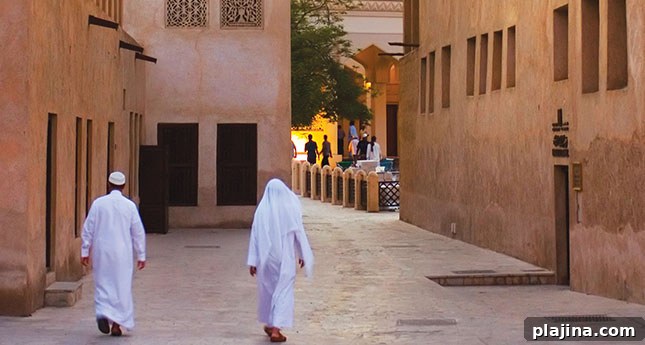
Wherever I looked, gleaming skyscrapers and construction cranes filled the sky. Then we drove into another Dubai — Bastakiya, the city’s oldest quarter. The scene shifted dramatically to reveal 19th-century courtyard houses, narrow souks and winding lanes. Wind towers dotted the rooftops, providing a reminder of traditional, passive cooling techniques.
There have been many Dubais through history. It began as a quiet fishing and pearling village and a regional trading outpost, later became an oil-rich emirate and then a major commercial hub. Today it is also a world-class tourist destination. Few places have experienced Dubai’s rapid transformation: a city-state in the United Arab Emirates that leveraged its prime location between Europe and Asia to accelerate modernization and global reach.
On this visit I discovered another facet of the metropolis: the lives of Arabian women. Early one morning I entered an old Arabic house and met Nada, who had driven in from the outskirts with her mother-in-law and a friend. Nada wore a traditional black silk abaya that revealed hints of stylish Western clothing underneath. Her mother-in-law preferred a more conservative style and wore dark shades that covered much of her face, a look common among older women. Despite different outward styles, I found both women to be surprisingly modern in outlook, much like the rising skyline around us.
Although strangers at first, our small group of Asian and European women were encouraged to ask questions. Over welcoming gahwa (Arabic coffee) and fresh local dates, we discussed how some traditions persist amid rapid modernization. Nada, in her 20s, spoke about her arranged marriage. She had not seen her husband before their wedding, a lavish event held at the Emirates Towers Hotel. Now a mother, she continues to work. Nada travels frequently for her job as an intermediary who helps bring medical conferences to Dubai.
As our visit unfolded, I tried on traditional garments and watched how locals perfume themselves with bakhour, a fragrant Asian incense used daily. I also learned about Arabic calligraphy from Mohamed, an accomplished practitioner who had studied the art for many years. Before leaving the old quarter we strolled through the glittering gold souk and the aromatic spice market, bustling with locals shopping for everyday needs. The atmosphere brought to mind Dubai’s past role on the ancient spice route. I purchased some saffron—often called the caviar of spices—before returning to the contemporary city.
We next went to the Jumeirah Emirates Towers, a large office complex, where staff from the Dubai Women Establishment welcomed us. This government agency works to improve opportunities and rights for women. Sana Suhail, a board member and assistant secretary-general of the Government of Dubai Executive Council, described initiatives to support local women finding jobs and to extend maternity leave for employed women.
For lunch we headed to the Burj Al Arab, the sail-shaped hotel that has become an iconic image of Dubai. Seated high above the city, we shared traditional Arabic meze—small plates that bridge the gap between appetizers and hors d’oeuvres. Wine is available at Dubai hotel restaurants, though not served to our group of Arabic women. Conversation and laughter flowed easily; Nada and I discovered we could have been friends anywhere. We also talked about the real estate boom then underway, fueled by condominium sales. Many units were being bought and resold before construction finished, and Nada cautioned potential buyers to understand the local market and the risks of preconstruction investments.
The next night I ran into Nada at a reception. She embraced me warmly and, with a mixture of pride and modesty, revealed the clothes beneath her abaya: slim jeans and an elegant silk blouse. We exchanged cards and planned to meet again when she came to New York.
Dubai’s upscale beachfront hotels and massive shopping malls—one even with an indoor ski slope—made clear how rapidly the city was expanding. I wanted to see more of the new developments before my trip ended, especially the ambitious architecture.
The recommended way to view Palm Jumeirah Island was by boat. The palm-shaped landform was created by spraying truckloads of sand over large rock formations set on the shallow seabed. The reclaimed island now features villas, hotels and retail space. Another massive reclamation, The World, aims to add hundreds of private islands and extend the coastline by miles.
Mindful that oil reserves would not last indefinitely, Dubai used petroleum revenues to build infrastructure and diversify its economy. The city invested in a world-class container port and promoted a pro-business environment with tax-free zones and streamlined processes to attract investors.
Since my visit, Dubai—like many global markets—has faced stock market declines and a real estate slowdown. Several construction and tourism projects were postponed. The city still claims the world’s tallest building, and market corrections could make Dubai comparatively more affordable.
Nada told me the city has changed and she looked forward to my return. The blend of enduring Arabic customs with ultra-modern surroundings is a central reason Dubai continues to fascinate. Having reinvented itself before, the metropolis remains poised to adapt again as it confronts the latest global challenges.