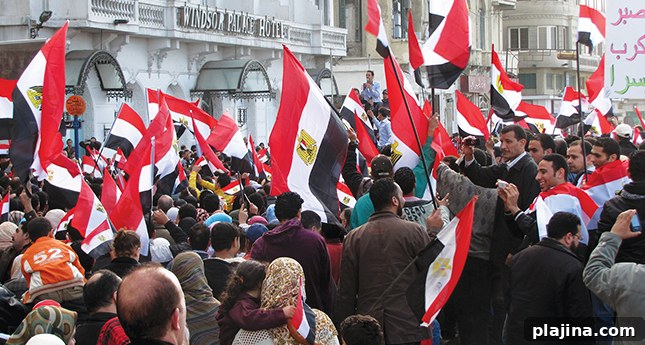
For many travelers, Egypt’s pyramids are the journey of a lifetime. But visitors in Cairo in late January found themselves in the midst of mass demonstrations against longtime leader Hosni Mubarak. Tear gas filled the streets, armored vehicles rolled through the city, government buildings burned, and the airport became chaotic as thousands of passengers were stranded — a vacation turned crisis.
As the situation in Egypt deteriorated, Global Rescue mobilized. The crisis-response firm, staffed with former Navy SEALs and other special-operations veterans, guided about 190 foreign nationals from central rally points to Alexandria’s international airport and escorted them onto a chartered Boeing 737 bound for Amman, Jordan.
Such large-scale evacuations are not unique. Political unrest across the Middle East, catastrophic natural disasters like the earthquake and tsunami in Japan, and medical emergencies in remote locations have combined to increase travel-related crises worldwide.
“I’m not sure there’s ever been a quarter like this,” said Daniel L. Richards, CEO of Boston-based Global Rescue. “Certainly not in a decade. … It really is unprecedented. It’s kept us very busy.”
Travelers can, however, take straightforward steps to reduce risk on overseas business trips and vacations. The most important preparation before departure is researching your destination’s current conditions.
“We call it ‘situational awareness,’” said Bruce McIndoe, president of iJet, a global security firm in Annapolis, Maryland. “Whether it’s political unrest, upcoming elections or the anniversary of a past attack, you need to know what might be happening.”
“You also need to understand the context you’re going into,” he added, “so you can be properly prepared for weather and medical concerns.”
For example, Sri Lanka has some of the world’s most beautiful beaches, but two seasonal monsoons can ruin a trip if you arrive at the wrong time (May–August in the south, December–March in the north). Bali, meanwhile, faced a rabies outbreak that caused many fatalities in recent years. Understanding seasonal and health risks helps travelers plan smarter.
Several authoritative sources provide country-specific travel information. The U.S. Department of State compiles detailed entries covering safety, road and aviation conditions, and special circumstances for every nation. The Centers for Disease Control and Prevention maintains a Travelers’ Health section with guidance on more than 200 destinations, lists of travel medicine clinics, and updates on epidemics. The World Health Organization monitors disease outbreaks, and other national foreign offices publish detailed travel advice as well.
Richards recommends enrolling in the State Department’s Smart Traveler Enrollment Program (STEP). STEP simplifies registering with the nearest U.S. Embassy or Consulate and sends travelers up-to-date information and travel warnings, often by email. STEP also helps consular officers locate and assist citizens during crises, as occurred after the 2010 Haiti earthquake.
“If you’re not registered, you’re not necessarily known to be in that location,” Richards said.
For travel to developing or politically sensitive destinations, consider using an experienced adventure travel company. A professional operator can offer a stronger safety net and local knowledge that make complex itineraries less risky.
“If you want a more robust safety net, you might go with a company like us,” said James Sano, president of Geographic Expeditions, a San Francisco-based firm specializing in small-group and custom travel. “For places like Hong Kong, you likely don’t need that level of support.”
Medical issues, including accidents and complications from pre-existing conditions, are the most common reason for overseas evacuations. Travelers should verify whether their health insurance covers overseas care and consider medical-evacuation insurance. It is important to know whether a policy repatriates patients to hospitals in the United States, as Global Rescue does, or routes them to the nearest available overseas facility. When treatment abroad is necessary, choose hospitals accredited by recognized international bodies such as Joint Commission International.
If you have a chronic condition, pack a digital copy of your medical history on a flash drive and a printed version in case you are in an area without computer access. Keep prescription medications in their original containers, bring extra supplies, and avoid relying on unverified pharmacies abroad where counterfeit drugs are more common. Dr. Bradley A. Connor, a gastroenterologist and former president of the International Society of Travel Medicine, suggests carrying a basic first-aid kit with over-the-counter remedies and prescription antibiotics as appropriate.
Richards says reliable communication is among the most essential travel tools. A cellphone is useful in many situations, but a GPS-enabled satellite phone is preferable for remote backcountry travel. He described a case in Alaska where a hunter stranded in severe winter conditions survived because he had a satellite phone and could call for a helicopter rescue.
Satellite phones are also valuable when natural disasters destroy local communications infrastructure or when governments disrupt phone service, as happened during Egypt’s protests. iJet’s McIndoe recommends assembling a “go kit” with items like a battery-operated radio, water-purification tablets, a multitool, and a charged phone.
Both McIndoe and Richards advise travelers to create an action plan for worst-case scenarios. Having a plan reduces panic and ensures you know options and next steps when a crisis unfolds.
Once abroad, avoid drawing attention to yourself. “Do not get off the plane advertising that you are an American,” Richards said. Keep a low profile, and avoid ostentatious travel arrangements that might attract unwanted attention.
While the chance of being targeted by terrorism is low, the risk of becoming a crime victim is more real. Security experts recommend not creating situations—verbal or visual—that draw notice. Western-branded hotels have been targets of attacks, but they generally offer higher safety standards than many local accommodations because global chains invest more in fire prevention and security. McIndoe suggests choosing rooms away from busy streets and avoiding ground-floor rooms or very high floors for fire-safety reasons.
If a crisis occurs, remain calm. Communicate your status and location, including GPS coordinates if possible, to a trusted contact. Evaluate the threat nearby—such as a large demonstration—and consider moving to a safer hotel that increases distance from the problem. If you are already removed from immediate danger, sheltering in place and monitoring reliable news sources can be safer than attempting to travel through uncertain conditions.
“Staying put is normally safer than venturing out and trying to make your way to the airport,” McIndoe said. “You may run into angry people or a roadblock, be held up for ransom, be kidnapped—or worse.”
Don’t expect rapid large-scale military or government rescues. Richards noted that responses after disasters like Haiti or Japan took days or weeks to arrive and were often insufficient. For medical or legal needs, the State Department can provide lists of local doctors or attorneys, but large evacuations, like those from Haiti, generally require passengers to reimburse the government for charter costs.
Private security and rescue firms can often act faster and by a wider range of transport methods. When commercial routes were unavailable during the 2006 Lebanon conflict, iJet rented vehicles and evacuated clients through mountain routes to Jordan. Global Rescue has used everything from chartered 737s to mules and yaks for operations in difficult terrain and bad weather.
“We’ve used everything from chartered 737s to mules and yaks,” Richards said. “Yaks will go whether it’s snowing or not.”