
Abu Dhabi’s recent history is still remembered by many residents who lived through the era before skyscrapers, wealth and oil shaped the city.
The change over the past five decades has been extraordinary. In the 1960s, local Bedouin tribes followed traditional livelihoods: coastal communities fished and collected pearls for trade, while desert nomads traveled with camels between oases and rarely settled permanently.
One of the most profound shifts has been in daily life. Where families once moved constantly in search of water and food, today the essentials are delivered to the population. Every day more than 16,000 tons of fresh produce arrive by sea and air, rising to around 21,000 tons during Ramadan. Advanced desalination plants treat seawater and supply fresh water across the city.
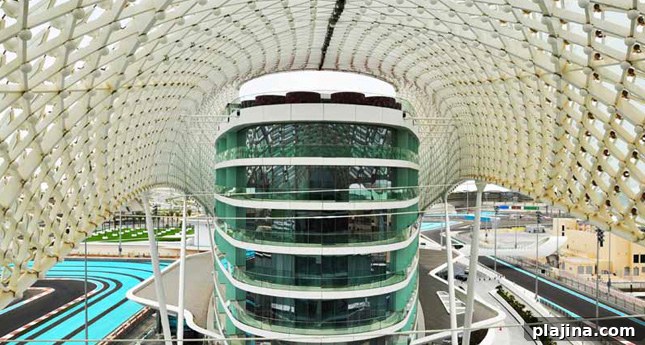
As residents became more settled, the emirate also opened outward. International culture and sport now arrive on Abu Dhabi’s doorstep. A new cultural district will host branches of the Louvre and the Guggenheim. On manmade Yas Island, the futuristic Yas Marina Circuit stages the annual Abu Dhabi Formula 1 Grand Prix. The Sheikh Zayed Cricket Stadium has even hosted displaced international teams.
The population itself changed dramatically. From about 60,000 people in the 1960s—mostly locals—the emirate grew to nearly 2 million by 2013, with foreign nationals making up roughly 80 percent of residents.
Oil is the most visible source of Abu Dhabi’s prosperity. Reserves discovered in the early 20th century began generating commercial exports in the 1960s. Equally important was the political leadership of Sheikh Zayed bin Sultan Al Nahyan, who led the formation of the United Arab Emirates in 1971. As the largest and wealthiest emirate, Abu Dhabi became the federal capital.
In recent decades Abu Dhabi and its neighbor Dubai competed then diverged. Dubai built a high-profile, tourism-focused economy based on real estate, while Abu Dhabi repositioned itself as a commercial and cultural capital. Dubai’s reliance on real estate exposed it to risk during the global financial crisis of 2008, and support from Abu Dhabi helped stabilize the region.
Despite holding around 95 percent of the UAE’s oil reserves and 92 percent of its gas, Abu Dhabi is planning for a post-hydrocarbon future. Large-scale projects emphasize culture, tourism and sustainable technology.
Park Hyatt Hotel & Villas on Saadiyat Island © Park Hyatt Hotel & Villas
Saadiyat Island, once largely undeveloped, is a flagship development. The multi-billion-dollar project aims to create homes for 150,000 people and includes luxury beach resorts such as the St. Regis and Park Hyatt Hotel & Villas, a Gary Player golf course and a cultural district planned to house major museums and galleries.
Saadiyat’s development has drawn criticism over migrant labor conditions. Thousands of low-wage workers from Bangladesh, India and Pakistan have built the island’s projects. While conditions have improved under international scrutiny, concerns remain about recruitment practices and workers’ rights.
Efforts to raise Abu Dhabi’s global profile include high-profile cultural and sporting investments. The emirate bought a stake in Manchester City and sponsors major sporting events, including the Formula 1 season finale. Abu Dhabi also supports innovative projects such as the Solar Impulse experimental aircraft, which began an attempted round-the-world flight from the emirate in March with the goal of completing the voyage in 2016.
Investment in renewable energy complements Abu Dhabi’s hydrocarbon wealth. Masdar City, located beside Abu Dhabi International Airport and estimated to cost up to $22 billion in initial phases, aims to be a center for clean technology and sustainable living. Designed for energy and water efficiency, the development includes automated public transport, driverless vehicles and urban design that captures prevailing winds for natural cooling.
Abu Dhabi’s transformation is ongoing. The city balances a living memory of its traditional past with ambitious plans for the future. Visitors can experience elements of all three eras—past, present and future—within the same visit.
Things to Do in Abu Dhabi
The shift from tradition to modernity is visible across the city. At Abu Dhabi’s Heritage Village, a recreated oasis settlement showcases old stone houses, date palms and traditional crafts. Across the former dhow harbor, downtown’s skyline rises, highlighting how quickly the city has changed.
Tourist stall, Heritage Village © Alex Scott | Dreamstime.com
Qasr al-Hosn, an 18th-century whitewashed fort in the city center, offers another vivid contrast. Inside its shaded passageways visitors can imagine life in a small coastal settlement, yet from the battlements a forest of modern skyscrapers now surrounds the historic site. A permanent exhibition details the fort’s role in Abu Dhabi’s history.
The fort is a humble reminder of the emir’s former palace before the much more opulent Emirates Palace opened in 2005. The hotel’s ornate marble lobby and grand dome remain striking even for those who only visit briefly.
One of the city’s simplest pleasures is free. The pedestrianized Corniche follows the shoreline through shaded parkland and past two manmade beaches. Locals and visitors jog, cycle and stroll here; refreshment stops and scenic views make it a favorite. Note that summer temperatures from June to August often top 104°F (40°C), so plan outdoor activities accordingly.
Ferrari World Abu Dhabi © Andrea La Corte | Dreamstime.com
Yas Island, near the international airport, is a major entertainment hub. Yas Waterworld is a large family water park with slides and surfing attractions. Nearby, the Yas Marina Circuit and Ferrari World offer motorsport experiences, thrill rides and driving events.
For wildlife and conservation, Sir Bani Yas Island lies about 110 miles southwest of the city and focuses on habitat restoration and species reintroduction. Visitors may see Arabian oryx, sand gazelles and other species in a protected setting, along with archaeological sites such as an early Christian monastery.
The desert hinterland offers adventure as well. Dune-bashing tours provide an exciting way to explore high dunes, and the oasis city of Al Ain—about a 90-minute drive east—presents a surprising landscape of greenery sustained by natural underground water, earning it the nickname the Garden City.
CHECKING IN WITH MUBARAK AL SHAMISI
Director, Abu Dhabi Convention Bureau, Abu Dhabi Tourism & Culture Authority
WHAT OPPORTUNITIES DOES ABU DHABI OFFER AMERICAN INVESTORS?
Abu Dhabi’s Economic Vision 2030 focuses on diversifying the economy into tourism, culture, business and renewable energy. The emirate is a zero-tax jurisdiction and a strategic regional hub with strong infrastructure for investment.
WHAT CULTURAL DIFFERENCES SHOULD AMERICAN INVESTORS BE AWARE OF?
While rooted in Islamic traditions, Abu Dhabi is a modern, multicultural city that emphasizes tolerance and hospitality. The environment is broadly welcoming and inclusive to international visitors and businesspeople.
HOW IMPORTANT IS THE BUSINESS SECTOR TO ABU DHABI’S TOURISM INDUSTRY?
Business tourism is a priority. The Abu Dhabi Convention Bureau supports meetings and events while TCA Abu Dhabi develops infrastructure, hotels and services to attract business travelers. Studies forecast continued growth in the economic impact of business events, and visa facilitation and airport preclearance make travel easier for international delegates.
WHAT ARE KEY FUTURE DEVELOPMENTS?
Planned developments include the cultural institutions on Saadiyat Island—such as Louvre Abu Dhabi and other major museums—expanded cruise facilities at Zayed Port and new international hotel openings. These projects aim to enhance Abu Dhabi as a global cultural and tourism destination.
Abu Dhabi is increasingly popular with international travelers. In 2014 the emirate received more than 123,000 visitors from the United States, a significant year-on-year increase, and officials expect further growth as new attractions and facilities open.
Sheikh Zayed Grand Mosque © Luciano Mortula | Dreamstime.com
WHICH ATTRACTIONS IN ABU DHABI DO YOU RECOMMEND?
Highlights include a guided tour of the Sheikh Zayed Grand Mosque, falconry experiences at Abu Dhabi Falcon Hospital, motorsport and theme-park attractions on Yas Island, cultural sites in Al Ain and desert experiences in the Al Gharbia region. Major annual events include the Formula 1 Etihad Airways Abu Dhabi Grand Prix, Abu Dhabi Food Festival, Abu Dhabi HSBC Golf Championship and Abu Dhabi Art.
Abu Dhabi: Just the Facts
Time Zone: GMT +4
Phone Code: Country Code: 971, City code: 2
Entry/Exit Requirements: U.S. citizens need a passport valid for at least six months beyond arrival and a confirmed round-trip ticket. Visas on arrival are available for stays up to one month; contact Abu Dhabi immigration for extensions.
Currency: Dirham
Official Language: Arabic, with English widely spoken. Other common languages include Persian, Hindi and Urdu.
Key Industries: Oil and gas, financial services, tourism, real estate
Abu Dhabi Info to Go
Abu Dhabi International Airport, about 19 miles east of downtown, handles scheduled international flights and is the primary hub for Etihad Airways, offering direct connections across the globe. The airport provides U.S. border preclearance for eligible flights.
Where to Stay in Abu Dhabi
Anantara Al Sahel Villa Resort — Sir Bani Yas Island. A secluded resort with luxury villas, ideal for wildlife and nature escapes. Sir Bani Yas Island $$$$
Jumeirah at Etihad Towers — Luxurious rooms with sweeping city views in the Etihad Towers complex. West Corniche $$$$
Yas Viceroy Abu Dhabi — Located on the Yas Marina Circuit, this hotel is popular with motorsport enthusiasts. Rates rise significantly during the Formula 1 Grand Prix. Yas Island $$$$
Restaurants in Abu Dhabi
Frankie’s Italian Restaurant & Bar — At Fairmont Bab Al Bahr, this restaurant is a partnership between jockey Frankie Dettori and chef Marco Pierre White. Fairmont Bab Al Bahr, Khor Al Maqta $$$
Spice Mela — Known for colorful décor and authentic Indian cuisine, located at Rosewood Abu Dhabi. Al Maryah Island $$$
Zuma Abu Dhabi — Contemporary Japanese dining in the waterfront Galleria Mall with an open-plan kitchen. Sowwah Square, Al Maryah Island $$$$