Two thoughts come to mind when you’re perched on the back of a runaway elephant. First, can such a massive animal be brought under control? Second, it’s a long way down.
I found myself on a wobbly wooden bench strapped across the elephant’s back, pinned to faith in the mahout. That faith quickly felt misplaced. From his perch on the animal’s neck, legs tucked behind the flapping ears, the mahout tried to assert control with a few urgent commands and increasingly desperate swishes of a small stick. The pachyderm was unconvinced.
The elephant veered off the jungle path we intended to take and crashed through dense vegetation, making a beeline for the nearby river. We splashed into the shallows and I braced for a dunking. Instead, the elephant simply wanted a drink.
That episode makes it easy to shake my head at the idea that prompted a pair of sports enthusiasts to invent elephant polo. Could two teams of up to four elephants each really compete on a playing field? It sounds like a recipe for chaos and bruised egos—perhaps worse. Yet the sport has become an unlikely success.
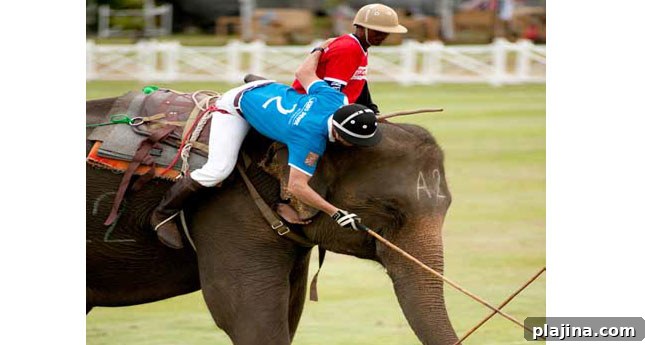
The first matches, billed as the World Championship, were held in Nepal in 1982. The event has continued annually, with recent editions staged in protected parks and lodges that combine tourism with conservation. Since 2001, a related tournament has been hosted by the exclusive Anantara Hotel in Hua Hin, southern Thailand, where teams vie for the King’s Cup. These events draw attention as much for their spectacle as for their purpose.
Both tournaments carry a serious underlying motive: to raise awareness about the plight of Asian domestic elephants and to fund their care. Street elephants take part in the Hua Hin matches, each carrying a mahout and a player armed with a long polo mallet. The basic aim mirrors horse polo—strike a small ball toward the opposing goal—but practical limits shape how the game is played. For logistics and safety, all players use their mallet right-handed, and they focus on striking the ball while the mahout positions the elephant.
Species-specific rule changes further distinguish elephant polo. An elephant may not pick the ball up with its trunk, and it is a foul if an elephant lies down to block its goal. These adaptations help keep play predictable and safer for both animals and humans.
Despite their size, elephants can be surprisingly agile in a match. Guided by mahouts with long-standing partnerships, they can pivot quickly, charge smoothly after the ball and pause obediently while the player swings. That coordination reflects the trust and training built up over years.
There is also something unmistakably joyful about watching elephants play. Their jaunty gait and the way they sweep the ground with their trunks suggest they enjoy being part of the game. Their expressions and movements convey engagement rather than distress.
Thinking back to my skittish encounter in northern Thailand, I realized I had misunderstood the nature of domestic elephants. They are not machines to be commanded at will; they are sentient beings that act on their own terms. When treated with respect and care, they may choose to cooperate and even to share in our pursuits. If we honor their dignity, they may take us along for the ride—sometimes literally.