
When Detroit filed the nation’s largest municipal bankruptcy in 2013, many wondered if the city could recover. Once the wealthiest city per capita in the United States during the 1950s, Detroit had lost many jobs as the auto industry migrated to the suburbs, and its population fell from about 1.8 million at its peak to roughly 667,000 today.
The broader Detroit region, spanning 11 counties, faced its own challenges. NAFTA and globalization shifted many manufacturing jobs out of the country, automation removed others, and the Great Recession depressed demand for new vehicles. By the time the economy began to bounce back, the automotive industry confronted a new set of disruptions: technological advances that were reshaping what vehicles are and how people use them. Urban residents increasingly opted not to own cars, and consumer demand for electric vehicles grew.
Rather than cling to the past, Detroit and its surrounding communities pivoted to next-generation mobility, a transition that could help restore the region’s economic prominence. Next-generation mobility encompasses autonomous, connected, electrified and shared vehicles designed to reduce pollution and congestion while improving safety. For example, a self-driving electric car could handle an airport run, or a cloud-connected vehicle might alert a driver that an intersection is unsafe.
“The auto industry is going through a significant transformation,” said Glenn Stevens, Jr., executive director of MICHauto and vice president of automotive and mobility initiatives for the Detroit Regional Chamber. “It’s transitioning from automobile companies to technology companies.”
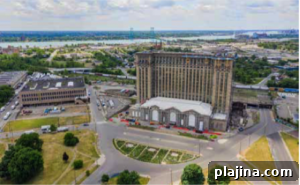
PHOTO: © FORD
Stevens emphasizes that tomorrow’s vehicles will be rolling computers running millions of lines of code. Despite its manufacturing roots, the Detroit region is well positioned to lead in next-generation mobility. Twenty-two original equipment manufacturers, including Ford and General Motors, maintain global headquarters or research centers here. Ninety-six of the top 100 North American automotive suppliers have a presence in the state, and roughly 72 percent of the nation’s automotive research and development takes place in Michigan.
Michigan also offers a deep engineering talent pool: the highest concentration of engineers in the country, more than 8,600 engineering degrees awarded annually, and prominent engineering programs at the University of Michigan, Michigan Technological University and Michigan State University.
Stevens notes the shift toward next-generation mobility began roughly five to ten years ago, and the industry has since grown. The region hosts two globally recognized automated vehicle testing sites—Mcity and the American Center for Mobility. Ford is converting a historic Detroit train station into an R&D facility, and General Motors has repositioned its D-Ham plant as Factory Zero to focus exclusively on electric-vehicle production. “The ‘zero’ is very important,” Stevens said, “It stands for zero emissions, zero congestion and zero accidents.”
Michigan has further demonstrated its commitment by creating the Office of Future Mobility and Electrification to boost electric vehicle production, expand software engineering talent, and leverage technology to cut traffic accidents and fatalities. The state also announced plans for a 40-mile Mobility Corridor for autonomous and connected vehicles stretching from downtown Detroit to Ann Arbor.
Still, next-generation mobility is not the region’s sole economic strategy. Maureen Donohue Krauss, president and CEO of the Detroit Regional Partnership, points out that past downturns taught the region resilience. During the COVID-19 pandemic, local manufacturers pivoted quickly to produce ventilators, illustrating the region’s capacity to repurpose skills and know-how.
With a skilled manufacturing workforce already in place, the Detroit area attracts businesses in aerospace, defense, medical devices, professional services like automotive insurance, and an emerging tech startup community. Josh Hundt, executive vice president of business attraction for the Michigan Economic Development Corporation, believes the state’s continued growth will depend on this diversified mix of industries alongside next-generation mobility.
Michigan’s pro-business environment—with a 6 percent corporate income tax and a 6 percent sales tax—combined with workforce development initiatives like the SixtyBy30 program (which aims for 60 percent of the workforce to hold a skill certificate or college degree by 2030) make the state attractive to employers. Add a relatively low cost of living and abundant natural beauty, and Michigan’s appeal increases further.
Ultimately, whether Detroit and the surrounding region prosper depends on adaptability. “Together we can build a better Detroit if we can change,” Stevens said. “For a long time, the auto industry didn’t want to change. Now its future depends on whether they can make a successful transition to mobility.”
SCENIC DRIVES

© HELGIDINSON | DREAMSTIME.COM
Michigan’s scenic roads showcase tree-lined country lanes, lakeshore views and sandy dunes just a short drive from Detroit. The M-15 Pure Michigan Byway begins in northern Oakland County and travels to downtown Bay City, where historic architecture, a river walk and a naval ship museum await. Along the route, visitors can detour to Frankenmuth, a Bavarian-themed town home to Bronner’s Christmas Wonderland.
Another route, the US 12 Heritage Trail, heads west from Detroit and includes stops such as Dearborn, home to The Henry Ford Museum of American Innovation and the Motown Museum. Small towns like Bronson, known as the Gladiolus Capital, and Allen, prized for its antiques, provide charming stops before the trail reaches its western terminus near Michigan City.
Wine enthusiasts can explore the Pioneer Wine Trail west of Detroit. Starting on US 12, tour three wineries near Hillsdale, then head to Jackson and visit Sandhill Crane Vineyards along I-94. Continue via US 127 and I-96 to reach Burgdorf’s Winery for another tasting stop.