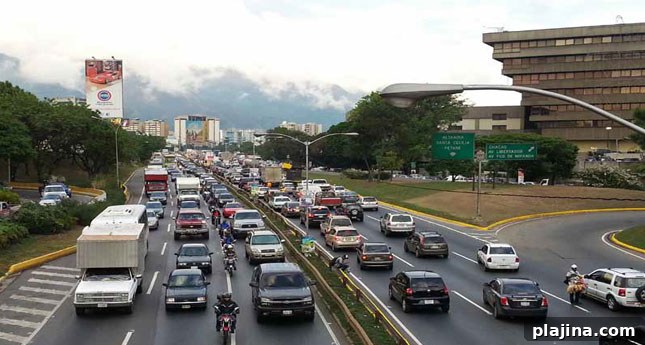
Stretching for 12 miles through the picturesque valley below Mount Avila and separating the city from the sea, Caracas long earned a reputation as one of South America’s most cosmopolitan capitals, with historic sites, notable museums and elegant plazas. Years of political upheaval and widening economic inequality, however, have profoundly changed the city’s character. Caracas is now considered one of the most dangerous cities in the world, with a high homicide rate and frequent incidents of kidnapping, assault and armed robbery. Former residents lament the proliferation of concrete walls and barricades in a place once called “Little Venice.” “It’s a ghetto, a war zone,” says native Venezuelan Reinaldo Herrera. Many neighborhoods are deemed off-limits to visitors, so travel here requires extreme caution.
Although Venezuela is not listed by the U.S. State Department as a country to avoid outright, the U.S. Embassy posts numerous cautions and warnings for travelers. On arrival, do not change money at the airport, and be alert for so‑called security officials who may be armed thieves escorting travelers to ATMs for “express kidnappings.” Gangs sometimes set up fake checkpoints and impersonate police on the road from Maiquetía Airport; embassy staff routinely use armored vehicles for airport transfers.
Venezuela’s vast oil reserves have kept gasoline prices low, contributing to chronic parking shortages and heavy traffic congestion. Given the risk of robbery, taxis can be dangerous; the metro, once a model system, also requires vigilance; and renting a car is generally discouraged. Many travelers and locals recommend arranging an armored car with a driver through a trusted hotel concierge or an established service for about $50 per day.
Currency exchange is another challenge. Hotels are prohibited from exchanging money, and travelers commonly avoid credit cards and ATMs because the official exchange rate is substantially less favorable than the parallel “street rate.” Although technically illegal, many people change cash privately with a trusted local contact. If confronted by thieves while carrying cash or valuables, surrender items without resistance; some travelers carry a decoy wallet and a low‑value phone to hand over if necessary.
Despite the security concerns, Caracas remains Venezuela’s business hub, hosting the stock exchange and the national oil company, Petróleos de Venezuela, S.A. The United States continues to be the country’s principal trading partner, with hundreds of U.S. companies represented and direct investment concentrated in petroleum, manufacturing and finance. American exports to Venezuela include machinery, chemicals, agricultural goods, medical and optical instruments, automobiles and auto parts.
Most commercial activity has shifted away from the riskier downtown areas near Plaza Bolívar to the eastern municipality of Chacao, considered the safest and most walkable part of the city. Adjacent neighborhoods include La Castellana, Altamira and Los Palos Grandes north of the Autopista freeway, and Las Mercedes to the south. Even in these neighborhoods, visitors are advised not to wander far from their hotels or accept unsolicited directions from strangers.
La Castellana hosts the city’s newest five‑star property, the Renaissance, while the InterContinental Tamanaco and the Eurobuilding Hotel in Las Mercedes are well‑known four‑star options, though some hotels have experienced disruptions when rooms were requisitioned for social programs. Reliable restaurants are often found inside hotels and shopping centers, and most reputable establishments offer valet parking.
Breakfast options outside hotels are limited, but locals and visitors find good morning fare such as arepas, empanadas and croissants at Café Arabíca in Los Palos Grandes. The café highlights single‑estate coffees roasted on the premises and displays information about coffee cultivation and processing.
For all‑day dining near the Renaissance Hotel, D.O.C. in Los Palos Grandes emphasizes fresh local ingredients, including fish, an assortment of artisanal cheeses and Muscovy duck. The restaurant’s bar features an extensive selection of Venezuelan rums and cocuy. Contemporary local art decorates the space, and a private dining room with Wi‑Fi is available for business meetings. D.O.C. also promotes 30‑day dry‑aged Venezuelan beef. Other popular steakhouses in Las Mercedes include Maute Grill and Hereford Grill.
Lunch destinations frequented by Caracas’s well‑dressed crowd include Aprile in Altamira, which offers Italian cuisine in a contemporary setting, and La Montanara in Las Mercedes for a more homely Italian experience. Mokambo is noted for its Venezuelan fusion dishes. Long‑established Lasserre in Los Palos Grandes provides a formal French dining experience with an extensive Bordeaux list and a dressy atmosphere.
Le Club remains a traditional, member‑only institution for upscale residents and can arrange private midweek lunches for non‑members and corporate groups. Casa Deli offers dim sum and Sichuan and Cantonese specialties with bilingual staff; a separate Nobu in Caracas is not affiliated with the international chain despite reports to the contrary.
The city’s vibrant arts scene is often displayed in restaurants and galleries. On weekends, several galleries exhibit new works in El Centro de Arte Los Galpones in Los Chorros. For artisan crafts and folkloric items, La Artezanía in La Cuadra Gastronómica in Los Palos Grandes offers quality basketry, carvings and traditional pieces. Venezuelan chocolate is a popular purchase, as are regional hot sauces with distinctive Amazonian flavors.
With a relatively steady average temperature around 88 degrees that varies little throughout the year, Caracas can be a pleasant place for business travelers who remain discreet, avoid carrying large sums of cash or flashy jewelry, and follow local safety precautions.