
What comes to mind when you think of the Canary Islands?
A subtropical paradise named for small yellow birds? A volcanic archipelago whose stark landscapes have doubled for alien worlds in Hollywood films? A mass-tourism destination of crowded beaches, bustling bars and Fish & Chips shops?
The Spanish islands off the northwest coast of Africa carry many preconceptions. Yes, canaries live here, but the islands did not take their name from the birds—the Romans called them Canariae Insulae, commonly translated as “Islands of Dogs.”
Geologically, the islands are volcanic, sculpted by lava into dramatic terrain. Yet that raw origin yields a diverse patchwork of habitats, from near-desert slopes to verdant laurel forests and pine-clad highlands.
And while millions of Europeans have flocked to the Canaries over the decades, relegating the archipelago in some minds to package-holiday clichés, there is far more to discover beyond the resorts: terraced farmland, quiet inland villages and authentic local traditions that remain remarkably intact.
I arrived at Tenerife South Airport on a winter charter flight from northern Europe. Most passengers boarded tour buses heading left toward Los Cristianos, Playa de las Américas and Costa Adeje. My vehicle turned right and climbed the island’s arid southeastern coast for about 50 minutes toward the capital, Santa Cruz.
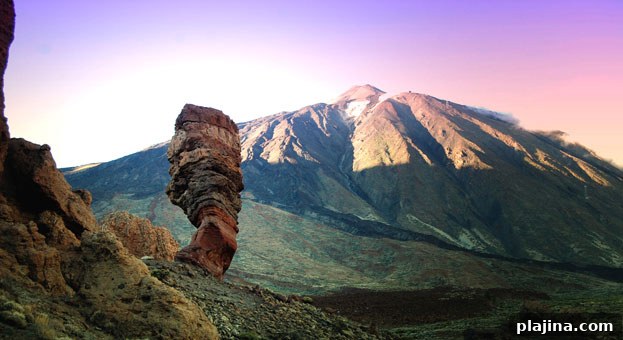
From the highway the island’s geology was obvious: plunging slopes to sea on one side, steep ascent toward cloud-clad heights on the other. Mount Teide—the highest point in Spain—dominates Tenerife, and almost every journey on the island involves circumnavigating its base or winding up its switchback roads.
Santa Cruz surprised me. Rather than a sleepy port, it revealed itself as a lively city of more than 200,000 people. In the years before Spain’s financial crisis, local authorities invested in bold architecture to raise the city’s profile, most notably Santiago Calatrava’s striking Auditorio de Tenerife.
On my first walk I visited the Auditorio, perched on the waterfront. Its sculptural curves and dramatic roofline recalled a deconstructed Sydney Opera House: at different angles the building suggested a billowing sail, then transformed into something like a sculpted cobra.
From the balcony of my room at the Grand Hotel Mencey I watched a city that looked modern and cosmopolitan, yet the volcanic slope behind the rooftops frequently reappeared, reminding me how little human ambitions matter against Tenerife’s geological backdrop.
One rainy morning I drove inland with fellow travelers and our guide, Carlos, an Anglo‑Spaniard who also answered to the name Miles. “Tenerife has many microclimates,” he said. “Just because it’s raining here doesn’t mean the whole island is wet.”
We skirted Tenerife North Airport and began the long climb toward Mount Teide. Rain and fog wrapped the landscape, but Carlos promised clearer weather higher up. At 7,841 feet we stopped at Teide Observatory, a cluster of research buildings chosen for their typically pristine skies. Drizzle continued to fall, and views were modest—until we learned the cable car to the upper slopes was running.
On the short drive to the cable station the clouds thinned. We boarded the cable car and rose to the upper station at 11,663 feet, stepping into brilliant, thin sunlight that contrasted sharply with the mountain’s black volcanic rock. Without a summit permit we followed a steep path circling Teide’s rim, looking down into a vast crater and out to occasional breaks of blue where the Atlantic shone.
That night we stayed in the Parador Canadas del Teide, located within the crater. After a cold dinner we gathered outdoors around a local astronomer’s telescope, sharing views of Jupiter and distant constellations under an extraordinarily clear sky.
At dawn we descended through shifting seasons: frost and winter at the crater’s rim, spring blossoms at the tree line, then warm sunshine by the time we reached the coast and the resort town of Los Cristianos. The rapid changes in temperature and vegetation over a relatively short distance illustrated Tenerife’s dramatic microclimates.
From Los Cristianos we took a 40‑minute ferry to La Gomera, one of the smaller Canary Islands. Each island has its own character; stepping ashore in La Gomera felt like entering a quieter world. Our guide, Roberto Durante, claimed a distant relation to entertainer Jimmy Durante and had the easy charm of a local who knows his island well.
La Gomera rises sharply from the sea in folded ridges and deep ravines. With limited flat land, farmers have carved terraces into steep slopes. Winding roads thread the mountains, and the distances are short only in absolute terms—every trip involves tight curves and slow progress. To communicate across ravines locals developed a whistled language, El Silbo. Once endangered, El Silbo is now taught in schools and survives as a living tradition.
Outside a countryside restaurant, 69‑year‑old Placido Chinea Mendoza demonstrated El Silbo: a single sharp whistle could carry farther than a shout and conveyed simple messages—“get the red wine ready,” “get the white wine ready,” or “I’ll have a beer.”
Large areas still showed the scars of a 2012 fire that damaged part of La Gomera’s laurel forest, but new green shoots were already softening the blackened slopes. The island’s network of hiking trails looks tempting; with more time I would have happily explored deeper into its ravines and forests.
On the return crossing the horizon was a ribbon of Tenerife’s coastline and the hazy silhouette of Teide. The 17th‑century poet John Donne captured the mountain’s presence succinctly in verse: “Doth not a Tenerife, or higher hill/Rise so high like a rock, that one might think/The floating moon would shipwreck there, and sink?”
Driving Tenerife’s southwest coast, I found my preconceptions challenged. Beyond the major resorts the landscape alternated between tourist development, banana plantations and open coastal land. We reached Los Gigantes, where sheer cliffs plunge into the sea and the road ends.
From a small boat off Los Gigantes we searched for marine life in the strait between Tenerife and La Gomera. Tenerife is now a leading whale‑watching destination in Europe. Sperm whales, sei whales, minkes, killer whales and several dolphin species can be seen at different times of year, but our main target was the resident population of pilot whales. Before long a pod of about a dozen animals rode the swell beside our boat.
Looking back toward the island, the narrow strip of tourist development hugged the shore while Teide towered behind, a reminder of the landscape that existed before European arrival. The indigenous Guanches once inhabited Tenerife; although their culture was largely erased after the 15th‑century conquest, recent DNA studies show Guanche ancestry survives in many Canarians.
The town of Candelaria brings these threads of history together. On its shoreline are caves once used as Guanche tombs, and local legend holds that an image of the Virgin Mary appeared there in 1392. The town grew into an important Catholic shrine for early Spanish settlers, anchored by the Basilica of Candelaria. Visiting on a Sunday morning, I joined locals making a leisurely pilgrimage to the town’s sacred sites and saw the waterfront lined with statues of the nine Guanche kings who ruled Tenerife at the time of the apparition.
Candelaria feels a world away from the island’s tourist centers. Souvenir shops here serve pilgrims more than sunseekers, while the Atlantic occasionally douses the sea wall with spray and Teide broods on the horizon—between them you get a vivid sense of contemporary Canarian life.
On departure, the flight traced Tenerife’s eastern coast. From the air I could pick out the cable car station, Candelaria’s red roofs and the Auditorio in Santa Cruz. As the plane banked north and the island receded, my image of the Canaries had shifted: not simply a sun‑and‑sand playground, but an archipelago of striking landscapes, resilient traditions and unexpected variety.
Where to Stay in Tenerife
Gran Meliá Palacio de Isora — An award‑winning 579‑room resort with a dramatic fountain display in the main courtyard. For extra luxury choose RedLevel for private villas, butler service and in‑room aromatherapy. Ave. Los Océanos, Alcalá, Tenerife. $$$–$$$$
Iberostar Grand Hotel Mencey — A recently renovated, palatial hotel in central Santa Cruz with a kitchen classroom for hands‑on local cuisine experiences. Calle Doctor José Naveiras 38, Santa Cruz, Tenerife. $$$
Parador La Gomera — The Parador occupies a historic building set in gardens overlooking San Sebastián de La Gomera, offering a peaceful base for exploring the island. San Sebastián de la Gomera. $$
Restaurants in Tenerife
Anturium Restaurant — Located in the fishing village of Garachico, this intimate restaurant in Hotel San Roque is known for memorable touches such as a mojito sorbet. Hotel San Roque, Esteban de Ponte 32, Garachico, Tenerife. $$$
M.B. — Tenerife’s Michelin‑starred restaurant, bearing the initials of chef Martín Berasategui and led by Erlantz Gorostiza, offers high‑end Basque‑influenced cuisine. Abama Golf & Spa Resort, Guía de Isora, Tenerife. $$$$
La Montaña–Casa Efigenia — A simple, hearty vegetarian restaurant in rural La Gomera serving flavorful regional dishes. Las Hayas, La Gomera. $$
Tenerife Info to Go
Most domestic flights from mainland Spain arrive at Tenerife North Airport (TFN), convenient for Santa Cruz and northern resorts like Puerto de la Cruz. Tenerife South Airport (TFS) is the island’s main international gateway, with daily flights from many European cities.