
Hotel Marcel, a Tapestry Collection by Hilton is an adaptive reuse of the famed Bauhaus designer Marcel Breuer’s Brutalist landmark, the Pirelli Tire Building in New Haven, Connecticut. Carefully preserved as an example of Breuer’s work, the building has been transformed into the nation’s first Passive House and Net Zero certified hotel and is also among a select group of LEED Platinum-certified hotels in the United States.
© Seamus Payne
Breuer designed the building in 1969 and it was completed in 1970 to serve as the headquarters for Armstrong Rubber Company, a major American tire manufacturer. Armstrong owned the site until 1988, when Pirelli acquired it. Known commonly as the Pirelli Building, the structure is listed on both the Connecticut and National Register of Historic Places and survived several proposals for demolition before being preserved and repurposed.
Preservationists and Brutalism enthusiasts celebrated in 2020 when developer and architect Bruce Redman Becker, FAIA, LEED AP, of Becker + Becker purchased the building with the goal of converting it into a net-zero energy hotel and conference center. The project culminated in spring 2022 with the opening of Hotel Marcel.
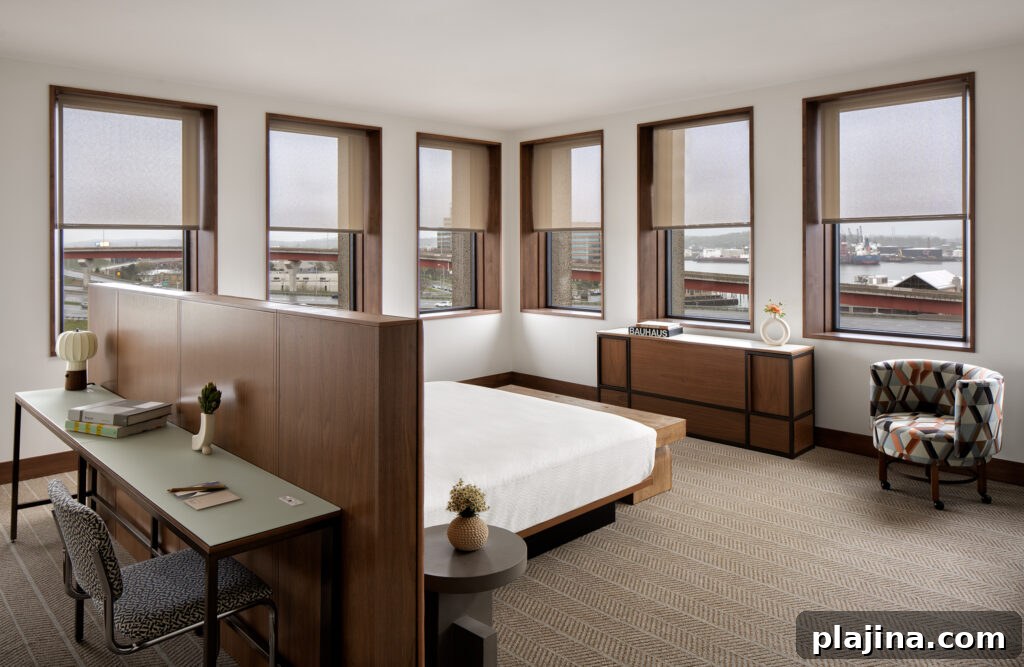
The hotel’s 165 guestrooms and suites reflect a restrained, contemporary aesthetic that honors the building’s architectural roots. Rooms feature concrete grey finishes, caramel vinyl, and walnut accents, complemented by muted dark green and sienna tones and sculptural lighting. Each desk includes a Breuer Cesca–designed chair, reinforcing the connection to the building’s designer.
© Seamus Payne
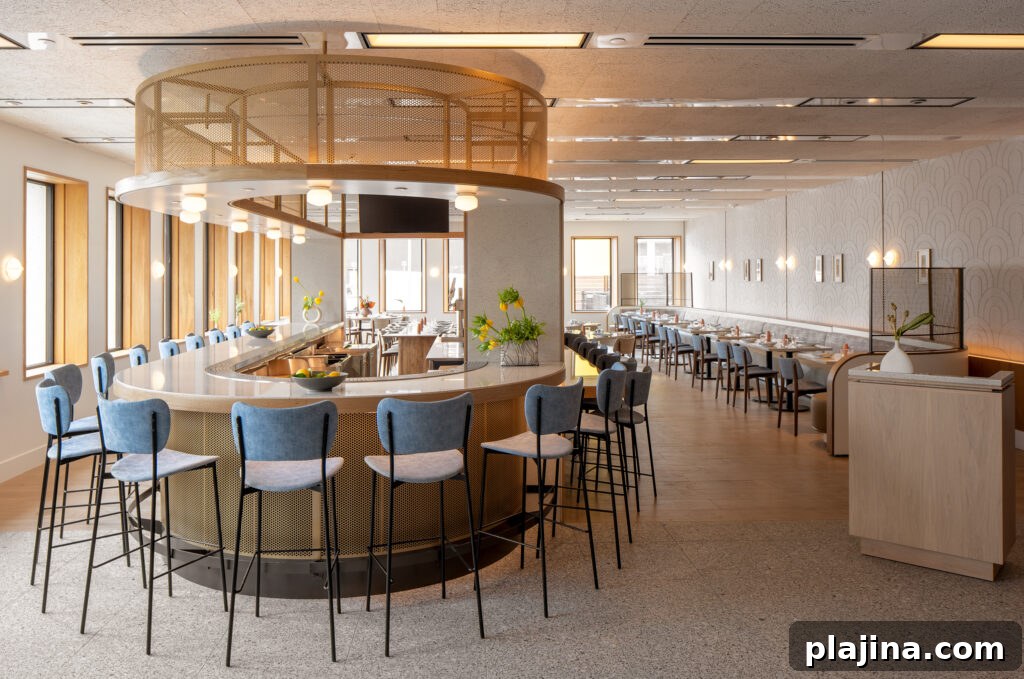
The hotel’s signature restaurant, BLDG, presents a menu that emphasizes local sourcing and seasonality. The wine list favors biodynamic and organic selections from regions such as Italy, Spain, New Zealand, Chile, and California. Menu highlights include New Haven lobster rolls and duck confit sliders. BLDG serves breakfast, lunch, dinner, and drinks daily. For meetings and events, the property offers approximately 7,000 square feet of flexible space, including a penthouse courtyard and gallery areas.
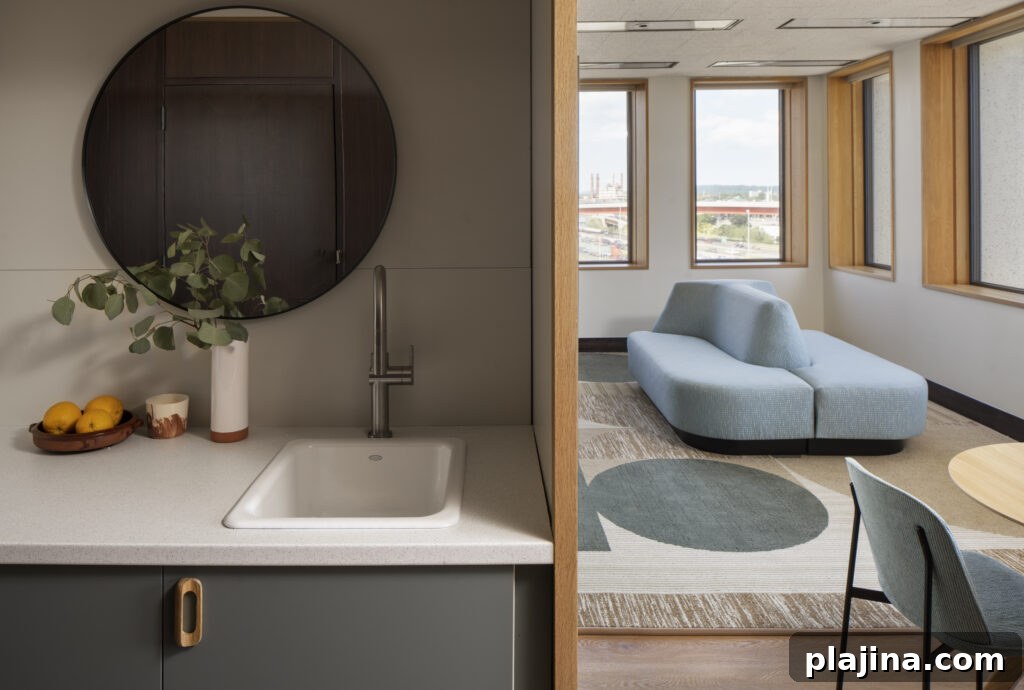
Dutch East Design led the interior transformation, reimagining the former industrial headquarters as a welcoming, human-centered hotel while honoring the building’s austere exterior. The design embraces Brutalism’s emphasis on honest materials by incorporating natural woods, hand-made tiles, and custom patterns and profiles inspired by Bauhaus principles. The intent was to create warmth and approachability without obscuring the structure’s original character.
© Seamus Payne
Working within the constraints imposed by the building’s historic designation, designers carefully integrated original and repurposed elements. The interiors feature restored 1960s light fixtures, custom furnishings, Bauhaus-inspired patterned rugs, and original textile and graphic artworks that reference the building’s midcentury origins while supporting contemporary use.
Sustainability systems were deeply integrated to meet the hotel’s high-performance goals. A Power over Ethernet (PoE) system provides efficient power for lighting, automated window treatments, and guestroom mini-fridges. The hotel operates entirely on electricity, producing 100 percent of its energy needs for electricity, heating, and hot water through a rooftop solar array and solar parking canopies. Electric vehicle charging stations are available for guests. Room rates for double occupancy start at approximately $175 per night, varying by room type and date.