
Shanghai literally means “on the sea” or “going to the sea,” an apt name for a city where the Yangtze River meets the Huangpu and flows into the South China Sea. Once a small fishing village, Shanghai rose to international prominence after the First Opium War (1839–1842) when treaties opened the city to foreign trade. The British were followed by the French and Americans, and by the 1880s Shanghai had become China’s largest city. The 1920s and early 1930s are often called Shanghai’s Golden Era, when the city flourished as a cosmopolitan commercial and financial center—sometimes nicknamed the “Paris of the Orient.” That era was interrupted by the Japanese bombing and occupation during World War II and later by the upheavals of the Chinese Communist Revolution and the establishment of the People’s Republic of China. It was not until the late 1970s and the reform period that market-oriented economic activity returned in earnest.
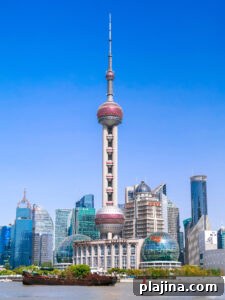
PHOTO: © JIXIANG LIU | DREAMSTIME
Today Shanghai is a dynamic metropolis of roughly 30.5 million people. Its metropolitan area covers about 2,448 square miles—around eight times the size of New York City’s five boroughs. The city’s appeal comes from its dramatic skyline, a thriving cultural and dining scene, lively nightlife, and a pragmatic, business-friendly spirit that attracts foreign investors.
Nearly 1,000 multinational corporations maintain their China or Asia Pacific headquarters in Shanghai, according to the American Chamber of Commerce Shanghai. Major global companies such as GlaxoSmithKline, Tesla, Apple, Cisco, Ford, Honeywell, Dow, Merck and Anglo American have a significant presence in the city. Shanghai is also home to hundreds of foreign-funded R&D centers. For example, Nvidia announced plans for an R&D facility in Shanghai to develop products suited to the Chinese market while meeting international compliance requirements.
With 43 container terminals, the Port of Shanghai is the world’s largest and busiest port, handling more than 47 million TEUs annually. Yangshan Port showcases advanced automation, including fully automated cranes and driverless trucks across its extensive complex. Four of the world’s top 10 most efficient ports are in China, according to a World Bank and S&P Global Market report. Global manufacturers and tech companies use Shanghai as a primary gateway to distribute electronics and consumer goods worldwide.
Shanghai’s three cruise terminals make the city a regular port of call for many international lines. The Shanghai Port International Cruise Terminal—only about 3 miles from the city center—can accommodate medium and smaller luxury ships, while Wusongkou and Waigaoqiao, located roughly 15–16 miles from downtown, can berth the world’s largest cruise vessels.
CHECKING IN WITH KENNETH JARRETT
Senior Advisor, Albright Stonebridge Group, and former President, American Chamber of Commerce in Shanghai
How would you characterize U.S.-China business relations during your term as president, and how does it compare to the present day?
When I became Chamber president in 2013, “cooperation” still defined U.S.-China business ties: U.S. firms sought access to China’s market while China benefited from foreign investment, technology and management know-how. By the time I left in 2018, “competition” had largely replaced cooperation. Growing concerns in the U.S. about China’s strategic behavior, cybersecurity and global influence shifted the relationship toward strategic competition and mistrust. Economic interactions now are often viewed through a national security lens, especially in technology sectors where both governments have imposed controls that limit business activities.
How can U.S. companies mitigate risk in the current business climate?
China remains essential for multinational companies because of its large consumer base and expanding middle class. Many Chinese firms are becoming global competitors, so having a presence in China helps multinationals understand competitive dynamics. Important innovation is emerging from China, and U.S. firms often learn from Chinese counterparts. Companies should monitor macro-level trends in U.S.-China relations, maintain active engagement with both governments, and ensure headquarters listens to its local teams. Senior executives should visit regularly to form a grounded perspective on developments and media coverage.
What activities would you recommend for first-time visitors?
Explore Shanghai on foot and by dining through its neighborhoods. The former French Concession is ideal for leisurely walks among tree-lined streets, historic architecture and independent boutiques. The Bund—Shanghai’s riverfront promenade—offers iconic views and impressive heritage buildings like the old HSBC headquarters. For history, the Shanghai History Museum provides a clear introduction to the city’s past.
Recommended reading
John Pomfret’s The Beautiful Country and the Middle Kingdom offers a readable historical overview of U.S.-China relations. Jim McGregor’s One Billion Customers is a practical guide for doing business in China.
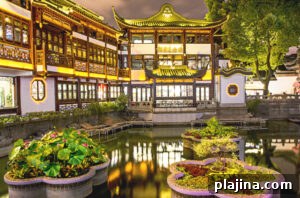
PHOTO: © RODRIGO RODRIGUEZ RUIZ | DREAMSTIME
DIVERSIONS
Begin at the historic Yu Garden and enjoy tea at the 400-year-old Huxinting Teahouse set above a small lake with lotus and koi. Wander the surrounding old city streets filled with jade shops and markets. Spend time in the French Concession—especially around Huaihai Lu—to absorb the 1930s atmosphere, discover outdoor cafés, family-run noodle shops and boutique stores tucked into old residential lanes. Visit Sun Yat-sen’s former residence and the site of the First Chinese Communist Party Congress for historical insight.
Shanghai’s art scene has expanded rapidly with new museums and art fairs such as ART021, West Bund Art & Design and PHOTOFAIRS Shanghai. Museum Mile in West Bund now features the Yuz Museum and a Centre Pompidou outpost, along with galleries like ShanghART. The area hosts more than a hundred galleries and artist studios, making it a must for serious collectors.
For live music, the Jazz Bar at the Fairmont Peace Hotel is a historic venue featuring one of the world’s longest-running jazz ensembles. For panoramic views, visit the Oriental Pearl Tower and book a window seat in the revolving restaurant. The Bund is striking both at night—when skyscrapers light the skyline—and at dawn, when locals practice tai chi and walk caged birds along the riverfront.
LODGING
CAPELLA SHANGHAI JIAN YE LI
Set in a restored 1930s Shikumen lane complex, this intimate hotel offers 55 villas in traditional three-story houses with private courtyards and rooftop balconies. The property features an acclaimed spa and a Michelin-starred restaurant.
480 W. Jianguo Road, Xuhui District, Shanghai
$$$$$
CONRAD SHANGHAI HOTEL
This landmark tower offers 728 rooms and suites across 66 floors, an indoor pool with city views, fitness facilities and meeting spaces. The Executive Lounge serves breakfast and evening refreshments.
789 Nanjing Road E., Huangpu, Shanghai
$$$
W SHANGHAI – THE BUND
Located just north of the Bund with dramatic views of Pudong, W Shanghai offers 374 contemporary rooms, spa and fitness facilities, and indoor and outdoor pools. On-site dining includes regional and international options.
66 Lushun Road, Hongkou, Shanghai
$$$$
DINING
CANTON 8
Known for classic Cantonese barbecue and high-quality dim sum, this popular Michelin-starred restaurant serves refined dishes in simple, traditional surroundings. Reservations are recommended.
63 Runan St., Huangpu, Shanghai
$$$
FU 1015
Housed in a historic townhouse with elegant private dining rooms and garden space, Fu 1015 offers menus that showcase Shanghainese classics and seasonal local ingredients. One Michelin star and a dedicated cigar room.
1015 Yuyuan Road, Changning District, Shanghai
$$$$$
MR & MRS BUND
A French brasserie in a heritage building, emphasizing large, shareable platters with steak and seafood specialties and an extensive wine list.
The Bund No. 18, Sixth Floor, 18 Zhongshan Road, Huangpu, Shanghai
$$$$$
INFO TO GO
Shanghai Pudong Airport sits about 26 miles from downtown and offers nonstop service from major U.S. cities. Taxis to the city typically take 45–60 minutes and cost around $30–40; private English-speaking car services run about $50–$70. Rideshare options are available via local apps.
JUST THE FACTS
Time zone: GMT+8
Phone code: Country code: 86, city code: 21
Currency: Yuan (renminbi)
Key industries: Technology, IT, financial services, hospitality, pharmaceuticals
COMING AND GOING
U.S. citizens need a valid passport and a visa for travel to China; visa applications should be submitted one to two months before departure. China also offers a 144-hour visa-free transit policy in select areas for citizens of many countries, allowing short stays without a prior visa.
OFFICIAL LANGUAGE
Mandarin Chinese is the official language; most hospitality staff speak basic English.