
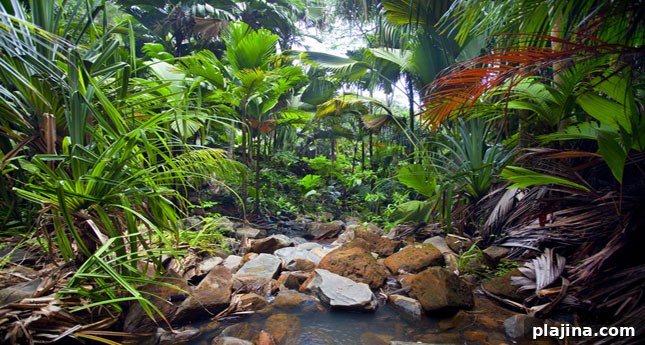
UNESCO designated the Vallée de Mai Nature Reserve, located in the center of Praslin Island, as a World Heritage Site in 1983 to protect the last stands of coco de mer palms and the very rare endemic Seychelles black parrot. The parrot’s survival is closely tied to the health and continuity of the Vallée de Mai and the surrounding palm forest, which represent its final stronghold. Botanists suggest the coco de mer may have evolved from an ancestral aquatic plant that once grew on the seabed. Notably, the coco de mer produces the largest seed in the plant kingdom.
In addition to the coco de mer, the reserve is the only place where visitors can see all five of Seychelles’ other endemic palm species growing together. Although the reserve’s area is limited and cannot support a fully self-sustaining ecosystem on its own, it remains the sole intact habitat that contains the key elements necessary for the survival and regeneration of these unique species. Continued support from international and local conservation organizations is essential to maintain the reserve’s ecological integrity.
Conservation efforts in the Vallée de Mai focus on habitat protection, invasive species control, scientific research, and public education. These measures help preserve the unique plant communities and provide nesting and feeding habitat for the black parrot and other native wildlife. Management also includes monitoring population trends, restoring degraded areas, and implementing biosecurity measures to prevent new threats from establishing in the reserve.
For visitors, the Vallée de Mai offers a rare opportunity to walk through an ancient palm forest and experience a landscape that has changed little over millennia. Well-managed trails and interpretive signage help visitors understand the ecological importance of the site while minimizing human impact. Guided tours led by knowledgeable local guides further enhance appreciation for the reserve’s flora and fauna and explain ongoing conservation challenges.
Local engagement is central to long-term conservation success. Community involvement in habitat protection, sustainable tourism, and environmental education ensures that the benefits of preserving the Vallée de Mai extend to residents, creating incentives to protect this natural heritage. Partnerships between government agencies, non-governmental organizations, researchers, and the tourism sector strengthen capacity for effective management.
Protecting the Vallée de Mai also has broader ecological and cultural value. As a refuge for endemic species and a living example of Seychelles’ natural history, the reserve contributes to global biodiversity conservation and offers a meaningful connection between people and place. With continued conservation commitment and responsible visitation, the Vallée de Mai can remain a marvel for future generations of Seychellois and visitors from around the world.