
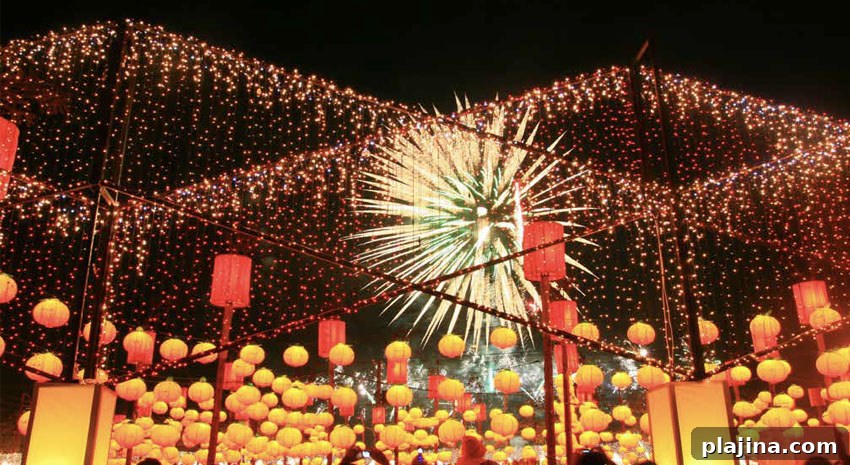
THE FIRST FULL MOON bathes Taiwan in a soft, silvery light, and the island—often called Formosa, or “beautiful island”—takes on a distinctly different mood. The frenetic energy of high-speed trains, bustling night markets and gleaming skyscrapers slows down as communities prepare for the annual Lantern Festival.
Travelers from mainland China and around the world gather in city squares and rural valleys to take part in a tradition that dates back more than two thousand years. Paper lanterns, glowing and buoyant, float upward like a cluster of jellyfish, carrying with them prayers, hopes and wishes. Over time the lantern release evolved from military signaling to a deeply symbolic, cultural act—farmers and families would light lanterns in spring to ask for good fortune and safety. Today the sight of hundreds of illuminated lanterns rising into the night sky remains a moving, bucket-list experience.
“The sky lantern is considered culturally and historically significant in Taiwan, and many find it touching and even romantic as people write their dreams and wishes onto the lantern to release in the night sky, hoping it would come true,” says Stella Ying of the Regent Taipei, explaining the small in-room lanterns the hotel places in guest rooms over the Lantern Festival weekend. These tokens are one example of how local hotels and communities embrace festival traditions and welcome visitors during this special time.
Held on the first full moon of the Chinese Lunar New Year, the Lantern Festival is a celebration of renewal, hope and good tidings. Events take place across Taiwan, often with each host city adding its own creative theme or interpretation. Since the Tourism Bureau revived the modern festival in 1990, it has grown into a major cultural attraction. While one county is typically designated the primary host, many other regions stage complementary lantern events and festivities.
This year’s festival offers a special tribute to the lantern and the zodiac animal of the year. Two highlights stand out as must-see events for visitors seeking an authentic and memorable Lantern Festival experience.
High in the cloud forests of Chiayi County, home to the famed Alishan sunrise, festivalgoers gather at higher elevations to welcome the Lunar New Year. The Taiwan Lantern Festival, running this year from March 2–11, blends three elements—water, land and air—into an integrated, artistic theme. In Taibao City, a downtown display connects visitors to the futuristic southern branch of the National Palace Museum, where contemporary technology and traditional motifs meet.
The “water” light district features choreographed water displays combined with recognizable architectural forms, evoking imagery like the Forbidden City, Alishan and cherry blossoms. In the “air” zone, smartphone apps connect audiences to remote lantern exhibits, enabling interactive participation. LED installations and projections create vivid “land” scenes; around the National Palace Museum visitors may see magnolia branches drift through projected airspace. Interactive features allow guests to engage directly with installations, for example “watering” a virtual plant and watching it grow in real time.
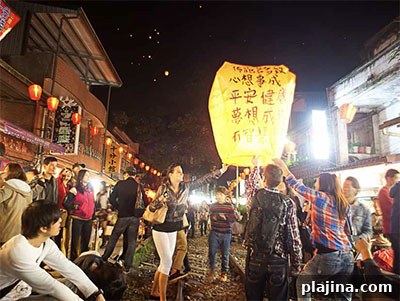
New Taipei City street scene during the Pingxi festival © NICHOLASHAN | DREAMSTIME
An equally iconic experience unfolds in Pingxi, a mountain-ringed district of New Taipei City where sky lantern releases have become synonymous with communal celebration. Historically, Pingxi residents released lanterns to signal safety to neighboring villages; today, locals and visitors handwrite wishes on delicate lanterns and release them together, transforming the night into a sea of glowing lights. At major events more than a million lanterns can light the sky, a breathtaking sight that draws photographers, families and cultural travelers alike.
Pingxi feels like a step back in time. About an hour east of Taipei, this former coal-mining town retains period architecture and narrow streets built along hillside terrain and a train line. Pingxi Old Street, with its wooden shopfronts and traditional buildings dating to the Japanese occupation, provides an evocative backdrop for daytime exploring. When evening falls, the focus shifts to the lantern ritual, and visitors cluster on the streets and along the rail line to take part. Many travelers staying at nearby hotels, including luxury properties in Taipei, join guided or private transfers to Pingxi to personalize and release their own lanterns, often accompanied by local staff who help with the ceremony.
Under a clear Taiwanese full moon, participants tilt their heads back and watch as hand-lettered hopes and dreams ascend, drifting together toward the stars. The Lantern Festival is at once intimate and communal—an expression of wishes, remembrance and shared celebration that resonates across generations.
Taiwan Info to Go
International flights arrive at Taiwan Taoyuan International Airport, located about 25 miles west of Taipei. From the airport, travelers can use shuttle buses, the airport skytrain and high-speed rail connections to reach Taipei and other cities. A high-speed rail shuttle bus ticket is available at arrivals and many terminals, and trains provide fast links to major urban centers. Car rentals, tour buses and taxis are also common; taxi fares and transit prices vary by route and service.