
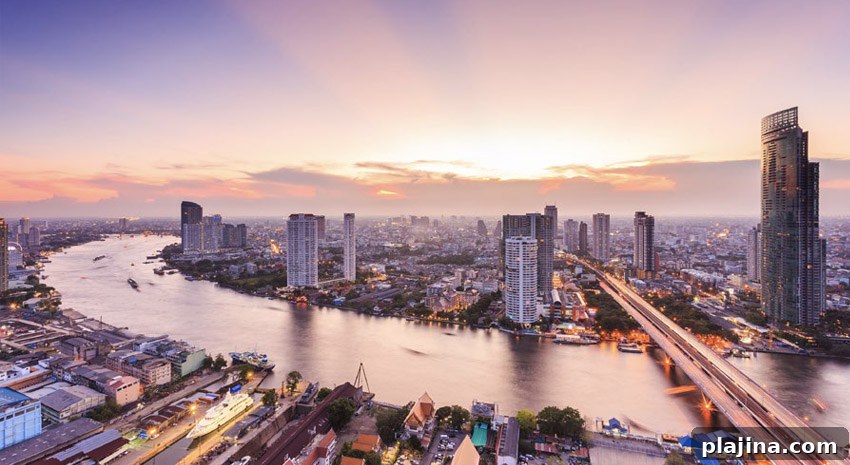
At once salty and sweet, simple and sophisticated, Bangkok’s contrasts blend like the flavors of a traditional pad thai. Time‑locked temples sit beside ultramodern megamalls; long‑tailed boats glide past congested roads along a network of canals; and Michelin‑level chefs prepare gourmet plates while street vendors sell deliciously cheap bites.
Often called the City of Angels or the Venice of the East, Bangkok’s long history stems from its role as the capital of Siam and as the center of the kingdom’s modernization in the late 19th century. Rapid growth without strict urban planning created the charming jumble of traditional wooden houses and towering glass skyscrapers that fascinates travelers today.
Although my husband and I hadn’t planned to linger, Bangkok has a way of drawing visitors in. Its airports and train stations make it a natural hub for trips to Vietnam, Laos, Malaysia or other parts of Thailand; affordable, comfortable lodging and abundant food options make it an indulgent stopover as well as a bustling, sometimes noisy, metropolis.
We were temporarily delayed in Bangkok while waiting for the Burmese consulate to issue our tourist visas to Myanmar. To stay close to the consulate we rented an Airbnb in a colonial‑style wooden house, and immediately experienced one of the city’s many juxtapositions: mere steps from the office towers of Sathon Road, the warbling calls of birds in the surrounding trees made us feel deep in a tropical garden.
Hardly had we set down our bags before we encountered the warm hospitality Bangkok is known for. Drawn to a roadside cart selling fresh fruit juices, we joined a cluster of locals placing orders. Unsure of how to proceed, we hesitated; a businesswoman nearby asked, “What would you like?” She relayed our choices to the vendor and, before we could reach for our wallets, had paid for them with a friendly smile and disappeared.
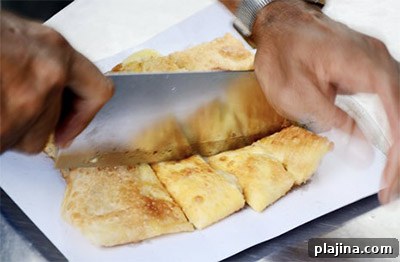
Dessert roti with bananas © PIXBOX77 | DREAMSTIME.COM
Food is central to life in Bangkok, and tasty snacks appeared around every corner. At first I found the intense sweetness of roti overwhelming, but soon we were hooked. Roti is a fried flatbread related to Indian chapatti, often filled with bananas, drizzled with chocolate and sweetened condensed milk, and finished with a dusting of sugar.
Visiting in August, we sometimes found the afternoon heat and humidity oppressive. While Bangkok offers many air‑conditioned shopping malls stocked with fast fashion and luxury brands, we chose another common cure for the tropics: a massage at Health Land. This well‑established local chain provides a wide range of Thai treatments in a professional, comfortable setting.
Thai massage, an ancient practice combining acupressure with assisted yoga‑style stretches, is done without oils and while the recipient remains clothed—typically in loose cotton shorts and a T‑shirt. Our petite, middle‑aged masseuses led us to a dimly lit room with floor mats and curtains for privacy.
Over the next hour, they pressed and stretched our limbs, rhythmically folding and unfolding our legs, arms and backs. Refreshed and eased of travel tension, we left Health Land ready to visit two of the city’s standout attractions: Wat Arun and the Grand Palace.
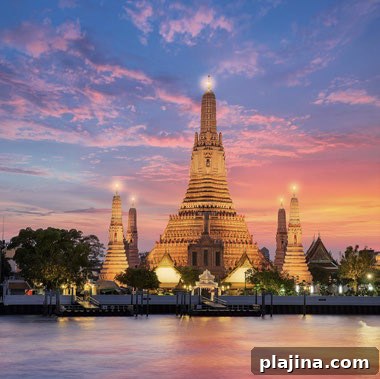
Wat Arun at twilight © ANEKOHO | DREAMSTIME.COM
Because rush hour had trapped traffic, we opted for one of Bangkok’s oldest transport methods: the public canal boat. Though khlong ferries are less dominant than when the city earned its Venice nickname, they still shuttle locals and visitors along narrow canals, passing under bridges and beside riverside homes.
When the boat pulled in for a moment, we leapt aboard. The attendant pointed to an open spot on a wooden bench and adjusted the plastic tarp that shields passengers from splashes. Racing past gleaming towers and rickety dwellings, we arrived at Wat Arun just as the setting sun bathed the prang in a warm, amber glow.
Originating in the 17th century and enlarged during King Rama III’s reign, Wat Arun’s central spire is covered in porcelain shards that shimmer at sunrise and sunset—its name means “temple of dawn.” We climbed the steep, narrow steps of the prang, admiring flower motifs and three‑headed elephant sculptures, and paused at the top to take in the temple‑dotted skyline at dusk.
Bangkok Info to Go
Bangkok Suvarnabhumi International Airport (BKK) is the city’s main international gateway, about 18 miles east of downtown. Don Mueang Airport (DMK), 15 miles to the north, handles some domestic flights. From either airport, taxis to the city center typically take 40–60 minutes depending on traffic; follow the official signs to the taxi stands or airport express buses and avoid touts.
Where to Stay in Bangkok
ARUN RESIDENCE Housed in a renovated Sino‑Portuguese building overlooking the river, with a handful of well‑appointed rooms and traditional furnishings. 36–38 Soi Pratoo Nok Yoong, Maharat Road, Rattanakosin Island $$$
MANDARIN ORIENTAL, BANGKOK A beautifully preserved, sumptuously furnished hotel that remains one of the city’s most celebrated luxury properties. 48 Oriental Ave., Bang Rak $$$$$
THE PENINSULA BANGKOK A modern riverside hotel that pairs high‑tech amenities with classic touches, featuring an elevated lounge and a spa set in a colonial‑style villa. 333 Charoennakorn Road, Klongsan $$$$
Restaurants in Bangkok
BREEZE Pan‑Asian dishes, including Wagyu beef ribs, served on an alfresco terrace with city views. Lebua State Tower, 1055 Silom Road $$$$
LE NORMANDIE The Mandarin Oriental’s elegant French restaurant, regularly praised for its refined cuisine and classic atmosphere. Mandarin Oriental, Bangkok, 48 Oriental Ave., Bang Rak $$$$$
YOU & MEE A noodle‑focused restaurant where diners choose from pan‑fried or broth‑style preparations for a flavorful, affordable meal. Grand Hyatt Erawan Bangkok, 494 Rajdamri Road $$